Creatine moves into protein bars as functional stacks grow
Creatine is leaving the powder aisle and showing up in bars and RTDs, where protein stacks are turning a gym ingredient into an everyday functional cue.

Creatine finds a new home in protein bars
Creatine is moving out of the supplement silo and into food and beverage formats that already feel familiar to everyday shoppers. The most telling signal is the protein bar: one emerging bar stack delivers 20 grams of protein from collagen and whey alongside 1.2 grams of creatine, a formulation that shows how brands are layering benefits instead of selling a single nutrient.
That matters because the category is crowded. Protein alone is no longer enough to stand out, so brands are building products that promise more than macros: strength, recovery, energy, and broader daily performance. Creatine gives those bars a performance cue, while protein still does the heavy lifting on satiety and muscle nutrition.
Why the bar format is the clearest permission slip
Bars already occupy a rare place in the grocery and sports nutrition aisle. They are portable, familiar, and widely understood as snack-plus products, which makes them an easy place to introduce a once-niche ingredient without making the consumer re-learn the entire category. That is why creatine in bars feels less radical than creatine in a bottle of capsules and more like a natural extension of the protein bar’s role as a functional snack.
The bigger story is consumer permission. When creatine appears next to whey, collagen, or other protein sources, it starts to read less like a hardcore gym add-on and more like part of a modern functional stack. The format itself does some of the educational work, especially when the product already sits in the protein set and communicates muscle support, recovery, or energy on pack.
The numbers show a category breaking out
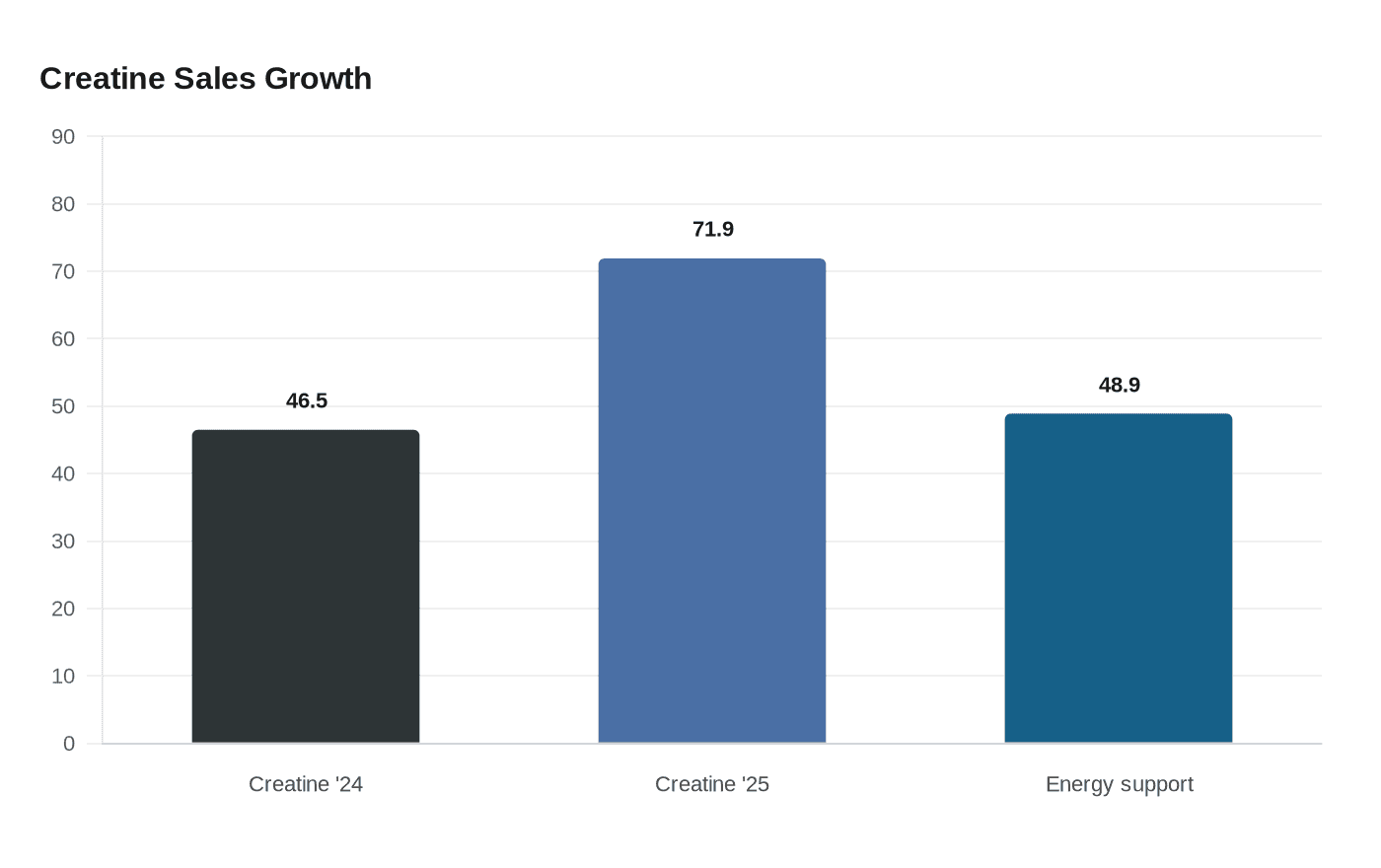
Market data backs up the shift. SPINS data cited by Nutritional Outlook showed creatine sales growth of 46.5 percent in the mainstream multioutlet performance category for the 52 weeks ending Oct. 6, 2024, then 71.9 percent growth for the 52 weeks ending Nov. 30, 2025. In the same reporting, natural-channel energy support posted 48.9 percent growth, underscoring that the ingredient is expanding beyond its original sports use case.
Glanbia Nutritionals put a sharper dollar value on that momentum, saying the U.S. creatine category was worth $88.7 million, up 53 percent year over year, with buyers increasing 36 percent. Even with that growth, 86 percent of U.S. creatine product sales were still in ready-to-mix powders, which leaves a wide opening for RTD beverages, shakes, and bars to claim more of the category’s next phase.
RTDs and shakes are becoming the battleground
The strongest challenge to creatine’s old image is the rise of ready-to-drink formats. Glanbia pointed to FITAID RX as a sign that the landscape is changing, since the RTD beverage combines creatine with BCAAs, electrolytes, and B vitamins. That kind of stack matters because it packages creatine inside a broader daily-performance story instead of isolating it as a workout-only ingredient.
Protein shakes are likely to follow the same logic. If bars can combine protein and creatine, shakes can do the same while adding hydration, energy, or recovery cues that make the product feel more complete. The opportunity is not just convenience, it is category expansion: once creatine is comfortable in bars and RTDs, it can move into the everyday routines that already belong to protein beverages.
How the science conversation is changing
The discussion around creatine is no longer limited to whether it works. Retail and trade audiences are increasingly asking how much to use, in what format, and how to communicate it clearly. One trade-show report said creatine may soon appear on Nutrition Facts labels and could eventually be treated as a conditionally essential nutrient, which would mark a major shift in how the ingredient is framed for shoppers.
Richard Kreider is studying creatine content in foods as part of USDA labeling work, a sign that the ingredient may soon be discussed with the same label-level seriousness that protein already enjoys. That kind of work could make it easier for consumers to see products with both protein and creatine listed together, not as an oddity but as a normal nutritional combination.
Who is driving demand now
The consumer base is widening beyond young men in the gym. Nutritional Outlook reported growing interest from women and older adults, with cognitive support and longevity themes helping pull creatine into new conversations. Innova Market Insights adds that creatine innovation accounted for 11 percent of total U.S. sports nutrition launches, while clinical studies are broadening the ingredient’s relevance into muscle growth, healthy aging, and cognitive function.
That widening use case is exactly why formulators are paying closer attention to scientific substantiation, transparency, and quality. If creatine is going to live in bars, shakes, and shelf-stable beverages, shoppers need to trust the dose, the stability, and the claim set. In a crowded protein aisle, the ingredient story has to be clear enough to survive a fast glance at the wrapper.
Formulation is where the story gets real
Not every format can carry creatine equally well. An industry review noted that gummies can face degradation problems from heat, moisture, acidic pH, and storage conditions, which can threaten both potency and label claims. Powders remain steadier, which helps explain why the category still leans so heavily on ready-to-mix formats even as new formats try to break through.
That leaves bars and beverages as the most credible bridge between supplement functionality and mainstream food. Bars can protect the ingredient inside a dense matrix, while RTDs can present creatine as part of a polished, all-in-one stack. The formats that win will be the ones that can deliver on stability, clear dosing, and enough consumer familiarity to make creatine feel ordinary.
The protein aisle is becoming a platform
The long-term consequence is bigger than one ingredient. Protein bars and shakes are evolving into modular platforms, not single-nutrient products. Creatine adds performance and recovery cues; protein handles satiety and muscle nutrition; together they create a cleaner, more complete functional story that fits the way shoppers already think about daily wellness.
JiMMYBAR! helped make that shift visible when it launched what it called the first protein bars fortified with creatine. Whether the next wave arrives in bars, RTDs, or shakes, the direction is clear: protein products are no longer just about grams per serving. They are becoming stacked solutions for strength, energy, recovery, and everyday performance.
This article was produced by Prism’s automated news system from verified source data, official records, and press releases, then run through automated quality and moderation checks before publishing. The system is built and supervised by the people who set the standards it runs under. Read our full AI policy.
Know something we missed? Have a correction or additional information?
Submit a Tip