Rockefeller scientists program immune cells to make lasting therapeutic proteins
By editing blood stem cells, Rockefeller researchers turned immune systems into living factories for antibodies, with about 7,000 cells enough in mice.
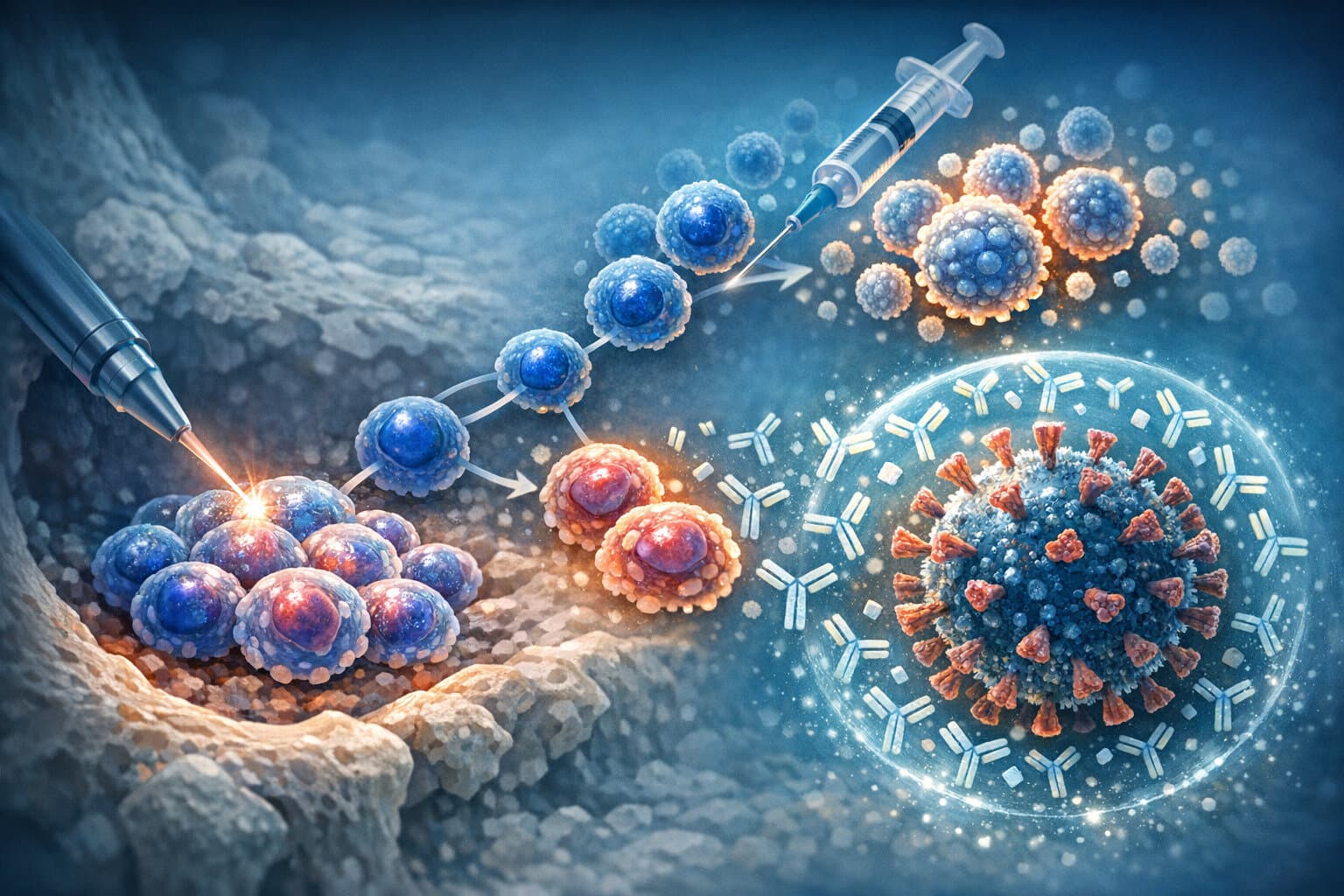
Instead of dosing patients again and again with therapeutic proteins, Rockefeller University scientists are trying to teach the immune system to manufacture them on its own. In a study published in Science on April 16, 2026, the team showed that editing a small number of hematopoietic stem and progenitor cells can create a renewable source of B cells that produce long-lasting antibodies or other cargo proteins.
The strategy is aimed at a stubborn problem in biologics and immunology: many of the most potent antibodies are difficult to generate, hard to manufacture at scale and too fragile to rely on if the cells that make them fade away. That is especially true for broadly neutralizing antibodies against HIV and rapidly mutating influenza strains, where traditional vaccines often struggle because the viral targets change or stay hidden from the immune system.
Rockefeller’s answer was to move upstream. Rather than editing mature B cells, which can disappear over time, Harald Hartweger and colleagues in Michel Nussenzweig’s Laboratory of Molecular Immunology edited hematopoietic stem and progenitor cells, or HSPCs, so those cells could keep replenishing antibody-producing descendants. The result, the researchers said, is a platform that could one day support a single-injection approach to durable protein delivery, with possible uses in infectious disease, genetic protein deficiencies, metabolic disorders, autoimmunity and cancer.
In mouse experiments, as few as about 7,000 edited HSPCs were enough to generate high titers of durable antibodies and cargo proteins. One engineered broadly neutralizing influenza antibody protected mice against an otherwise lethal viral challenge, a result that underscores why this platform is being watched closely by gene therapy and immunotherapy researchers. The team also showed that the same approach could make non-antibody proteins, widening the technology beyond classic antibody therapeutics.
The study adds another sign that the field is shifting from transient biologic dosing toward in vivo manufacturing. Human HSPCs edited with the same method produced functional human B cells in an immunodeficient mouse model, an early translational signal that the approach could move beyond proof of concept. Even so, the work remains a research platform, not a clinical therapy, and the hard questions are still the ones that usually decide whether a promising engineering idea survives the jump into medicine: safety, durability and how tightly the output can be controlled.
For Rockefeller, the study also extended a long-running research program around antibody maturation and immune memory. Hartweger and Nussenzweig had previously laid out the logic for CRISPR-based antibody reprogramming in vivo, and this stem-cell version takes that concept one step closer to a living drug factory.
This article was produced by Prism’s automated news system from verified source data, official records, and press releases, then run through automated quality and moderation checks before publishing. The system is built and supervised by the people who set the standards it runs under. Read our full AI policy.
Know something we missed? Have a correction or additional information?
Submit a Tip