Tencent AI lab uses cell-free kit to validate powerful AI proteins
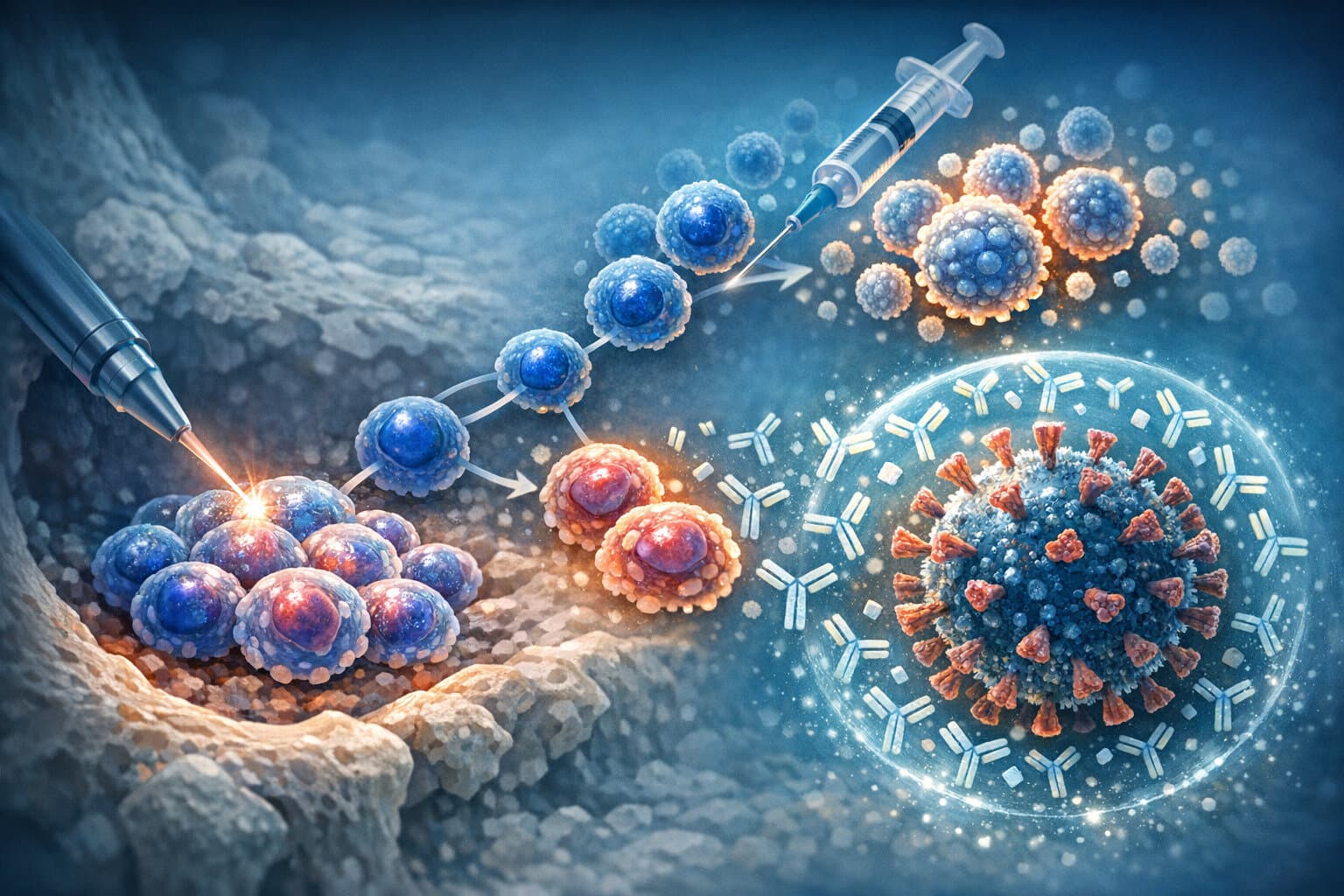
Tencent’s AI-designed proteins cleared a real lab hurdle, with one lysozyme jumping more than 100-fold in activity after cell-free validation.

Tencent’s AI for Life Sciences Lab is now showing that protein design can move past pretty models and into hard experimental wins. In Nature Communications, Bing He, Chenchen Qin, Yu Zhao, Long-Kai Huang, Zihan Wu, Fang Wang, Fandi Wu, Fan Yang and Jianhua Yao described ORI, short for Ontology Reinforcement Iteration, a framework that ties ontology-conditioned decoding to reinforcement learning from wet-lab feedback.
That matters because protein engineering has long been trapped in the gap between what software predicts and what the bench can actually make work. ORI is pitched as a general-purpose, scalable system for functional protein engineering, and the results are the part that gets your attention: the team used Sino Biological’s gene synthesis and cell-free protein expression workflow to validate designs quickly, then pushed one lysozyme to more than 100-fold higher activity than the natural enzyme. They also built a thermostable chitinase that kept working at 85°C and produced bifunctional enzymes that outperformed naturally occurring multifunctional proteins.

The paper, which lists Tencent AI for Life Sciences Lab in Shenzhen, China, was received on May 21, 2025, accepted on February 3, 2026 and published in 2026. That timeline matters because this was not just a flashy concept sketch from a model demo. It went through the normal publication pipeline and then landed with concrete enzyme data that suggest the closed loop between computation and experiment is starting to produce genuinely useful protein variants.
The cell-free piece is the practical hinge. Sino Biological said on May 19, 2026, that its XPressMAX kit can synthesize proteins in as little as 3 hours, using an E. coli lysate and direct input from plasmid or PCR templates. The company also said its high-throughput workflow can validate more than 2,000 scFv/VHH molecules in 3 to 4 weeks. For enzyme and therapeutic protein discovery, that kind of turnaround changes the economics: faster construct-to-readout cycles mean more design iterations, less dead time and a better shot at rescuing candidates that look promising in silico but fail in conventional expression systems.
The bigger takeaway is not that AI can now dream up one better enzyme. It is that AI plus cell-free validation is becoming a credible production line for functional protein engineering, especially where activity, thermostability and multi-functionality are hard to optimize at the same time. Nature has recently highlighted AI-designed enzymes that can run multi-step reactions, and this Tencent work pushes that story in a more useful direction: less hype, more measured validation, and a workflow that could actually scale.
This article was produced by Prism’s automated news system from verified source data, official records, and press releases, then run through automated quality and moderation checks before publishing. The system is built and supervised by the people who set the standards it runs under. Read our full AI policy.
Know something we missed? Have a correction or additional information?
Submit a Tip