Europe’s alternative protein sector shifts focus to taste, price and scale
Europe’s protein market is rewarding products that taste better, cost less and scale cleanly. The hype has faded; regulation, retailers and factory capacity now decide who lasts.
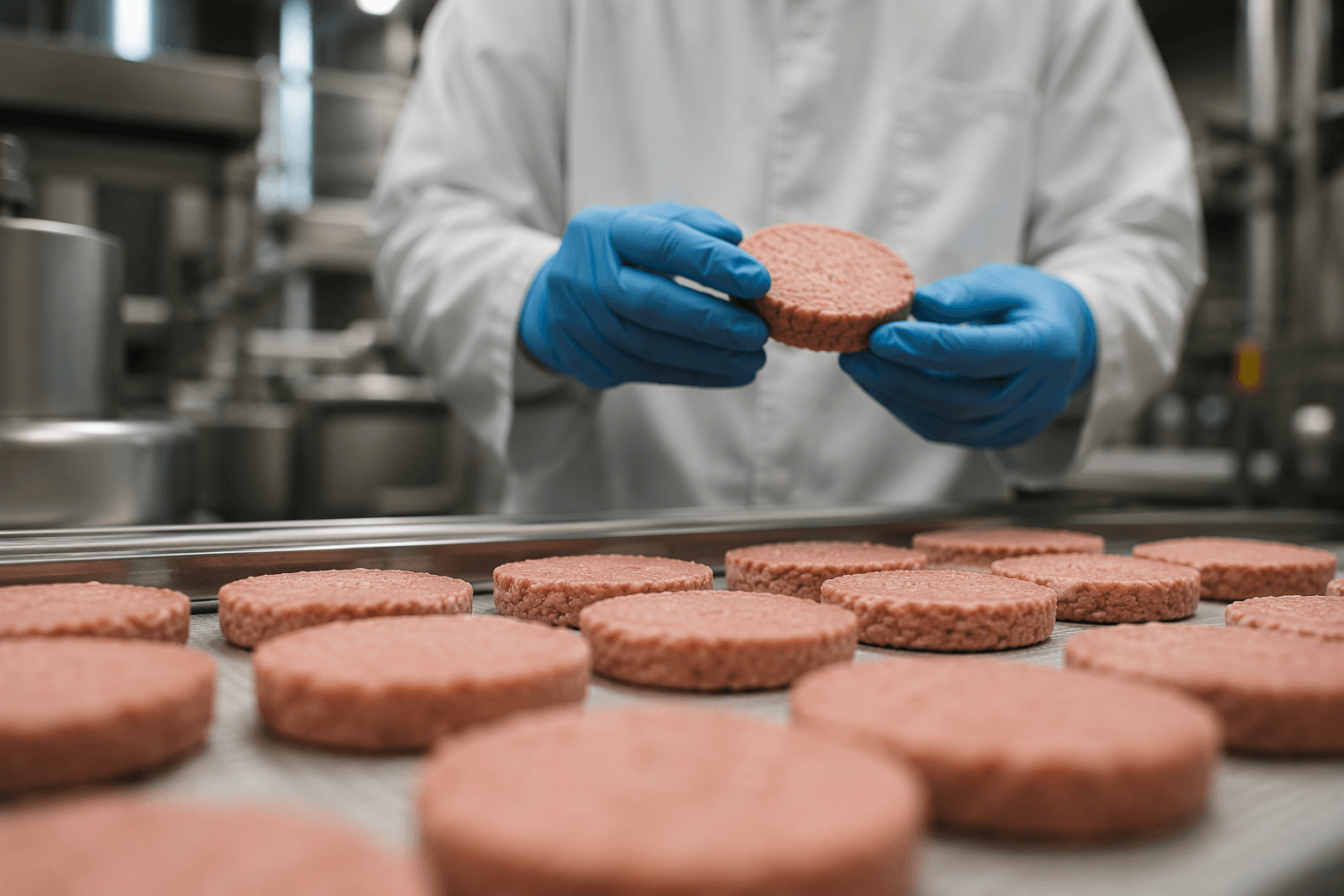
Across France, Germany, Italy and Spain, plant-based retail sales are growing, but taste and price are deciding success. The products that keep moving are the ones that taste convincing, land at workable price points and fit into real supply chains, not the ones that merely promise a cleaner future. Europe is a useful test case for the whole sector: regulation, consumer expectations, retailer discipline and manufacturing limits all show up at the same time.
What is actually driving sales
GFI Europe’s retail data across France, Germany, Italy and Spain shows why category growth is not enough. Repeat purchase depends on whether a burger, milk or ready meal performs like something shoppers already buy.
For brands and ingredient makers, that changes the product brief. Better emulsification, cleaner flavour masking, stronger texture and tighter cost control matter more than category labels. In mainstream retail, a plant-based product can win an initial trial on values, but it keeps shelf space only when the economics work for the retailer and the sensory experience works for the customer.
Consumer adoption is real, but it is not automatic
Europe remains receptive to foods framed around environmental benefits, animal welfare and ingredient transparency, but that interest is not the same as durable conversion. The Smart Protein project’s pan-European survey, published in November 2023, focused on flexitarians and captured the part of the market that matters most for volume: people who want to cut back on meat without committing to a fully plant-based identity.
People say they care about sustainability and health, but they still buy on taste, price and convenience.
The regulatory gate is still the gate
No one gets a novel food onto the EU market by declaring it innovative and moving on. Under EU law, food business operators can place a novel food on the market only after the European Commission has processed an authorisation application, adopted an implementing act and updated the Union list of novel foods. That list also sets the conditions of use, labelling requirements and specifications that determine how a product can actually be sold.
EFSA updated its novel-food guidance and confirmed procedural changes in 2025 aimed at making the process faster and smarter. For alternative protein companies, that matters as much as the science itself, because time-to-market and regulatory predictability shape whether a fermentation-derived ingredient or other next-generation protein can survive the cash burn of scale-up.
Why Europe still matters strategically
The European Parliament’s April 2024 study on alternative protein sources for food and feed ties the sector to food security and environmental pressures. That framing is broader than consumer-facing burgers and milks. It includes the feed system, where the Parliament’s July 2023 EU protein strategy briefing describes the EU livestock sector as critically dependent on imported plant-based proteins, especially soybeans from Argentina, Brazil and the United States.
That import dependence is one reason Europe keeps coming back to protein diversification even when the consumer market looks uneven. The issue is not just what goes on the plate. It is also what keeps livestock systems, ingredient supply chains and food manufacturing running when geopolitical or climate shocks hit trade flows.
Public money, private capital and the scale-up gap
The money question is where the story gets practical. Public funding remains central to protein diversification and food-system resilience in Europe. GFI’s 2026 State of Global Policy report on public investment in protein diversification keeps that issue in the centre of the conversation. That matters in Europe because private capital alone has not been enough to carry every category through the expensive middle stage between lab validation and factory throughput.
Manufacturing capacity is the other constraint that keeps showing up. Europe has deep food-processing expertise, but the sector still needs more equipment, more contract manufacturing options and more operational know-how to move from promising prototypes to consistent volumes. Without that, the best formulation in the world still struggles to reach retail at a price that works for both grocery and foodservice.
The next proof point is scale, not headlines
The Future of Protein Production Summit is scheduled for November 4-5, 2026 at RAI Amsterdam. The sector has moved into an engineering phase where processing lines, ingredient systems and commercial partnerships matter more than launch-day buzz.
Europe’s big advantage is not that it automatically leads the world. It is that it exposes the real tests earlier than many markets do. A company has to satisfy European retailers on taste and price, clear the EU’s regulatory process, secure manufacturing capacity and build repeat consumer demand.
The market signal is now explicit
A policy proposal tied to Plant-Based Foods & Proteins says poor diets cost Europe €900 billion annually and that shifting toward more plant-based foods and proteins can improve food security while reducing land and resource use. The market will still decide on smaller, more immediate questions: can the product taste right, can it be made cheaply enough, can it be authorised cleanly, and can it be stocked at scale?
This article was produced by Prism’s automated news system from verified source data, official records, and press releases, then run through automated quality and moderation checks before publishing. The system is built and supervised by the people who set the standards it runs under. Read our full AI policy.
Did this article answer your question?