Foodvalley adds protein chapter to healthier reformulation guide
Foodvalley’s new protein chapter makes the reformulation problem concrete: adding protein is easy to sell, but hard to do without wrecking texture, taste, and shelf life.

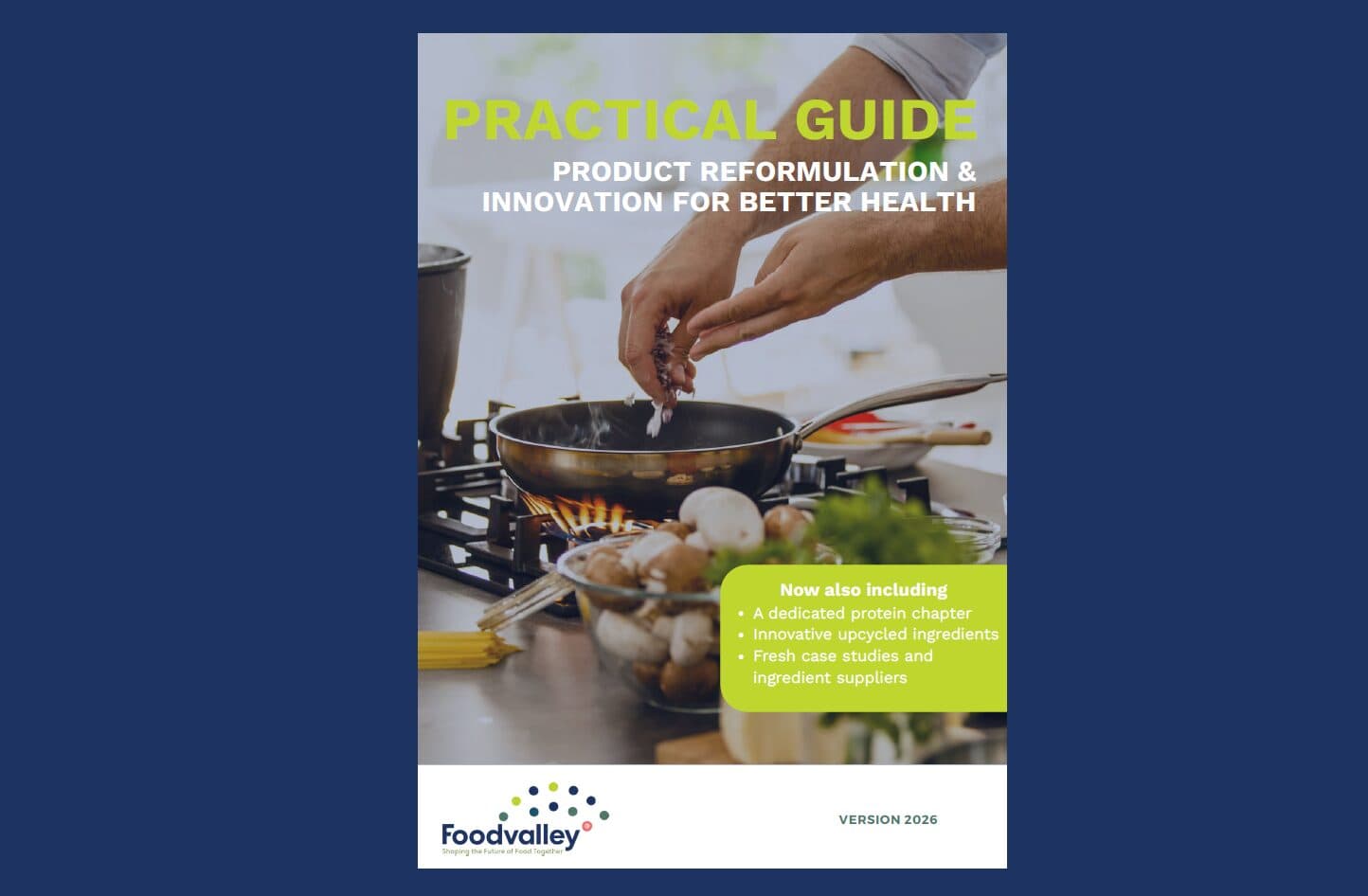
Foodvalley launched the updated Practical Guide for Reformulation and Innovation in Wageningen on 16 June 2026, adding a dedicated protein chapter for product developers who have to make the numbers work in the lab, not just on the label. Protein enrichment is where many “healthier” claims start colliding with real-world formulation constraints.
Protein is the hardest kind of upgrade to make look easy
Raising protein sounds straightforward until the first pilot batch comes off the line. Change one ingredient and you can shift taste, texture, mouthfeel, appearance, functionality, shelf life, and consumer acceptance all at once, which is why protein reformulation so often stalls after the marketing brief.
The 2026 edition does not treat protein as a simple nutritional add-on; it treats it as a formulation variable that affects the whole product system, from processing behavior to how the finished product holds up in storage and on the shelf.
Vera Hoynck van Papendrecht, Foodvalley’s program manager for Healthier Food, put that tension plainly in the earlier launch: “Reformulation requires a tailored approach: it’s not simply a matter of swapping one ingredient for another.”
What the 2026 guide adds
The first public edition launched on 3 June 2025. The new version keeps the original reformulation framework in place, but expands it with plant-based ingredients and novel protein, plus upcycled ingredients, fresh case studies, and a larger supplier overview.
The update also keeps the guide grounded in the older reformulation priorities that still dominate packaged food work: salt, sugar, saturated fat, and fibre. The difference is that protein now gets direct guidance instead of being folded awkwardly into the margins of a broader “healthier product” conversation.
Higher-protein claims have become a familiar sales pitch, and alternative proteins have moved from niche innovation to a serious formulation category.
Built for the teams that have to launch the product
The guide is aimed at product development, R&D, innovation, marketing, and commercial teams. If the scientists do not understand the commercial target, the product misses the brief. If the commercial team does not understand the formulation trade-offs, the launch copy oversells what the product can deliver.
The guide is meant to function as a practical, living resource that can be used as a reference guide, a discussion tool, or a training resource. Reformulation decisions rarely sit in one department for long. A formulation choice that improves protein content can trigger changes in cost, processing, sensory profile, and shelf life, so the guide has to work as a shared language across functions.
Protein changes often require rework in more than one part of the recipe. If a formulation is being pushed toward more protein while also trying to preserve texture and consumer liking, the team has to confront those trade-offs early.
The guide is built like a pre-competitive working tool
The guide was developed through Foodvalley’s Healthier Food Community and also draws on The Protein Community, The Upcycling Community, and The Regenerative Agriculture Community.
The content base is broad: scientific literature, official publications, industry case studies, expert interviews, and contributions from ingredient suppliers and R&D consultants all fed into the update. Feedback from the 2025 edition was systematically incorporated into the 2026 version.
There is no one fix that works across bars, beverages, dairy alternatives, baked goods, or ready meals. Ingredient suppliers can point toward what their proteins do in a formula, but R&D consultants and field experts are the ones who see how those ingredients behave under pressure from heat, shear, hydration, and storage.
Why the NAPV alignment matters to formulation teams
The guide is aligned with the Dutch National Approach to Product Improvement, or NAPV, which gives it a policy anchor rather than leaving it as a loose industry handbook.
It is built to support a broader improvement agenda that includes nutrient reduction and product redesign, with protein now part of the same reformulation toolkit as salt, sugar, saturated fat, and fibre.
Upcycled ingredients also show up alongside protein in the new edition. In real formulation work, these topics often meet in the same brief: add nutritional value, reduce waste, improve the ingredient story, and still keep the product stable, affordable, and pleasant to eat.
What product developers should take from the update
“Healthier with more protein” sounds clean in a deck, but the minute the formula changes, the team has to solve for water binding, structure, sensory balance, process tolerance, and shelf performance at the same time.
The dedicated protein chapter is the real addition, not just a new section title. It tells developers to treat protein as a technical system, not a marketing claim, and to use plant-based and novel protein strategically rather than symbolically. The expanded supplier overview and fresh case studies should make it easier to move from concept to bench, which is exactly where these projects usually get stuck.
This article was produced by Prism’s automated news system from verified source data, official records, and press releases, then run through automated quality and moderation checks before publishing. The system is built and supervised by the people who set the standards it runs under. Read our full AI policy.
Know something we missed? Have a correction or additional information?
Submit a Tip