New quintuple agonist outperforms semaglutide in obese mice, boosts metabolism
A GLP-1-GIP-lanifibranor drug beat semaglutide in obese mice, cutting weight, food intake and glucose while pointing to a new metabolic delivery strategy.
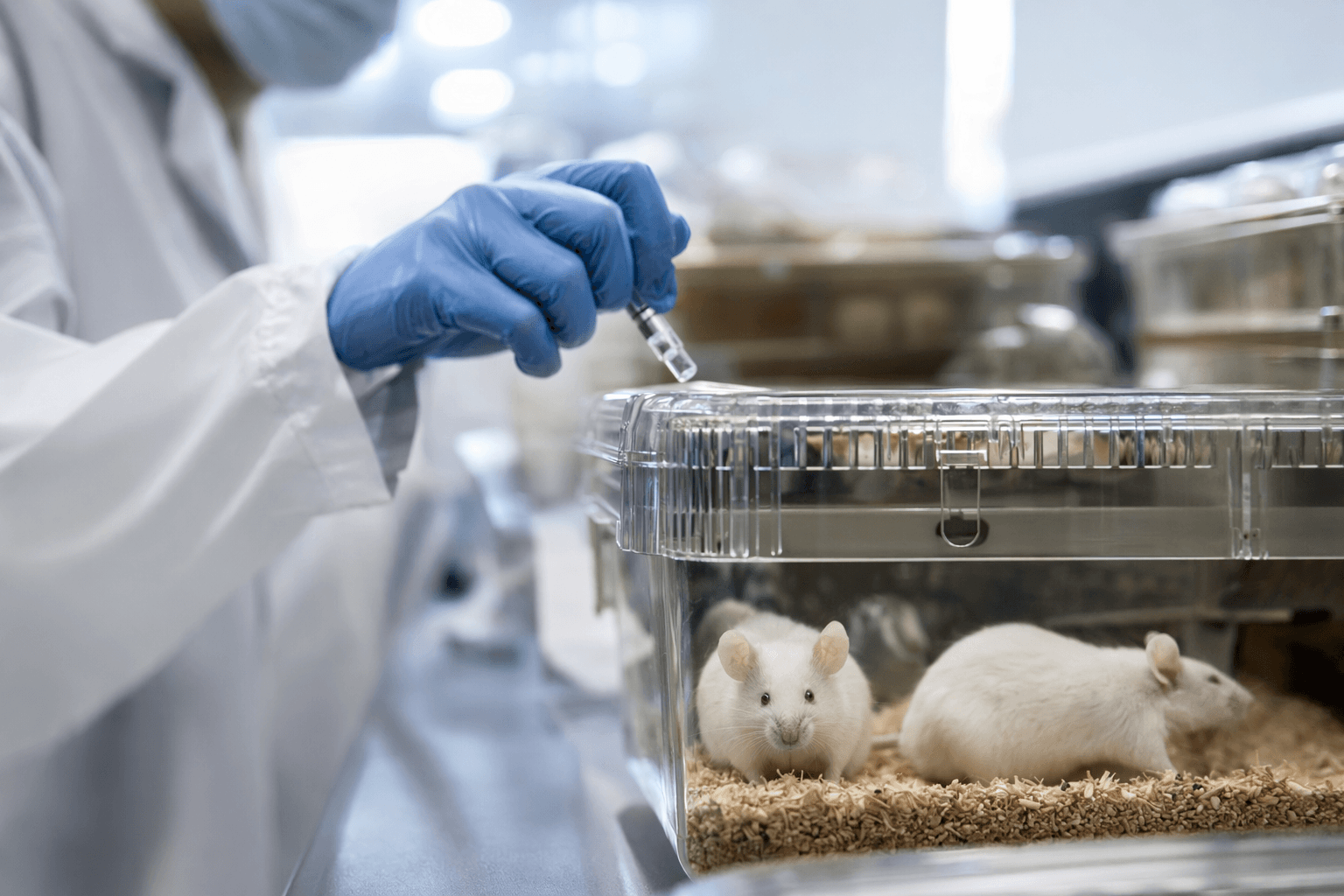
A new obesity compound did what current incretin drugs have made investors expect, then went a step further. GLP-1–GIP–lanifibranor, a unimolecular quintuple agonist, outperformed semaglutide and GLP-1R–GIPR co-agonism in obese and insulin-resistant mice, while also lowering body weight, food intake and hyperglycaemia.
The study, published in Nature on April 29, 2026, comes from Helmholtz Munich’s Institute for Diabetes and Obesity under Timo D. Müller. The idea is not just to hit two incretin receptors harder. It uses GLP-1R and GIPR signaling as a “door opener” to deliver lanifibranor, a pan-PPAR drug that activates PPAR, PPAR and PPAR inside the same target cells. That gives the molecule a second mechanism on top of appetite suppression: insulin-sensitizing and anti-inflammatory effects aimed at the metabolic machinery itself.
In the lab, the compound looked familiar at first. It was indistinguishable from GLP-1–GIP in incretin receptor signaling and stimulated insulin secretion just as effectively in isolated mouse islets. The difference showed up in vivo, where the quintuple agonist drove deeper weight loss and better glucose control than semaglutide, the GLP-1R–GIPR co-agonist benchmark that already reshaped obesity treatment after tirzepatide won FDA approval for chronic weight management in November 2023. Semaglutide’s STEP 1 trial set a high bar too, with mean weight loss of 14.9% at 68 weeks in adults with overweight or obesity without diabetes.

The biology behind the result looked cooperative, not additive. The metabolic effect was blunted when GLP-1R, GIPR or PPAR was inhibited, and it disappeared in diet-induced-obesity mice lacking both incretin receptors. That points to a synergistic mechanism, not just a stronger appetite drug. It also shows why the work matters for the next phase of metabolic medicine: the field may be moving from receptor agonism alone toward targeted intracellular payload delivery, with incretin signaling acting as a transport system as much as a therapeutic signal.
That is still a preclinical leap, not a human result, and translation from obese mice to patients is where many ambitious obesity programs stall. But the direction is clear. If more potent appetite-suppressing drugs keep arriving with stronger metabolic effects, the ripple could extend beyond endocrinology and into the protein aisle, where smaller, higher-protein meals may look even more attractive to people eating less. With 890 million adults living with obesity worldwide in 2022, about one in eight people, the pressure to build the next generation of therapies is only getting more intense.
This article was produced by Prism’s automated news system from verified source data, official records, and press releases, then run through automated quality and moderation checks before publishing. The system is built and supervised by the people who set the standards it runs under. Read our full AI policy.
Did this article answer your question?