Plant proteins face texture and flavor hurdles in nutrition bars
Plant bars win on protein claims, then lose on chew if formulators miss hardening. The real fix is a blend of scalable texture controls and a few promising but still messy protein swaps.
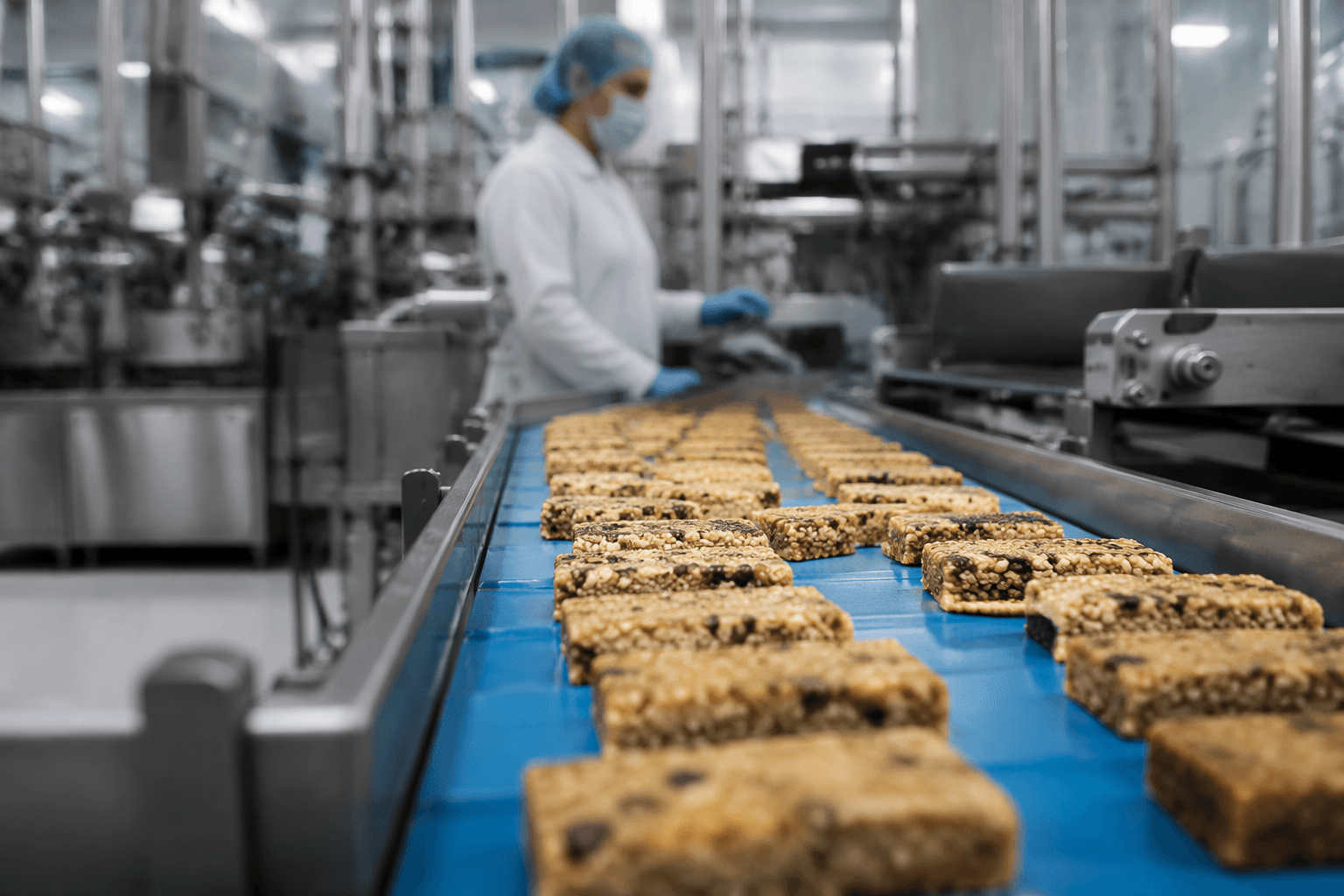
By the third bite, a plant protein bar can turn chalky or hard even when the front of pack looks great. That gap between label promise and eating experience is where most of the formulation work lives, because the protein has to build structure, hold moisture, release flavor cleanly and survive months on shelf without drifting into grit, dryness or hardening.
The bar category is big enough to punish bad texture
The University of Wisconsin–Madison Department of Biochemistry put retail sales of snack, nutrition and performance bars at $8.9 billion in 2023, and IFIC’s 2022 Food and Health Survey found 73% of respondents snacked at least once a day, up from 58% in 2021. That means a lot of bars are competing not just against other health products, but against anything convenient that feels pleasant to eat.
Bars are a brutal format for plant proteins because the matrix is dense and usually low in free water. The same protein that helps a bar hit its nutrition target can also push it toward grit, dryness, beany or earthy notes, and a firmer bite that reads as stale long before the date code expires.
Why plant proteins harden bars so fast
Storage hardening is the central problem, and it is not one thing. Major drivers of texture drift during storage include sugar crystallization, water migration, protein self-aggregation, phase separation and Maillard reactions, and newer work also includes protein and lipid oxidation. In 2025, the University of Wisconsin–Madison published an article on shelf-stable snacks that can become unpleasantly hard during storage.
A 2020 review indexed on PubMed found that hardening can lead to consumer rejection or avoidance of the product, which is exactly what brands do not want after spending on protein claims, clean-label positioning and premium packaging.
The fixes that are already practical on the line
The most scalable fixes are the ones manufacturers already know how to run through standard bar systems. Blending proteins instead of leaning on a single source is a common move, especially when one protein brings less flavor impact or better solubility than another. Selecting proteins with lower off-note intensity, then pairing them with binders, humectants and fats, gives formulators more control over chew and moisture retention without reinventing the process.
Flavor masking matters just as much, especially in bars built around fruit, chocolate, peanut butter and dessert profiles. Plant proteins often bring beany, grassy or earthy notes that are easy to notice in a dense bar, so brands are using masking systems to keep the flavor release from collapsing into dryness and bitterness by the finish.
Process is another lever that is already practical at scale. Heat, shear and moisture conditions during extrusion, baking or cold-forming change how proteins behave in the final matrix, so the same ingredient can perform very differently depending on how the bar is made. Packaging and shelf-life testing also belong in the production toolbox, because moisture migration and oxidation are texture killers that show up slowly and often only after launch.
- Mixed protein systems help soften the sensory edges of a single plant source.
- Humectants and fat systems can slow the dry, brittle mouthfeel that shoppers notice first.
- Moisture-barrier and oxygen-control packaging help defend softness and flavor over time.
- Shelf-life programs need to watch not just texture but also quality drift; a 2022 Foods study on ready-to-eat organic protein snack bars tracked physicochemical quality changes and antioxidant activity during storage.
Where the more interesting R&D is happening
The more experimental work is in the protein system itself. A 2024 Foods study on protein bars formulated with mycoproteins looked at nutritional, textural and sensory attributes, which is a sign that brands are exploring proteins beyond the usual pea-and-soy mix to get better eating quality.
The same is true for anti-hardening work that tweaks the sweetener and protein system together. A study on sweeteners and protein source found that non-nutritive sweeteners did not have a negative effect on hardness in low-carbohydrate, high-protein bars. Earlier work also showed that hydrolyzed proteins can delay hardening, but those ingredients often bring their own flavor and process challenges.
Research on high-protein bars intended for physically active people compared protein source with syrup type and evaluated physicochemical, nutritional, microstructural, surface and sensory properties.
Why oxidation and phase behavior now matter more
The newest hardening work is pushing beyond old assumptions that texture loss is mostly a sugar problem. Peer-reviewed work on high-protein bars shows protein and lipid oxidation are correlated with hardening during storage, and plant formulas where unsaturated fats and reactive proteins are both in play can move toward stale, dry notes. That adds another reason for brands to care about oxygen control, fat choice and storage conditions, not just sweetness and chew.
A separate review on high-protein nutrition bars also identifies anti-hardening methods during storage. Some of those methods are ready for manufacturing, especially mixed proteins, syrup tuning and packaging changes. Others, like new protein sources or more elaborate oxidation management systems, still need more proof before they can be treated as routine production tools.
The market is still pulling the category forward
One market report projects the global vegan protein bars market will rise from USD 1.9 billion in 2026 to USD 4.8 billion by 2036, at a CAGR of 9.7%. Another pegs the plant-based bars market at USD 1 billion in 2025 and expects it to reach USD 2.9 billion by 2035 at a CAGR of 10.3%.
This article was produced by Prism’s automated news system from verified source data, official records, and press releases, then run through automated quality and moderation checks before publishing. The system is built and supervised by the people who set the standards it runs under. Read our full AI policy.
Did this article answer your question?