Protein bars chase longevity claims with superfoods and supplements
NOVOS is selling a protein bar as a longevity tool, but the real test is whether 15g of protein and a pile of superfoods add up to more than smart branding.
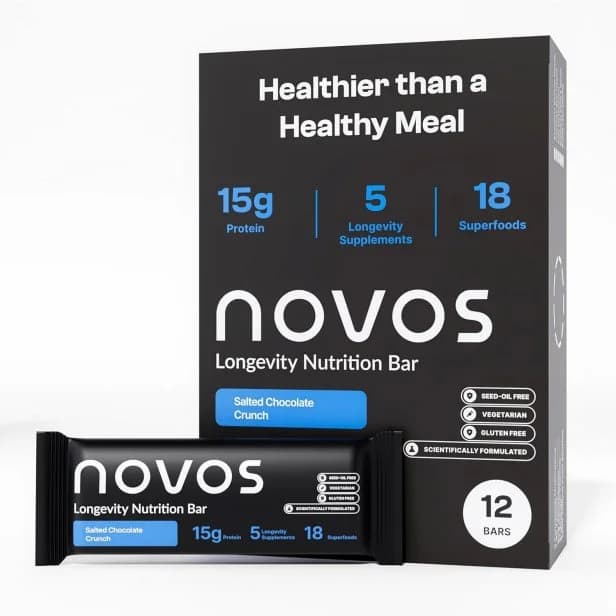
NOVOS markets its bar with 15g of protein, 20 superfoods, and five longevity ingredients. It is framed as something that can help people stay younger for longer, with built-in supplements, but that kind of promise deserves a hard look at the dose, the ingredient logic, and what a snack can realistically do.
The longevity pitch is bigger than the protein bar category
Food Network titled one piece, “This Protein Bar Claims To Help You Live Longer. Here’s What Dietitians Think.” The bar aisle has long sold convenience and protein, but NOVOS is trying to sell healthspan. The company is not treating the bar as a quick bite between meetings or after a workout. It is positioning it as a daily longevity product.
A Business Wire release was headlined “Introducing NOVOS Bar: The First and Only Functional Bar Formulated to Support Longevity,” and called the bar “designed to be healthier than a healthy meal.” That is a bold claim for any packaged food, especially one sold in the same format as a protein bar. When a snack starts promising anti-aging benefits, the burden shifts from marketing copy to actual nutrition.
What is actually inside the bar matters more than the slogan
Amazon listings repeat the same formula language, describing it as a “Novos Longevity Protein Bar,” and one listing showed a first delivery date of Jul 27. That tells you how the product is being sold at retail, not just how it is being pitched in a press release.
The protein amount is respectable, but the bigger question is whether the other ingredients do enough to justify the longevity framing. Superfoods and built-in supplements sound impressive, yet the real issue is dose and purpose: are those ingredients present at useful levels, and are they there because they improve the nutrition profile, or because they make the bar look more advanced than a standard protein snack? A long ingredient list is not the same thing as a meaningful formulation.
Dietitians usually separate anti-aging claims from snack reality
Protein matters, especially as more consumers want it in snacks, breakfast foods, and desserts, but dietitians tend to draw a sharp line between adequate nutrition and anti-aging promises. Longevity does not come from one bar. It comes from long-term eating patterns, enough protein overall, fiber, physical activity, sleep, and medical care.
That is why a protein bar loaded with botanicals, vitamins, minerals, and superfoods can become a problem if the branding outruns the nutrition. If a product is sold as an anti-aging tool, shoppers naturally expect evidence that the formulation does something specific and measurable. If it is sold as a convenient snack, the standard is much simpler: decent protein, manageable calories, a sane sugar profile, and ingredients you would actually want to eat regularly.
NOVOS is building a bigger longevity brand, not just a single snack
NOVOS lists New York, NY as its base on LinkedIn and has 11,671 followers. The company describes itself as creating nutraceuticals to extend human lifespan. That is a broader identity than a protein-bar brand, and it helps explain why the bar is wrapped in language usually reserved for supplements and longevity startups.
Athletech News headlined one item “Novos Launches ‘Longevity Bar,’ a New Spin on Protein Snacks,” while Global Wellness Summit described the product as emphasizing “protein quality over quantity” and using a Mediterranean diet-inspired formula.
The functional-snacking market is moving fast, and aging is the newest theme
Longevity is only the latest badge in a crowded field. Protein bars already compete on satiety, muscle support, gut health, hormone support, cognitive wellness, and metabolic health. Adding aging support to the mix is a logical next step for premium brands because it gives them a higher-value story than plain nutrition. It also raises the bar for proof.
In “Longevity bars may signal what’s next in functional snacking,” FoodNavigator wrote that healthy aging has been part of food and beverage strategy for more than 20 years, with “few successes and many failures.” Consumers have seen plenty of products promise more energy, better focus, better digestion, or healthier aging, then fade once the novelty wears off.
How to judge a longevity bar like this
When a protein bar starts talking like a supplement stack, the easiest mistake is to focus on the halo instead of the facts on the wrapper. The useful questions are simple:
- How much protein is there per bar, and is it enough to replace a real snack?
- What are the actual longevity ingredients, and are they included at meaningful levels or just sprinkled in for label appeal?
- Does the formula still make sense once you look at calories, sugar, and fiber?
- Is the bar solving a convenience problem, or is it trying to be a stand-in for an entire diet pattern?
A bar can be a smart on-the-go food, and that amount of protein can absolutely have a place in a day. But a snack bar is not a substitute for the daily habits that actually shape aging.
This article was produced by Prism’s automated news system from verified source data, official records, and press releases, then run through automated quality and moderation checks before publishing. The system is built and supervised by the people who set the standards it runs under. Read our full AI policy.
Did this article answer your question?