FMLA basics, what Monday.com workers need to know about leave
FMLA is not a paid-benefit promise. For monday.com workers, the real test is eligibility, documentation, and whether HR runs the leave workflow cleanly.

What FMLA actually protects
FMLA is the baseline safety net, not the full leave package. The law gives eligible employees up to 12 weeks of unpaid, job-protected leave in a 12-month period for qualifying family and medical reasons, and it generally requires employers to keep group health benefits going during that time. The U.S. Department of Labor also says workers are generally entitled to return to the same or a virtually identical position when the leave ends.
That distinction matters in a SaaS workplace like monday.com, where teams move fast, work is tracked in systems, and absence can quickly become a process problem. If you are planning leave for childbirth, adoption, a serious illness, or caregiving, FMLA is the legal floor. Your company policy may be richer, but it cannot be treated as a substitute for understanding the law.
The simple checklist most people need
The fastest way to avoid confusion is to ask four questions in order:
- Are you eligible?
- Is your reason covered?
- Will the leave be paid, unpaid, or a mix?
- Did HR and your manager set up the paperwork correctly?
That sequence sounds basic, but it is where real-world mistakes happen. Employees often jump straight to “Can I take time off?” without checking whether they meet the 12-month service rule, the 1,250-hour rule, and the 50-employees-within-75-miles requirement. Managers make the opposite mistake: they hear “FMLA” and assume it is only about long absences, when it can also cover intermittent leave and overlapping paid time off.
Who is actually eligible
Eligibility is one of the biggest friction points. The Department of Labor says a worker generally must have been employed for at least 12 months, have at least 1,250 hours of service in the previous 12 months, and work at a site where the employer has at least 50 employees within 75 miles. FMLA applies to covered private employers, public agencies, and public and private elementary and secondary schools.
There is one detail that trips people up: those 12 months of employment do not have to be consecutive in all cases. That matters in a modern workplace where people boomerang back to a company, move between contracts, or return after a break. At a company like monday.com, where teams are cross-functional and roles can evolve quickly, it is easy to assume tenure is obvious from the org chart. The legal standard is narrower than that, and HR has to check it carefully.
What counts as a covered reason
FMLA covers more than just a worker’s own illness. The law includes the birth and care of a child, adoption or foster care placement, a serious health condition affecting the employee, a serious health condition affecting certain family members, and qualifying military exigencies. USAGov’s explainer reflects the same structure and makes clear that FMLA can be used for personal medical reasons or to care for family.
This is where employees and managers often oversimplify the policy. A pregnancy-related absence, a caregiver issue, or a serious condition affecting a spouse, parent, or child may all trigger leave rights, but the right reason still has to be matched with the right process. For a project manager juggling launches or an engineer in the middle of a sprint, the operational question is not just whether someone can be away. It is whether the absence is being documented as FMLA-qualifying, whether intermittent leave is being tracked correctly, and whether the team understands what work can be reassigned without crossing the line into retaliation.
Paid leave is not the same thing as protected leave
One of the most common misunderstandings is assuming FMLA means paid time off. It does not. FMLA protects the job and, generally, the health plan. It does not promise a paycheck by itself. The Department of Labor says FMLA leave can run at the same time as employer-provided paid leave if the employer allows it, and employers may require, or employees may choose, to use accrued vacation, sick leave, or family leave during some or all of the FMLA period.
That overlap is where leave administration often breaks down. An employee may hear “approved leave” and assume they are covered financially, while a manager may think paid leave automatically means FMLA paperwork is unnecessary. In practice, the two systems need to be coordinated. If your company offers paid parental leave, paid caregiver leave, or sick time, those benefits may run alongside FMLA, but they are not interchangeable.
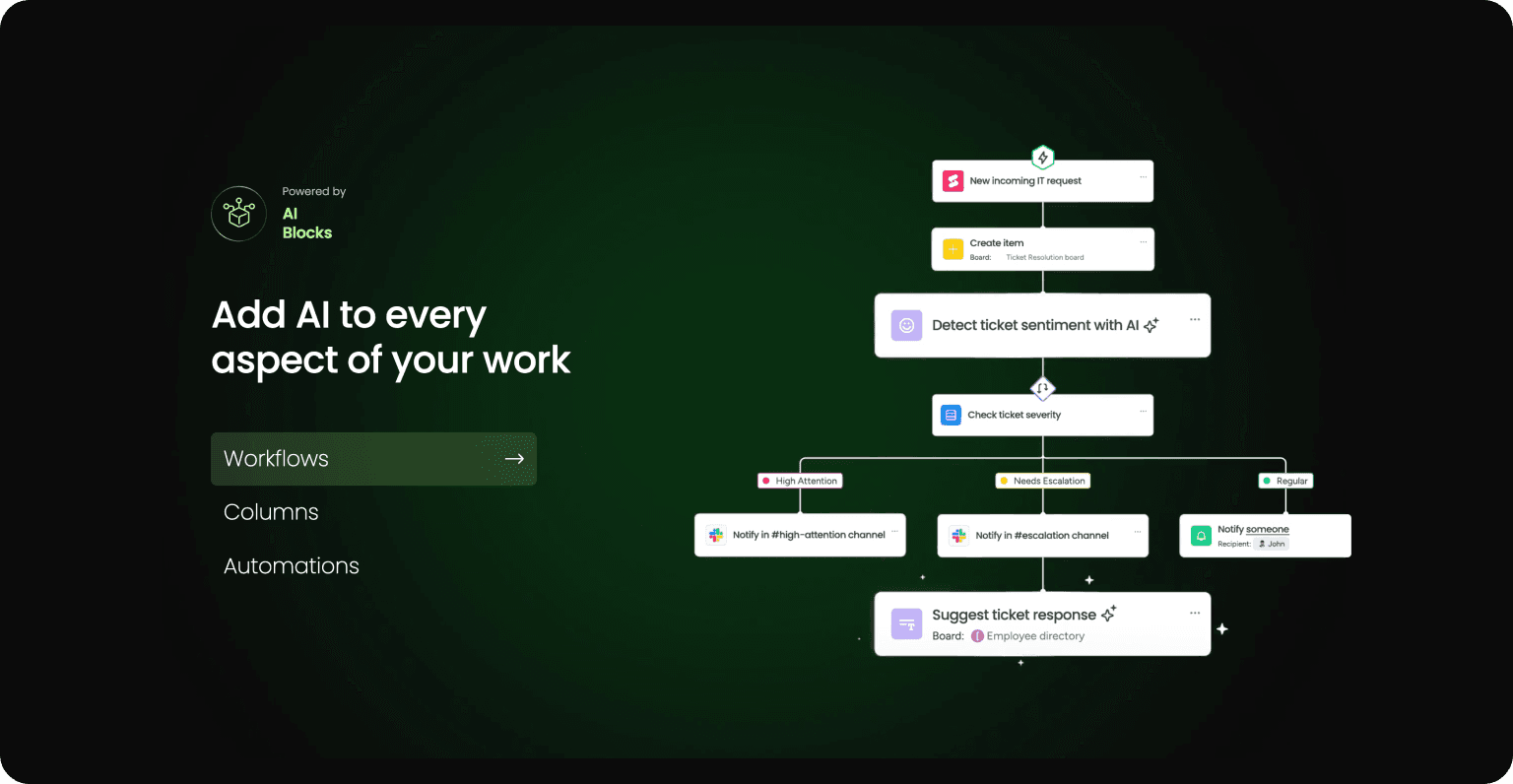
For monday.com employees, that distinction is especially relevant because the company’s own product culture is built around workflow clarity. monday.com publicly positions itself as a work-management platform for teams, and it offers a vacation-tracker template with automated notifications, dashboards, and form integration for leave requests. That is a useful reminder that leave is not just a personal issue. It is also an operations problem that depends on clean handoffs, accurate status tracking, and clear ownership.
How managers get FMLA wrong in day-to-day workflows
Most FMLA mistakes are not dramatic legal disputes at the start. They are process failures. A manager may delay escalating a leave request because they do not know whether the absence is serious enough. HR may ask for the wrong paperwork or fail to explain how certification works. A team may keep pinging an employee who is on protected leave because no one has updated the board, calendar, or handoff notes.
The operational fix is simple, even if the execution is not:
1. Route leave requests to HR quickly.
2. Confirm whether the reason may qualify under FMLA.
3. Check eligibility before assuming approval.
4. Clarify whether paid leave will run at the same time.
5. Document return-to-work expectations and the employee’s reinstatement rights.
That matters for intermittent leave too, not just a full block of time off. A serious health condition may require time away in pieces rather than one long absence, and that creates real scheduling pressure for sales coverage, sprint planning, and customer commitments. The mistake is treating intermittent leave like a loose favor instead of a protected workflow that needs tracking and consistency.
What happens if leave is denied
If FMLA leave is denied, the Department of Labor says workers can file a complaint with the Wage and Hour Division. That is the backstop when internal processes fail or when an employer misreads the rules. It is also why companies need managers and HR teams aligned before a leave request turns into a conflict.
For monday.com workers, the practical lesson is not to wait until the last minute. If you are planning parental leave, caregiving leave, or time away for a medical issue, get ahead of the process early, ask how the leave will be coded, and confirm whether your paid benefits will run concurrently. In a company built around organizing work, the leave process should be one of the cleanest workflows you ever touch.
The bottom line
FMLA is easy to talk about and easy to misunderstand. It is unpaid but job-protected, limited to eligible employees, and tied to specific family and medical reasons. It also interacts with paid leave, benefits, and HR documentation in ways that can either smooth the transition or create unnecessary conflict.
The workers who fare best are not the ones who know the slogans. They are the ones who know the checklist, push for clear answers early, and make sure the leave process is handled like any other critical business workflow: accurately, consistently, and without improvisation.
Know something we missed? Have a correction or additional information?
Submit a Tip