Salesforce brings MuleSoft on Hyperforce to India, adds Hindi support
Salesforce is localizing MuleSoft and Agentforce for India, with local data residency and Hindi support signaling that AI deals now hinge on region, language, and compliance.

Salesforce pushed MuleSoft onto Hyperforce in India and added Hindi support for Agentforce Voice, a sign that enterprise AI sales are moving beyond flashy demos into the far less glamorous work of satisfying local rules, languages, and data boundaries.
The company said MuleSoft on Hyperforce will be available in a dedicated India region, with Indian customers able to store and process integration and API data within the country. Salesforce said the control plane and runtime plane will sit in the same India region, a design meant to help regulated buyers keep sensitive data from crossing borders. The move builds on Hyperforce’s introduction to India in 2020 and is aimed squarely at financial services, healthcare, and the public sector, where local residency is often a compliance requirement rather than a preference.

Salesforce also said planned India-region capabilities include MuleSoft Agent Fabric, MuleSoft Omni Gateway, and MuleSoft Vibes. Those additions matter because integration and orchestration are increasingly part of how AI actually gets used inside large companies. For enterprise buyers, the question is no longer whether an AI feature works in a demo; it is whether it can work inside a country-specific deployment model that satisfies legal, security, and procurement teams.
Language is now part of that same buying checklist. Salesforce said it added Hindi support for Agentforce Voice and plans to add more Indian languages in the coming months. The company also said its India workforce has surpassed 17,000 employees, up from more than 14,000 it reported in November 2025, and that India revenue has risen more than 47% to $1.5 billion. Salesforce said its India offices include Bengaluru, Mumbai, Delhi, Hyderabad, Pune, and Jaipur, underscoring how central the market has become to its global enterprise push. It also said it aims to skill 100,000 people with AI skills by the end of 2026, and local coverage reported Tata Realty as a new Agentforce customer.
For monday.com, the strategic lesson is hard to miss. As the company grows its CRM and enterprise work-management footprint, the sales motion will increasingly depend on whether AI features can be localized as cleanly as the core workflow product. monday.com says its AI follows the same data residency policies as a customer’s account, that account data may be hosted in the US, EU, or APAC, and that Enterprise EU customers keep data within the EU. Its systems are hosted on Amazon Web Services in the US, EU, and AUS.
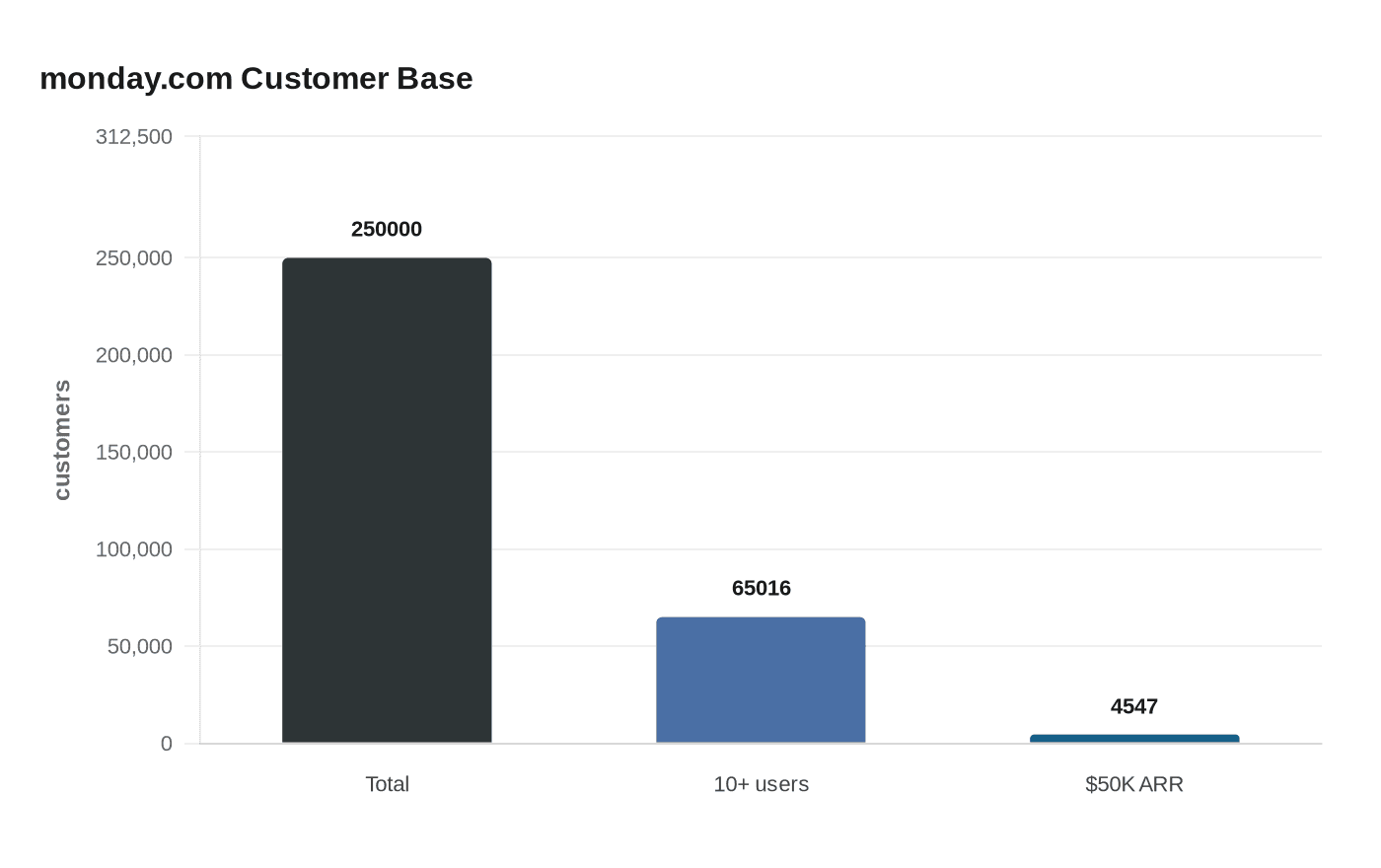
That kind of architecture is becoming part of the product spec, not just the legal review. monday.com said it has more than 250,000 customers worldwide, and its first-quarter 2026 revenue reached $351.3 million, up 24% year over year, with 65,016 paid customers using the platform for more than 10 users and 4,547 customers generating more than $50,000 in annual recurring revenue as of March 31. For vendors selling AI into large organizations, the competitive edge is shifting toward the boring essentials: residency, governance, multilingual support, and trust.
Know something we missed? Have a correction or additional information?
Submit a Tip