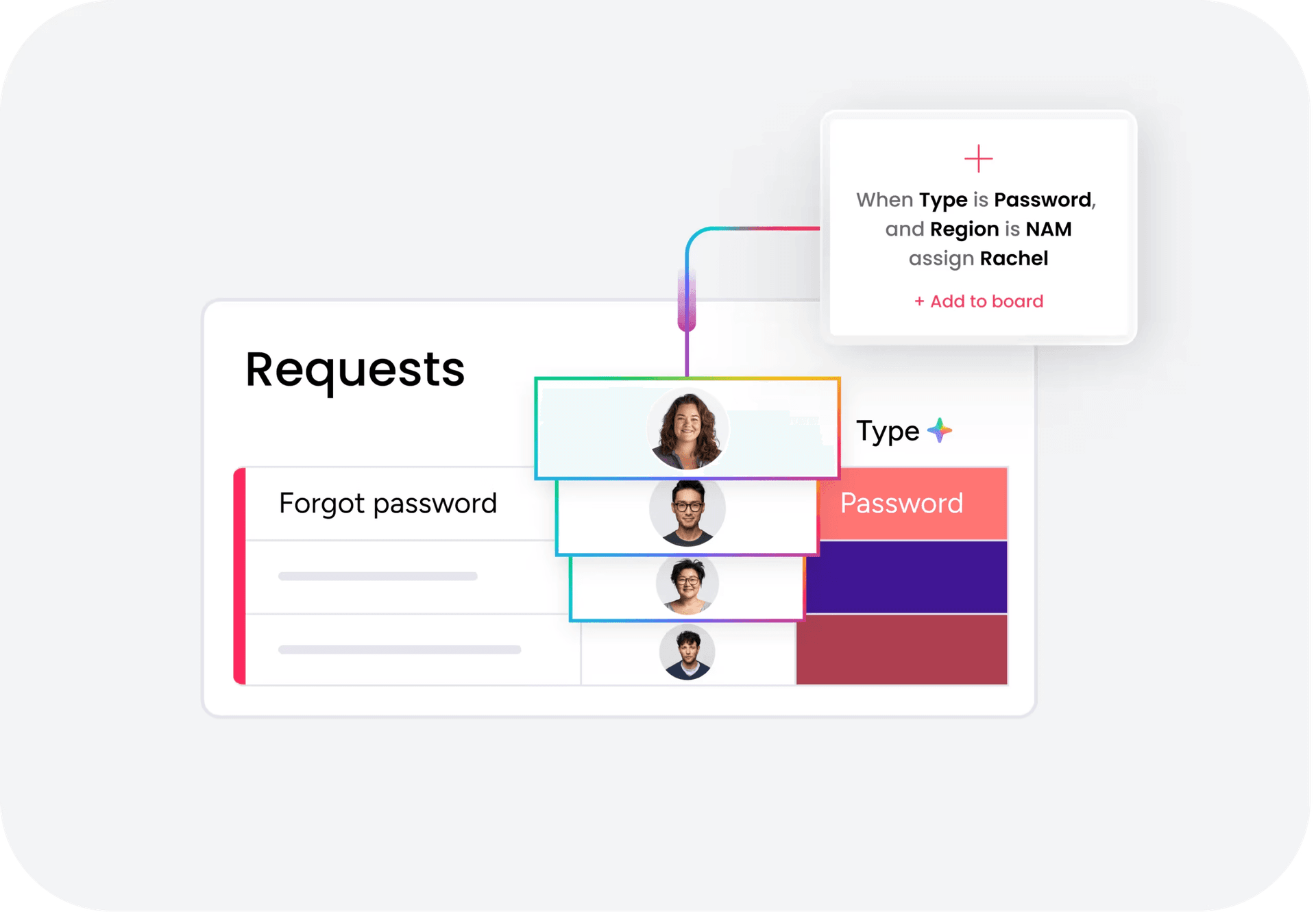
Monday.com guide says change management must become a core operating capability
monday.com’s new change-management playbook says adoption is the work, not the afterthought. That matters even more as AI launches pile up and every team is asked to adapt faster.

Change management is becoming part of the job description
monday.com’s new organizational change management guide argues that change is no longer a rare event to survive once. It is a permanent operating condition. For a company that ships fast, adds AI features quickly, and serves customers who expect every rollout to work on day one, that is more than a theory piece. It is a reminder that adaptation now sits beside product execution, sales motion, and customer success as a core skill.
The practical shift is simple to say and hard to do: leaders should treat adoption as something they measure, not something they hope for. The guide says teams need visibility into adoption, utilization, and employee sentiment as change unfolds, so they can spot friction before a rollout stalls. That matters inside monday.com as much as it does for customers, because the company’s own pace of product change can overwhelm people if each launch is handled like a one-off event.
The real finish line is adoption
For product teams, the guide draws a hard line between shipping and landing. Launching a feature is only the first step; the real finish line is whether people actually use it, understand it, and keep using it. That is a useful correction for any SaaS company, but it is especially pointed at monday.com, where the product story increasingly revolves around AI-powered workflows and new capabilities that can look impressive in a demo and still fail if users do not change their habits.
The guide’s framing also pushes teams to think about friction from the user’s point of view. Process changes fail when they add work, create confusion, or force people to learn a new path that does not feel easier than the old one. If the new behavior is not simpler, faster, or more obviously valuable, adoption will sag no matter how much internal excitement surrounds the launch.
Why managers need a repeatable change muscle
For managers, the message is less about transformation theater and more about repeatability. The company says successful change management comes from creating visibility across initiatives, which helps people understand how a new process fits into the broader picture instead of treating each rollout like a disconnected demand. That is the difference between a workplace that absorbs change and one that exhausts people with endless initiative churn.
This is where the guide’s culture-and-operations argument becomes clear. Change management should be embedded into the operating model, not bolted on after the fact. In practice, that means recurring rituals, clear ownership, and tooling that make change legible across teams. It also means managers cannot wait until a launch is already wobbling to start explaining the why, the how, and the new expectation.
The AI angle is the most important stress test
The guide is most relevant where AI enters the workflow. As more teams introduce AI-enabled tools and processes, companies need a repeatable way to absorb them without creating confusion or fatigue. The point is not that AI is special enough to justify panic. It is that AI makes the pace of change relentless, which raises the cost of vague rollout plans and loose accountability.
That backdrop fits monday.com’s own product strategy. On July 10, 2025, the company said it was unveiling three AI-powered capabilities: monday magic, monday vibe, and monday sidekick. On September 17, 2025, it announced an expanded set of AI-powered agents, a CRM suite expansion, and enterprise-grade capabilities. Taken together, those moves show a company trying to operationalize rapid product change, not just announce it.
The company’s growth story depends on making change easier to absorb
monday.com’s investor materials make the same point from a different angle. In fiscal 2025, revenue rose 27% year over year to $1.232 billion, while fourth-quarter revenue reached $333.9 million, up 25% year over year. Customers with more than $50,000 in ARR climbed 34% year over year to 4,281 as of December 31, 2025, and those larger customers represented 41% of total ARR.
That mix matters because bigger customers usually demand more structured rollout support, more training, and more confidence that new capabilities will actually stick. The company also said monday vibe was the fastest product to surpass $1 million in ARR in monday.com history, which is a telling signal: rapid adoption is no longer just a hope, it is becoming a measurable business outcome. In other words, monday.com is not only selling change management. It is depending on it.
What this means for sales and customer success
For sales and customer success teams, the guide’s logic is straightforward. Customers do not just buy software; they buy the ability to change without derailing their teams. That means the conversation cannot stop at possibility. It has to move into rollout, training, championing, and the human work of making new behavior feel manageable.
That is also why monday.com’s implementation offerings matter. The company explicitly includes change management, champion enablement, and tailored team training in those services. Those are not side notes. They are part of the company’s go-to-market motion, which suggests monday.com understands that adoption support is not separate from revenue growth. It is one of the reasons revenue keeps compounding in the first place.
The operating lesson inside monday.com
For people working at monday.com, the clearest takeaway is that constant change is now part of the job. Engineers, product managers, and sales teams are not just building and selling tools that help other companies work better. They are living inside the same problem set: new product lines, AI features, shifting customer expectations, and internal process updates that cannot be treated like special events anymore.
That is why the guide lands as more than a blog post. It describes a company where change management, AI rollout, and enterprise expansion are converging into one operating reality. The companies that handle that reality well will not be the ones with the biggest launch announcements. They will be the ones that can make adaptation routine, visible, and easier to repeat than resist.
This article was produced by Prism’s automated news system from verified source data, official records, and press releases, then run through automated quality and moderation checks before publishing. The system is built and supervised by the people who set the standards it runs under. Read our full AI policy.
Know something we missed? Have a correction or additional information?
Submit a Tip