Samsung workers demand bigger share of AI boom gains
Tens of thousands of Samsung workers rallied in Pyeongtaek, arguing AI-chip gains should translate into bigger bonuses, not just higher output.
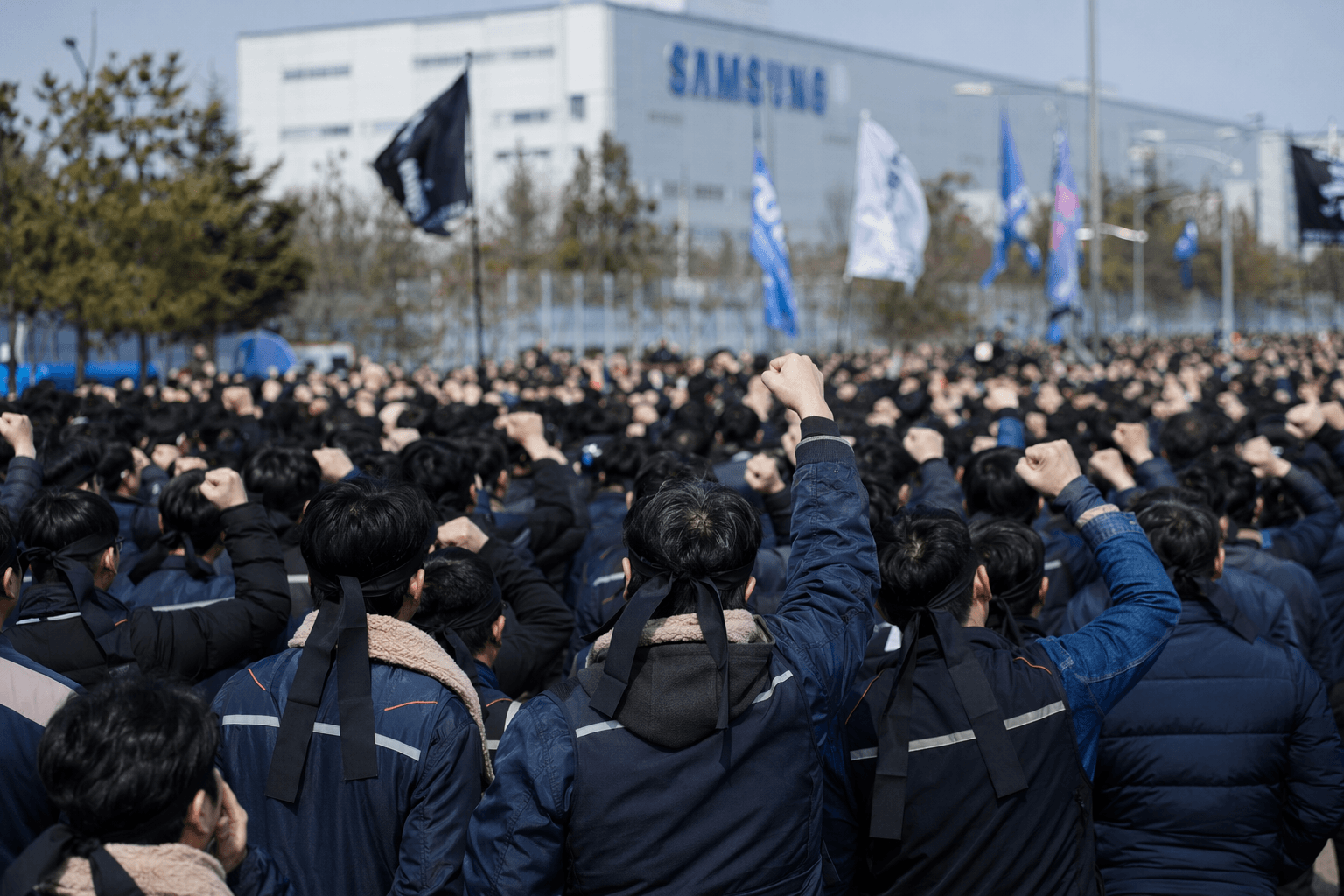
Tens of thousands of Samsung Electronics workers gathered at a factory complex south of Seoul and put the company’s AI chip boom on trial, demanding better compensation and backing a long strike that could hit production. Union organizers said about 40,000 people joined the rally in Pyeongtaek, turning a pay dispute into a public test of how much of the AI-era upside should flow to the people making the chips.
At the center of the fight is a stark bonus gap. The Samsung Electronics Labour Union said a chip division employee with a base salary of 76 million won, or about $51,280, would receive 38 million won in bonus pay for 2025, less than a third of what a similarly paid SK Hynix worker would qualify for. Samsung said it would keep working toward a swift agreement in wage talks, but the scale of the protest showed how quickly compensation grievances can become a broader challenge to trust inside a company that sits at the heart of AI infrastructure.
The pressure on Samsung has grown as workers compare their package with SK Hynix’s. After an 11-round, three-month standoff, SK Hynix and its union reached a tentative wage deal on September 1, 2025, with a 6 percent wage increase, removal of the cap on performance-sharing bonuses and a commitment to distribute 10 percent of annual operating profit as bonuses. That settlement fueled frustration at Samsung and helped drive a surge in union membership, as workers there concluded that the AI memory boom was delivering clearer rewards elsewhere.

Samsung workers are now preparing for an 18-day strike window starting May 21, a move that raises the stakes well beyond pay. A Samsung official reportedly warned that even a single production halt could damage customer trust and take years to recover from, a reminder that in semiconductors, labor disputes can become supply-chain risks almost overnight.
For monday.com employees, the lesson is not about chips alone. It is about the social contract around AI: when a company sells automation, smarter workflows or productivity gains, employees want to see a visible share of the upside in pay, workload and career growth. Samsung’s fight shows how quickly AI-era efficiency gains can collide with compensation expectations, especially when workers believe management and shareholders are capturing most of the reward.
Know something we missed? Have a correction or additional information?
Submit a Tip