Monday.com template helps employees map skills, milestones, and career growth
A skills-tracking template can make promotion talks less vague, helping monday.com employees show proof of growth and giving managers a clearer standard.
Why this template matters
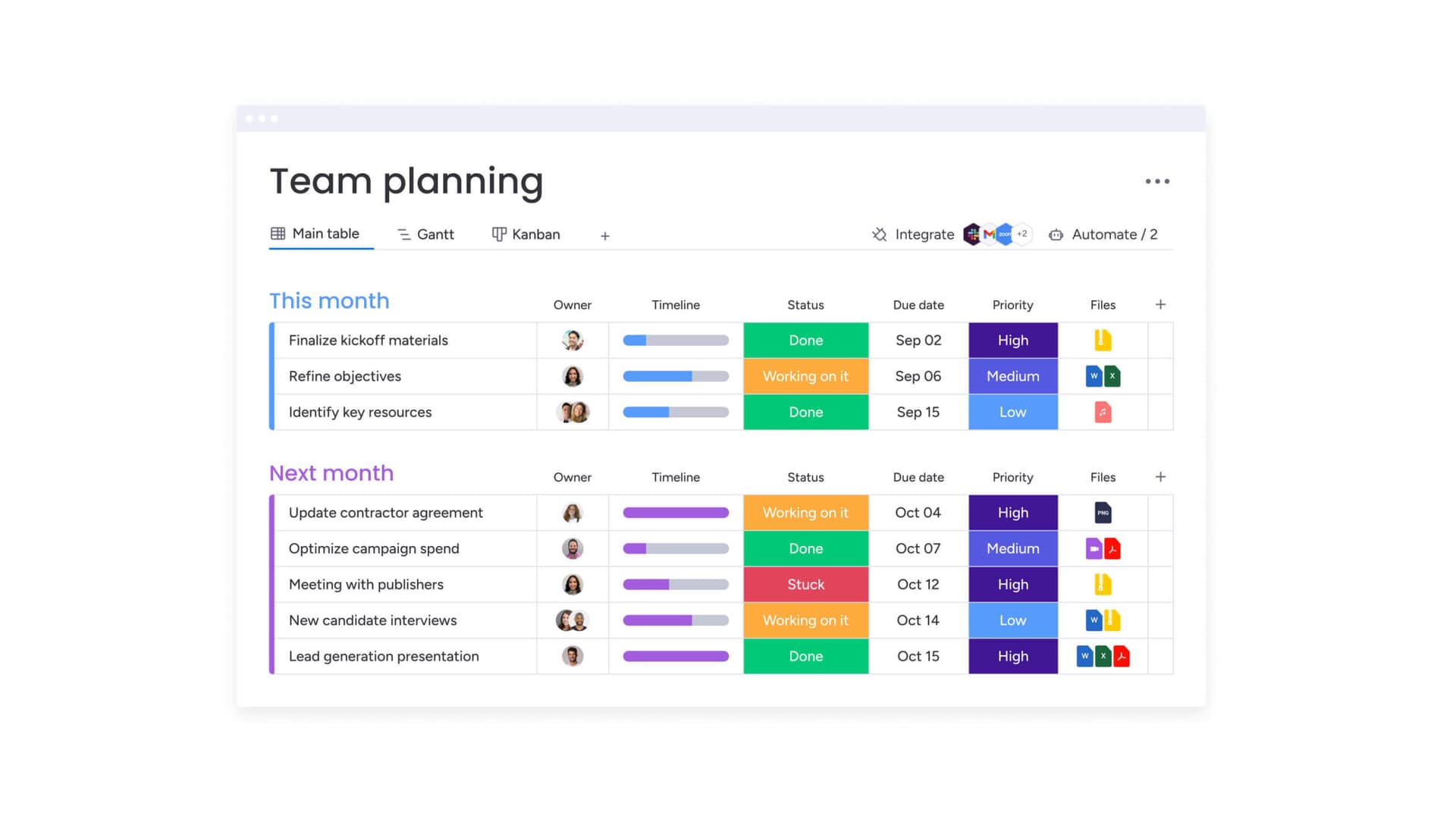
A career conversation gets a lot more credible when it is built on visible skills, milestones, and proof of impact instead of memory or vibes. That is the promise behind monday.com’s career-planning template with skill tracking, which combines goal-setting with competency assessment and tracks skill development over time.
For employees, the appeal is simple: the next step is easier to pursue when it is defined. For managers, the benefit is just as practical: the conversation shifts from broad encouragement to specific evidence, concrete gaps, and a visible record of progress.
Turn ambition into evidence
The template works because it forces a harder set of questions than a typical review cycle often does: What role are you aiming for, what skills does that role require, where are you already operating at that level, and what proof still needs to be gathered? That structure matters because promotion decisions are often easier to justify when an employee can point to a trail of results rather than asking a manager to reconstruct the last six months from memory.
monday.com’s career-roadmap guidance pushes the same idea further. Roadmap templates connect specific skills and milestones to upward or lateral movement, which is especially useful in a company where growth does not always mean one narrow ladder move. It can mean a bigger scope, a sideways move into a new function, or a deeper role in the same specialty.
That framing is a good fit for monday.com’s own careers messaging. The company says growth can mean deepening expertise, building new skills, or exploring a different path altogether, with access to learning programs, mentorship, and development opportunities. In other words, the company is not just talking about progression in theory. It is defining growth as something broader than title changes alone.
What the template should capture
A useful career plan is not a wish list. It is a working document that ties aspiration to observable proof. The strongest version of the template should make room for the role you want, the skills that role demands, the work you are already doing at that level, and the gaps that still need to be closed.
- The target role or next path
- The technical or business skills required
- The milestones that signal readiness
- The evidence you can point to now
- The proof you still need to collect
At monday.com, that distinction matters because the company works across a wide range of roles and work styles. Engineers may need to show technical scope, systems knowledge, and collaboration habits before moving up or sideways. Product managers may need to prove prioritization, cross-functional influence, and launch ownership. Sales professionals may need to show quota attainment, territory complexity, and a track record of coaching or mentoring others.
That is not just a people-ops exercise. It is a response to how monday.com defines impact in the first place.
Why it fits monday.com’s business
A Senior Product Manager role at monday.com is described as working closely with engineering, design, marketing, sales, and customer success, while driving measurable business impact through adoption, retention, and revenue growth. That is a useful lens for career planning because it shows how much the company values cross-functional execution and visible results.
The scale of the business makes that even more important. monday.com said in a 2025 earnings release that it surpassed $1 billion in annual recurring revenue. It also reported $972.0 million in fiscal 2024 revenue, up 33% year over year, and said it served about 245,000 customers across more than 200 industries and in more than 200 countries and territories. The company filed its 2024 Annual Report on Form 20-F with the Securities and Exchange Commission on March 17, 2025.
In a company moving at that pace, career paths can get blurry fast. Product priorities shift, teams expand, and expectations change as the platform grows. A template that records milestones and skills is not just a personal planning tool. It is a way to keep advancement legible inside a business where the work itself is constantly changing.
How it helps managers give better feedback
The most useful career plans do not only help employees advocate for themselves. They also make managers better at coaching. Instead of saying a person should keep developing, a manager can point to a concrete gap, a milestone, and the kind of evidence that would demonstrate readiness for the next step.
That matters because subjectivity is one of the quiet forces that can distort performance management. SHRM has argued that clearly defined career paths are important for workforce planning and retention. Deloitte has warned that bias can undermine objectivity and consistency in performance decisions. McKinsey has linked internal mobility to retention and employee growth, and Deloitte has pointed to one internal-mobility case study that saw nearly a 30 percent increase in employee engagement after changes in this area.
The lesson is not that templates solve everything. It is that they reduce the room for guesswork. When employees and managers can see the same evidence, feedback becomes sharper and promotions become easier to defend.
Why this matters for retention and trust
This is where monday.com’s template becomes more than a productivity tool. The company’s own career-roadmap guidance notes that when advancement is not visible, ambition can stall, engagement can drop, and even loyal employees may start looking elsewhere. That is a blunt but accurate description of how career ambiguity works in real workplaces.
Templates like this do not remove manager discretion, but they can make it more accountable. They push the conversation away from memory and toward measurable progress, which is especially important in a company with a broad product surface, a global customer base, and roles that depend on collaboration across engineering, design, marketing, sales, and customer success. For employees, that means better odds of building a case for growth before review season becomes a scramble. For managers, it means fewer vague judgments and a clearer standard for who is ready to move.
In a business as large and fast-moving as monday.com, the people who advance are often the ones who can make their impact visible early. The strongest career plans do exactly that: they turn ambition into a record that can be seen, discussed, and acted on.
This article was produced by Prism’s automated news system from verified source data, official records, and press releases, then run through automated quality and moderation checks before publishing. The system is built and supervised by the people who set the standards it runs under. Read our full AI policy.
Know something we missed? Have a correction or additional information?
Submit a Tip