Monday.com Guide Shows How Better Status Reports Cut Update Chaos
Better status reports do more than tidy up updates. They cut the chase, the follow-up pings, and the quiet anxiety that comes from not knowing what is actually moving.

The hidden cost of “What’s the status?”
The most expensive question in a modern team is often the smallest one: what’s the status? At monday.com, the answer is increasingly framed as a visibility problem, not a documentation problem. When teams have to dig through emails, spreadsheets, and chat threads just to reconstruct progress, every quick check turns into a hidden tax on focus.

That is why the company’s status-report guidance lands as more than a how-to. It argues that a good status report should compress the right information into one view: where the project stands, what changed, what is blocked, and what needs attention next. In practice, that means fewer managerial chase-ups, fewer duplicate meetings, and less of the low-grade anxiety that builds when nobody trusts the thread they are reading.
What a real status report has to do
The monday.com framework is blunt about what stakeholders need: a snapshot of project health, progress, risks, resource allocation, and next steps. That list matters because most reporting failures are not about missing data. They are about scattered data that forces people to do the synthesis themselves.
The company’s support materials reinforce the same point. Reporting tools are meant to help teams track progress and analyze data with dashboards and views, not leave everyone scrolling across disconnected systems to guess what changed. A useful status report therefore does not try to say everything; it says the right things clearly enough that a manager, a peer, or an executive can act without a second round of clarification.
Why bad visibility becomes a daily work friction
This is where the story stops being abstract. In a hybrid or distributed team, people cannot rely on overheard conversations, desk-side interruptions, or hallway updates to stay aligned. monday.com’s remote-collaboration guidance says successful remote work depends on communication protocols and digital workspaces, which is another way of saying that visibility has to be designed, not hoped for.
That matters because every missing update creates a chain reaction. A product lead pings engineering for the latest build status, sales asks customer success for account context, and leadership asks for a summary that nobody wants to rewrite. The cost is not just time. It is cognitive drag, and it shows up everywhere from delayed decisions to a team’s reluctance to start the next task until the last one feels formally closed.
Inside monday.com, the lesson cuts both ways
For monday.com employees, this is not just customer advice. The company itself runs on cross-functional coordination, which makes clean reporting an internal operating principle as much as a market message. Product teams need quick visibility into delivery status, customer success needs current context on account health, and leadership needs a summary layer that does not force people to manually rebuild the story.
That is also where the company’s culture messaging lines up with the product. monday.com support says the company is all about “transparency and communication,” and its team workflows reflect that with the ability to notify, update, assign tasks, and chat in one place. If that sounds operationally mundane, that is the point: the less time teams spend translating status between tools, the more time they spend actually moving work forward.
Why this matters even more as the company scales
The scale of the customer base makes the visibility problem more valuable, not less. monday.com says more than 250,000 customers worldwide use the platform, and that breadth means the company is selling into organizations where update chaos is not a nuisance, it is a cost center. As accounts get larger, the penalty for weak reporting gets sharper because more people depend on the same truth at the same time.
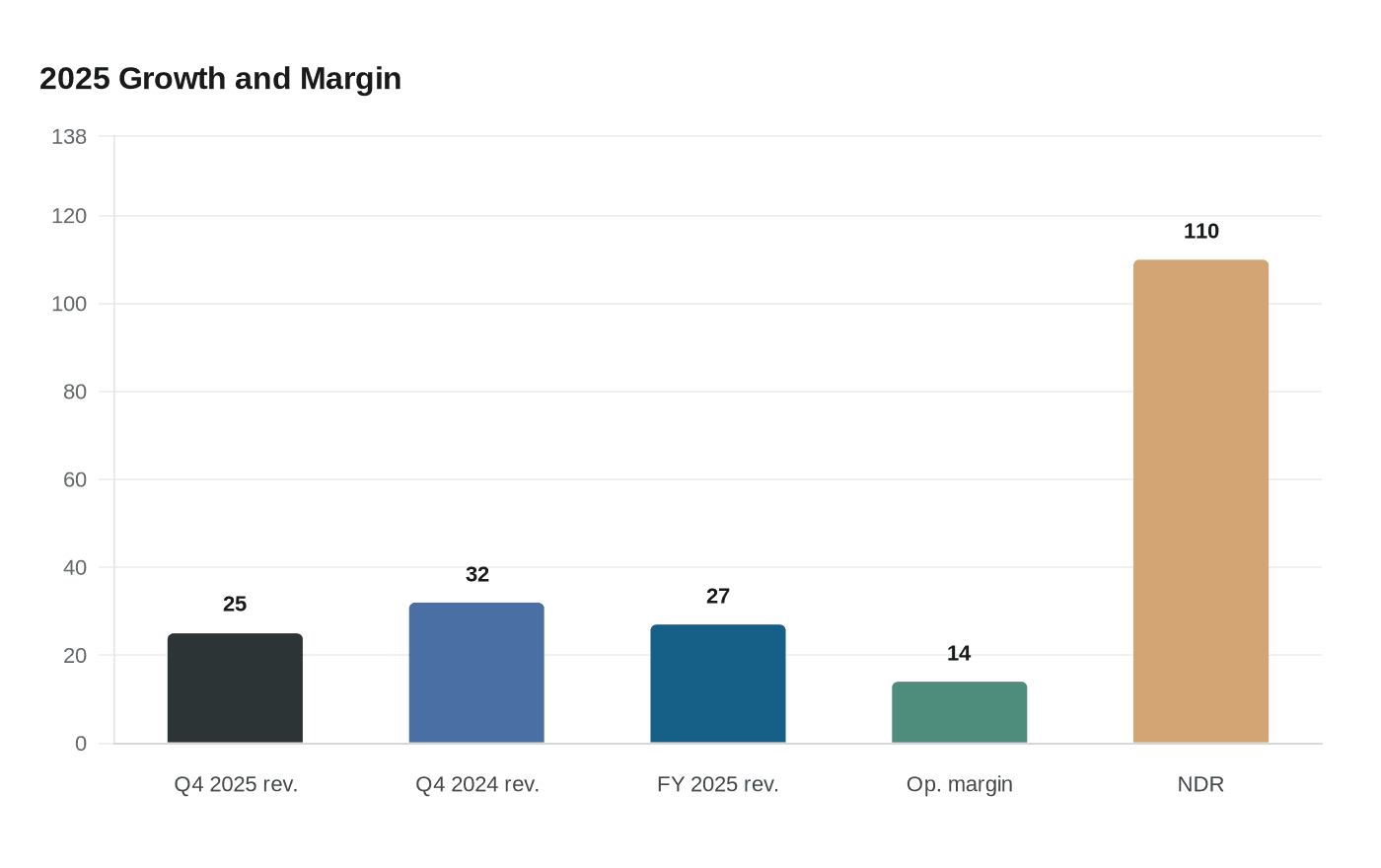
The revenue mix tells a similar story. monday.com reported fourth-quarter 2025 revenue of $333.9 million, 27% revenue growth for fiscal 2025, and said customers with more than $50,000 in ARR represented 41% of total ARR. That is the profile of a company moving deeper into larger, more complex customers, where standardized reporting is less about neat project hygiene and more about keeping enterprise workflows from fragmenting.
The product argument is really an operating argument
monday.com now describes itself as an “AI work platform,” language that suggests a broader ambition than task tracking. The company says it helps teams manage, orchestrate, and do work, and status reporting fits neatly inside that promise because AI is only useful if the underlying work system is legible. If the inputs are messy, the automation just moves confusion faster.
That is also why the reporting ecosystem matters. monday.com points customers toward reporting dashboards, templates, and automated workflows, which turns status into a repeatable system rather than a one-off document. In other words, the company is not just selling a place to log work. It is selling a way to make work easier to explain, easier to trust, and easier to hand off.
How teams can turn status reporting into less noise and more signal
The most effective reporting habits are often the simplest. A good weekly or daily status update should be consistent, concise, and obvious to skim. monday.com’s own template guidance says consistent design helps reports stay clear, scannable, on schedule, and trustworthy, which is exactly what busy teams need when they are trying to avoid another round of “just checking in” messages.
- what is done
- what changed since the last update
- what is blocked
- what needs a decision
- what comes next
A practical reporting cadence usually includes a few basics:
That structure works because it answers the questions people actually ask. It reduces managerial chasing, cuts meeting overload, and gives distributed teams a shared source of truth that does not depend on who happened to be online at the same moment.
The larger lesson for monday.com is that visibility is not a side benefit of work management. It is the difference between a team that spends its day coordinating around work and a team that spends its day doing it.
Know something we missed? Have a correction or additional information?
Submit a Tip