Monday.com issue log template helps teams track and clear blockers
When blockers live in Slack and memory, deadlines slip. monday.com’s issue log template turns that drift into an owned, visible workflow.

The problem is not a lack of awareness
A project usually does not slip because nobody spotted the blocker. It slips because the blocker sat in Slack, got mentioned in a meeting, and then vanished into memory without a clear owner. monday.com’s issue log template is built for that exact failure mode: take the problem out of passing conversation, assign it, track it, and keep moving until it is closed.
That matters in a company culture where engineers, product managers, and support teams are all touching the same customer reality. A hidden bug, a dependency that slides, or a customer escalation that never gets formally recorded can ripple across several teams before anyone agrees who is responsible for the next step. The template is a simple answer to a very expensive habit, which is treating blockers as if awareness alone will solve them.
What the issue log is supposed to do
The point of an issue log is not to create more paperwork. It is to capture the problem in one place, identify who owns it, prioritize what matters most, and keep the team honest about resolution. In practice, that means every issue has a home, a status, and a next action, instead of drifting between standups, message threads, and individual inboxes.
monday.com positions the template as a practical download in Excel or Google Sheets, which is useful because many teams still start with a lightweight tracker before they move to a more connected workflow. The structure is what gives it value. Once people know where to record blockers, the log becomes the team’s running memory, not just a spreadsheet someone opens when the pressure is already high.
A disciplined issue log usually needs a few basics:
- a short description of the blocker
- an owner responsible for follow-up
- a priority or severity level
- a target date or expected resolution window
- a status field that shows whether the issue is open, in progress, escalated, or closed
Those fields sound simple, but they change behavior. They turn vague concern into an actionable workflow, which is the difference between a team that talks about delays and a team that clears them.
Why this fits monday.com’s product strategy
The issue log also shows how monday.com wants customers to think about monday work management. It is not just a task board for assignments and checklists. It is the layer where blockers become visible, patterns are identified, and help gets routed to the right team before the problem spreads.
That logic fits the company’s broader template strategy. monday.com says its template center is a library of ready-made templates that can include single elements like docs, boards, WorkForms, and dashboards, as well as bundled setups with multiple connected instances, pre-set automations, views, and more. Support documentation also says templates can be added to a workspace and organized into folders, which reinforces the idea that teams should not have to invent their own status language every time they start a project.
For a scaling SaaS company, that shared language matters. If one team calls something a blocker, another calls it a risk, and a third calls it an incident, nobody gets a clean picture of what actually needs action. A single issue log format gives monday.com a way to argue for operational consistency without pretending every team works the same way.

From issue tracking to incident response
The clearest extension of the issue log is incident management. monday.com offers an Incident Management Template that is designed to keep track of production incidents, assign team members to each action item, and monitor progress at every stage. That is a more formal version of the same discipline: do not rely on memory when the work is urgent and cross-functional.
The company’s service workflows push that idea further. In monday service, teams can route tricky tickets to a dedicated Incidents board and update customer service with an estimated time to resolution. That is not just an internal efficiency play. It is a trust move, because customers are less likely to feel stranded when service teams can see the issue, route it, and communicate a credible timeline.
monday dev treats incidents as something to document after they are resolved, with a focus on key details, response metrics, and dashboards for trend analysis. That is where the culture-of-accountability point gets sharper. A well-run incident log is not only about closing today’s problem. It is also about understanding why the same kind of problem keeps appearing, and whether the process around it needs to change.
Why blockers become a business issue
For employees inside monday.com, this is familiar because blockers are rarely isolated. A support escalation can become a product bug, a bug can become a dependency issue, and a dependency issue can become a sales promise that needs to be renegotiated. Once the company gets large enough, the cost of informal coordination goes up fast, and the penalty for missing an issue is no longer just a late task, but confusion across teams.
That is where shared dashboards and shared categories matter. When every blocker sits in the same operational system, leaders can see which projects are repeatedly slowed by the same kind of issue, who is overloaded, and where the organization keeps losing time. The issue log becomes a source of truth, but more importantly, it becomes an escalation path.
The scale behind a simple template
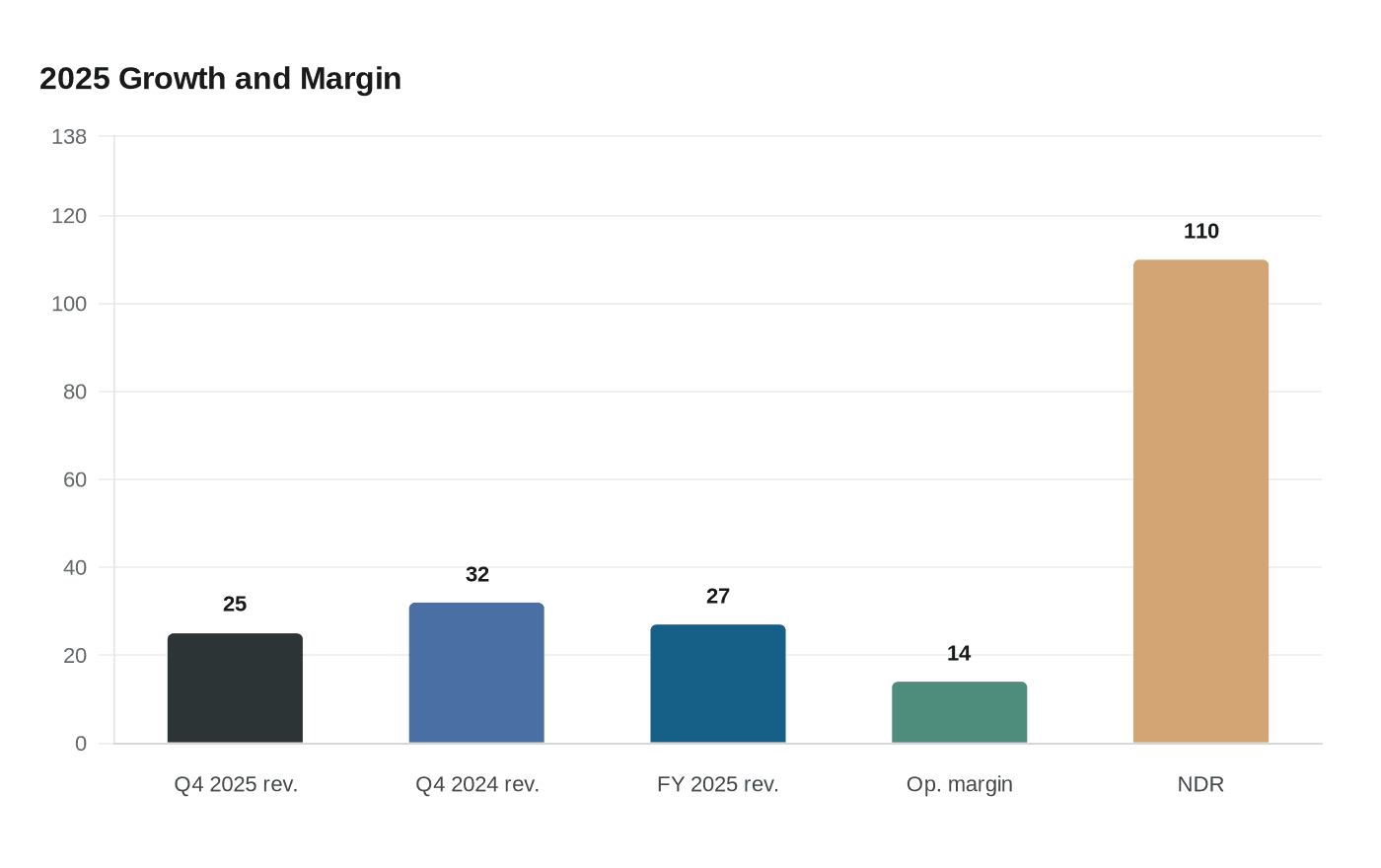
The appeal of a basic issue log is easier to understand when you look at monday.com’s scale. As of December 31, 2025, the company said it had more than 250,000 customers, 4,281 customers with more than $50,000 in annual recurring revenue, and 3,155 employees. In its fourth-quarter and fiscal-year 2025 results, monday.com said revenue grew 27 percent and non-GAAP operating margin reached 14 percent. The company also said it hit $1 billion in annual recurring revenue in 2024.
Those numbers help explain why a template story matters so much. At monday.com’s size, the question is no longer whether teams can spot problems. It is whether the company can build repeatable systems that make the right problems visible early, assign ownership fast, and preserve trust across product, service, and sales. An issue log is a small tool, but in a business this scaled, small tools are often what keep complexity from turning into drift.
The real value of the template is not that it records blockers. It is that it changes the social contract around them. Once a problem is written down, owned, and tracked, it stops being everyone’s vague concern and becomes someone’s job to move it forward.
Know something we missed? Have a correction or additional information?
Submit a Tip