Monday.com guide shows how employee lifecycle management improves culture
At monday.com, the employee lifecycle is treated like one system, not five HR handoffs. That shift can make culture feel more coherent at scale.
At monday.com, the strongest version of culture may be the one people barely notice because it works smoothly. A new hire gets the right context, a manager knows when to step in, a transfer does not feel like a reset, and an exit does not erase hard-won knowledge. That is the promise of employee lifecycle management, and it matters most in a company that scales fast, spans time zones, and relies on managers to keep daily work from feeling fragmented.
Why the lifecycle matters
Employee lifecycle management treats the worker experience as one connected journey, from the first touchpoint with the employer brand through onboarding, engagement, development, and offboarding. That approach is especially useful at monday.com because the culture is often clearest in the moments between milestones: the first week on the job, the first promotion conversation, the first move across teams, and the last handoff before someone leaves.
When those moments are inconsistent, a company can feel larger and more disconnected than it really is. When they are intentional, the experience becomes easier to trust. The practical advantage is simple: HR and managers can see where people get stuck, where process breaks down, and where automation can remove friction without stripping out the human judgment that makes workplace decisions feel fair.
How monday.com maps the journey
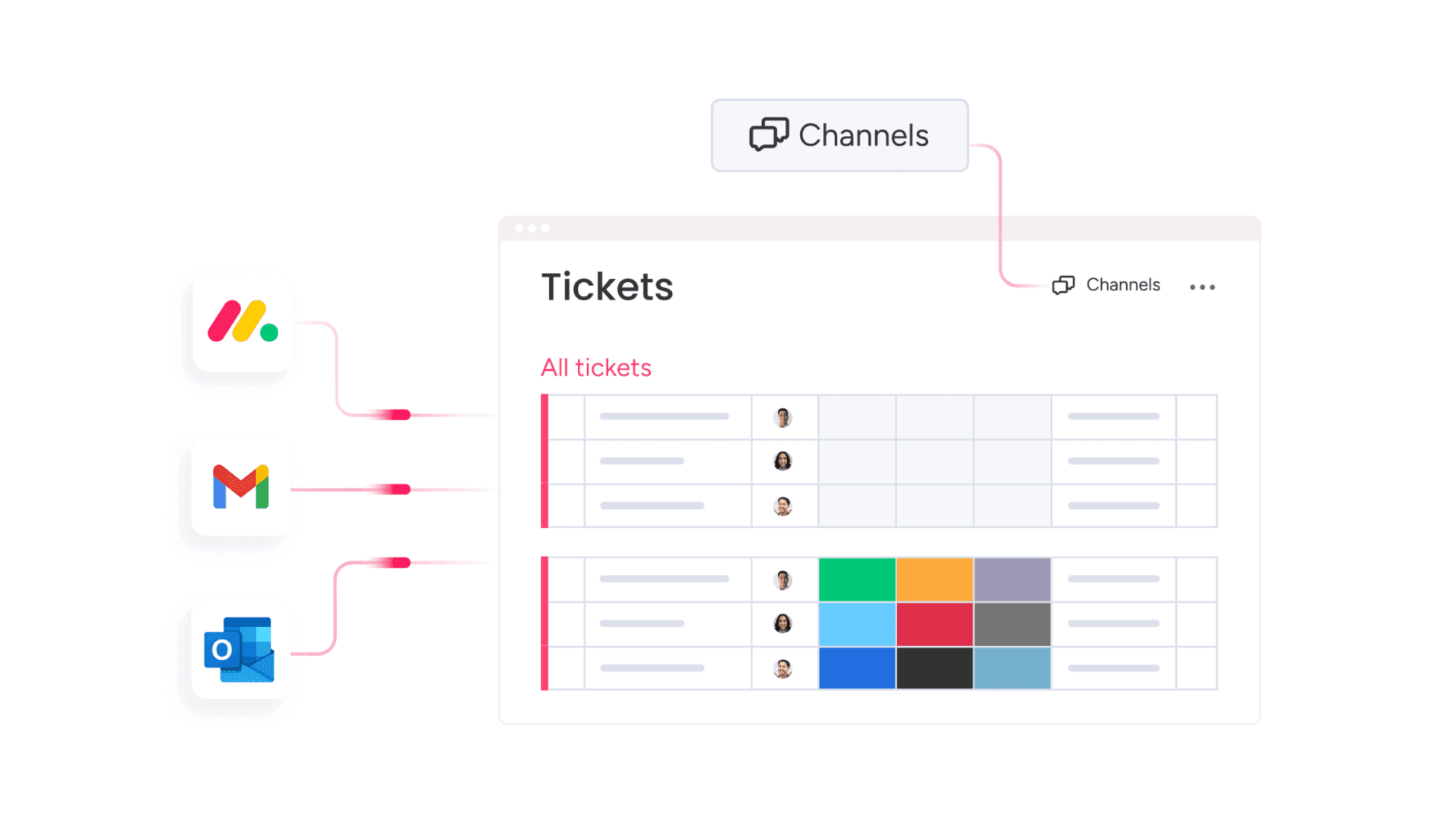
monday.com’s own HR management solution is built around that idea of continuity. The company says the system can streamline recruitment, employee onboarding and offboarding, administrative processes, personal development, and learning management. That makes the lifecycle visible in one place rather than spread across separate tools, emails, and ad hoc spreadsheets.
Its HR template library reinforces the same structure. The available templates include recruitment and onboarding, employee engagement surveys, and a new employee onboarding template. monday.com also offers an employee lifecycle packages template designed to help HR managers manage employee packages in one visual place and gauge employee wellbeing. In practice, that means the system is not just tracking tasks. It is trying to preserve the information that makes each handoff make sense.
Where fragmentation hurts most
The biggest cost of a broken lifecycle is not just extra admin work. It is the quiet loss of context. Good onboarding preserves the reasoning behind decisions, the unwritten norms of a team, and the expectations that keep new employees from spending months guessing. Good offboarding preserves institutional memory, so a departure does not force the next team to relearn the same lessons.
That point lands hard in a fast-moving SaaS company. Engineers, product managers, and sales teams often work in overlapping but very different rhythms, and if each group develops its own version of onboarding or manager support, the company starts to feel uneven. One team may get a thoughtful ramp plan, another may get a calendar invite and a folder of links. Lifecycle management gives leaders a way to standardize the basics so they can spend more energy on the moments that actually require empathy and judgment.
Why scale makes consistency harder
monday.com’s own growth makes the case for a connected system. The company was incorporated in Israel and commenced operations in 2012, and a 2021 SEC filing said headcount rose from 177 employees on January 1, 2019 to 799 employees on March 31, 2021. That kind of expansion changes the management problem. Once a company gets that much bigger that fast, culture is no longer maintained by proximity alone.
The company also has a broad geographic footprint, with teams in Tel Aviv, New York, San Francisco, Miami, Chicago, London, Warsaw, Sydney, São Paulo, and Tokyo. It opened a 110,000-square-foot North American headquarters in New York City in 2022 and said the move tripled its prior New York footprint. In 2023, monday.com announced a hybrid regional structure for North America effective September 1, 2023. Together, those moves point to a company that is actively reorganizing itself around distributed work, which is exactly where lifecycle consistency becomes harder to maintain and more valuable to get right.
What the company’s own platform signals
There is an important internal logic to monday.com pushing employee lifecycle management. The company says more than 250,000 customers worldwide use its platform, and earlier materials described a customer base across more than 200 industries in over 200 countries and territories. That scale helps explain why the company thinks about HR as a systems problem, not a pile of disconnected tasks.
The same work-OS mindset that helps customers coordinate projects, approvals, and workflows also applies to people operations. In a company with that many customers and that broad a footprint, lifecycle management becomes less about paperwork and more about keeping knowledge intact, reducing manager drift, and making the employee experience feel coherent across regions. For a platform company, the message is straightforward: the internal operating model should match the discipline the product promises externally.
What it means for day-to-day work
For managers, the value is cleaner transitions and less guesswork. A structured lifecycle makes it easier to support a new hire, recognize a strong performer, handle a transfer, or manage a departure without reinventing the process every time. For employees, it can reduce the feeling that each stage of work is governed by a different company with different rules.
That matters even more when the company is still moving at speed. In February 2026, monday.com reported fourth quarter 2025 revenue of $333.9 million and full-year 2025 revenue growth of 27%. In March 2026, it filed its 2025 Annual Report on Form 20-F. Growth at that pace can easily widen the gap between what leaders think the experience is and what employees actually feel. Lifecycle management is one way to close that gap before it turns into turnover, confusion, or a culture that looks unified from the outside but feels scattered from within.
The clearest lesson is that employee experience is not built in one moment. It is built in the handoffs, and the companies that manage those handoffs well are the ones that keep trust compounding as they scale.
This article was produced by Prism’s automated news system from verified source data, official records, and press releases, then run through automated quality and moderation checks before publishing. The system is built and supervised by the people who set the standards it runs under. Read our full AI policy.
Know something we missed? Have a correction or additional information?
Submit a Tip