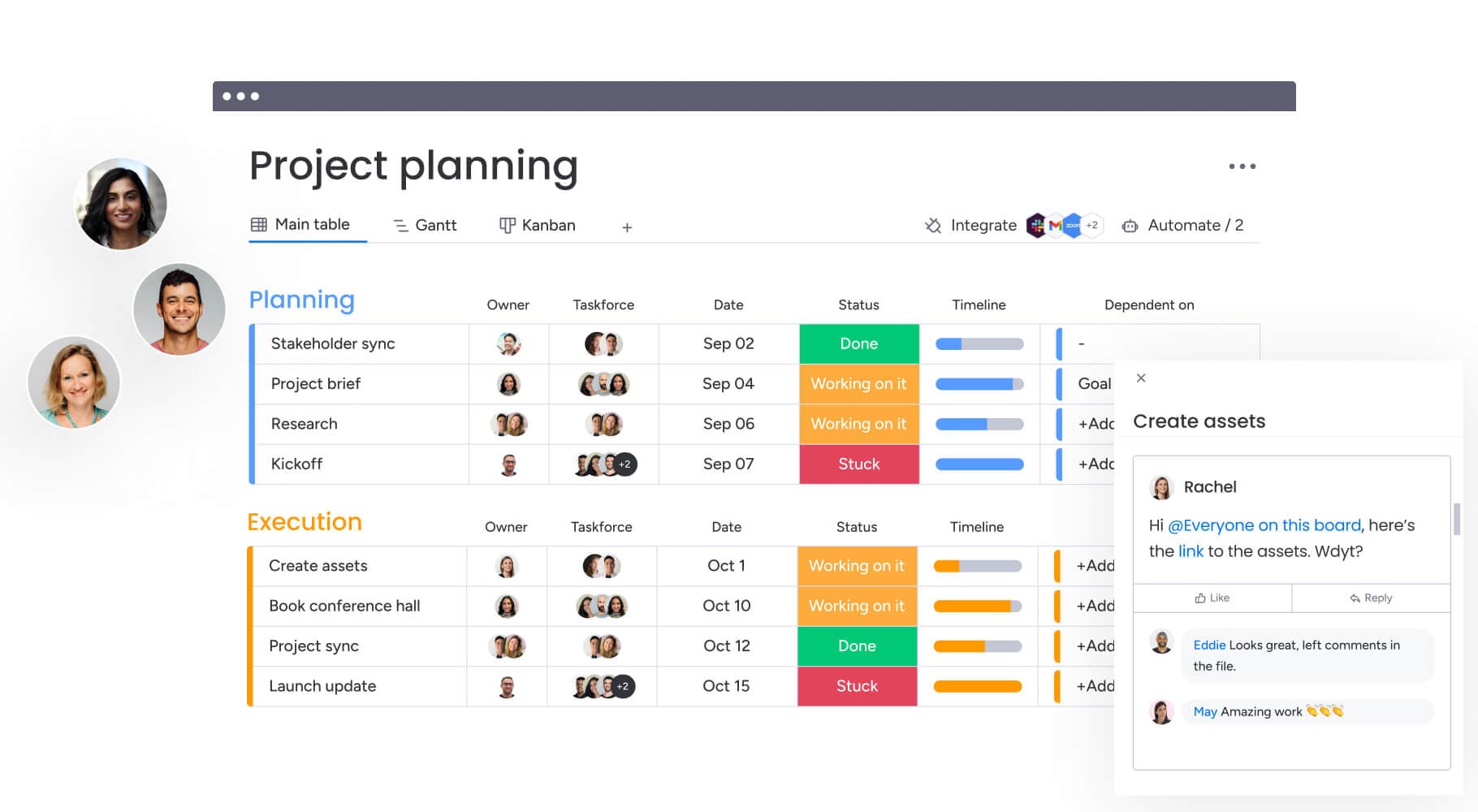
Monday.com guide shows how project budgets keep work grounded in reality
Project budgets are the reality check that keeps ambitious work shippable, and monday.com’s guide turns financial visibility into a delivery advantage.

The fastest way to turn a bold plan into a delivered one is to make the budget visible. monday.com’s project budget guide treats money as a working part of execution, not a spreadsheet to revisit after the fact, and that framing fits a company serving more than 250,000 customers worldwide on an AI work platform.
At monday.com’s scale, budgeting is not a side exercise. The company reported fiscal 2025 revenue of $1.232 billion, with fourth-quarter revenue of $333.9 million, up 25% year over year, and it filed its 2024 annual report with the SEC on March 17, 2025 for the year ended December 31, 2024. That kind of public-company maturity changes the conversation: project budgets stop being a paperwork ritual and become a way to decide what can actually ship, what needs more people, and what should wait.
Why budget visibility changes the work
A project budget is a financial roadmap that covers the full cost of a project from start to finish. That means labor, materials, equipment, and services, not just the most obvious line items. When the budget is clear, scope decisions get easier, staffing choices become sharper, and timing is less likely to drift into wishful thinking.
That matters inside monday.com because the same logic applies to product launches, internal programs, and customer implementations. If a PM can see the financial shape of a rollout early, the team can decide whether to compress the timeline, add headcount, or reduce scope before the project has already started consuming time and trust. In practice, budget visibility is what keeps a plan from turning into a wish list.
The seven moves that make a budget usable
The guide’s value is in its sequence. It starts with defining the scope, because a budget without boundaries is just a guess dressed up as planning. Once the scope is clear, the next move is identifying the resources needed to deliver it, which makes the staffing and tooling implications visible before work begins.

From there, the process turns to estimating costs, then adding contingencies. Those two steps matter because no plan survives first contact with reality without some room for error, especially in software projects where dependencies can multiply quickly. Consolidating the budget comes next, so the full picture sits in one place instead of scattered across team-level assumptions, and then stakeholder approval turns the plan into a shared commitment rather than a private forecast.
The final step is the one many teams skip: monitor expenses as work progresses. That is what turns budgeting into a living control system rather than a one-time document. A budget that is checked against actual spending during the project changes behavior in real time, which is exactly when it still has a chance to save the outcome.
Where projects go off the rails
The guide calls out three common failure modes: scope creep, inaccurate estimates, and communication gaps. Those are not abstract management buzzwords. PMI’s Pulse of the Profession 2018 found that 52% of projects completed in the prior 12 months experienced scope creep or uncontrolled changes, up from 43% five years earlier, which shows how persistent the problem is across project environments.
The fix is not just tougher budgeting language. The guide points to change control, historical data, and transparent stakeholder engagement, and outside research backs that up. Harvard Business Review has argued that controlling scope creep requires sharing project details and financials with the team at least weekly, while PMI has said overruns can come from deficient cost-control systems, diluted responsibility, and the loss of project knowledge. Put differently, budget discipline is a communication habit as much as a finance process.
That matters because the most expensive project mistake is often not a single big decision. It is a slow accumulation of small ones, like approving one more feature, adding one more dependency, or assuming one more week will be enough. Once that pattern starts, the budget stops being a guide and becomes a history of decisions nobody noticed were compounding.
What this means for PMs, engineers, and sales
For project managers, the lesson is direct: a budget keeps launches and implementations grounded in reality. It gives you a way to talk about tradeoffs before they become crises, and it makes it easier to explain why a deadline, feature set, or rollout plan needs to change. The best PMs are rarely the ones who promise the most; they are the ones who can connect financial discipline to successful delivery.
For engineers, the guide is a reminder that technical decisions have downstream cost implications. A broader architecture, a more complex integration, or a heavier infrastructure choice can change staffing needs, support load, and release timing long after the original ticket is closed. Budget awareness helps engineering teams evaluate not just whether something works, but whether it is sustainable within the project’s real constraints.
For sales teams, the same logic shows up in implementation conversations and enterprise deals. Customer buyers want confidence that a platform can handle expected and unexpected costs, especially when work spans multiple teams or departments. A clear budget framework gives sales a better way to talk about adoption, rollout risk, and the operational discipline that comes with buying software meant to run real work.
The career edge belongs to the person who can connect money and delivery
Budgeting is often sold as restraint, but the more useful interpretation is judgment. The point is not to spend less for its own sake; it is to surface tradeoffs early enough that the team can act on them. That is why the most valuable project lead is often the one who can read the financial shape of a plan and still keep it moving.
In a company like monday.com, where product innovation and work management are the business, that skill is more than project hygiene. It is part of the operating culture. Teams that can match ambition with budget visibility are the teams most likely to finish on time, stay within boundaries that matter to the business, and build trust while they do it.
Know something we missed? Have a correction or additional information?
Submit a Tip