Monday.com onboarding guides users to value faster, reduces churn
Onboarding is where monday.com either becomes daily infrastructure or slips into shelfware. The company’s own tools, training, and metrics show why the first 30 days decide retention.
Onboarding is the first workflow test
The real job of onboarding is not to greet users, it is to get a team to its first repeatable win. HubSpot frames onboarding as the process companies use to help new users adopt software at the team or company level, and Wyzowl says 86% of people are more likely to stay loyal to a business that invests in onboarding content. That makes onboarding part of the product experience itself, not a nice-to-have layer around it.
For monday.com, that matters because the platform is sold into real operating rhythms, not one-off tasks. A board, a dashboard, or an automation only creates value if it lands inside a recurring workflow, and the first signal of success is whether people keep coming back without extra hand-holding from customer success. The fastest path to loyalty is the one that gets users from setup to actual work as quickly as possible.
Start with the first useful outcome
The best onboarding does not dump every feature on new users at once. HubSpot’s warning is simple: overwhelming people with complexity before they understand the basics slows adoption and raises the odds of churn. For monday.com, the first useful outcome might be creating a board, inviting teammates, connecting an existing process, or setting up a workflow that replaces scattered status updates.
That is why the most useful onboarding lens is the first 30 days. In that window, product teams should watch for the actions that show a workflow has been embedded, not just explored. Are teams returning to the board unprompted, adding owners, using automations, and checking dashboards in meetings, or are they still stuck in setup, waiting on one more explanation from customer-facing staff?
The answer matters because onboarding is a cross-functional responsibility. Product managers have to define activation milestones, engineers have to reduce friction and keep the experience reliable, and customer-facing teams have to decide where a checklist, a role-specific guide, or a follow-up call will actually move the user forward. Good onboarding cuts down the handoffs between product, customer success, and end users, which is often where momentum is lost.
monday.com has built onboarding into the platform itself
monday.com does not treat onboarding as a separate training program bolted onto the software. Its Template Center is a library of templates for boards, docs, WorkForms, dashboards, and bundled workflow elements, often with pre-set automations and views, so teams can start from structure instead of a blank page. That design choice reflects a clear product belief: the sooner users can see a real workflow, the sooner they understand the platform’s value.
The company has also built a formal learning stack around adoption. monday.com offers an official course called “Onboarding essentials: Get started with monday.com,” and its Learning Center includes knowledge-base articles, video tutorials, webinars, training, and certifications. That signals something important for a SaaS company at monday.com’s scale: education is not separate from product usage, it is part of the adoption system.
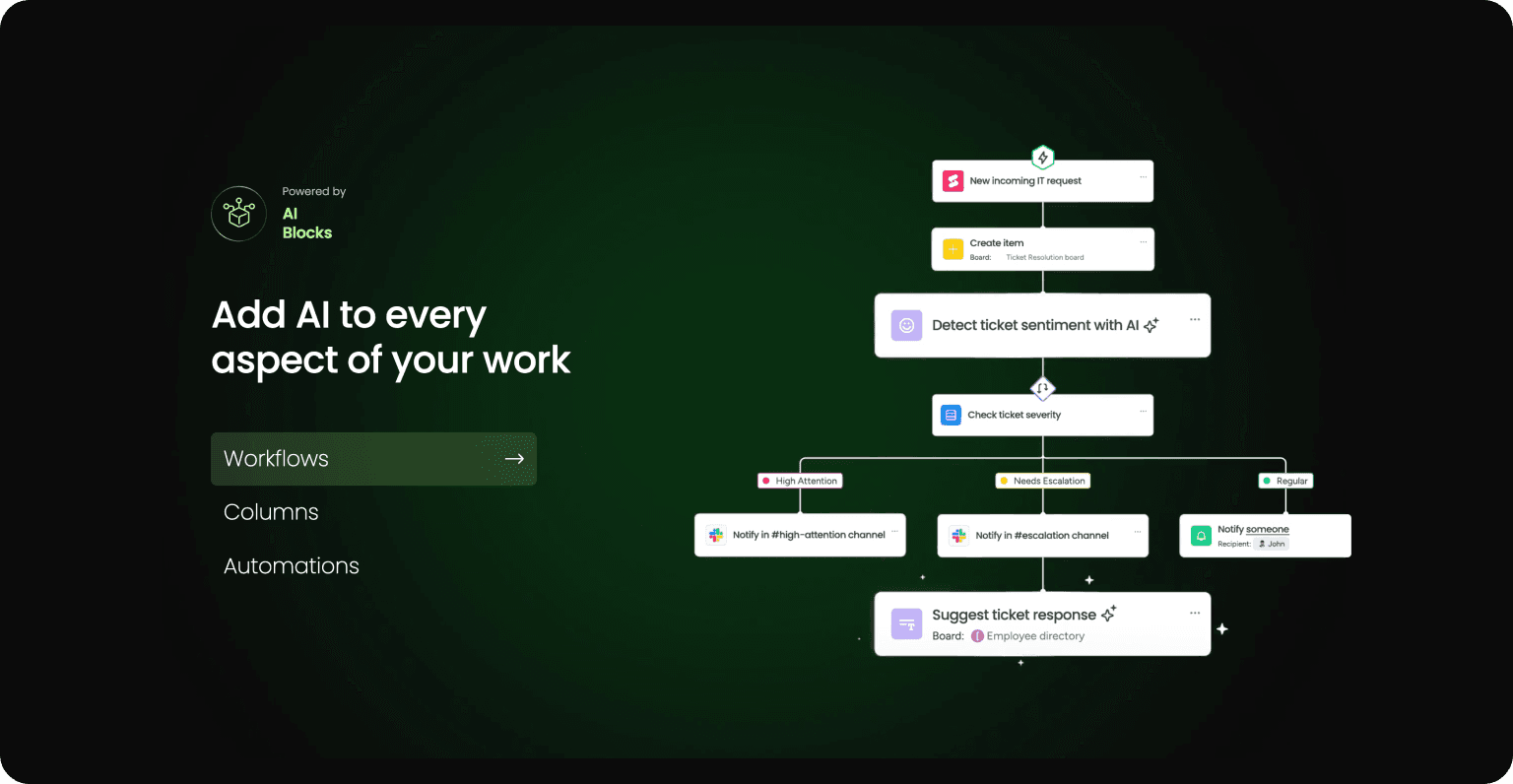
That approach fits the company’s broader workflow model. A template plus an onboarding course plus a support article can do more than a polished welcome tour ever will, because it helps users move from curiosity to execution. In a product like monday.com, the point is not to admire the interface. The point is to make the team’s work start flowing through it.
Customer onboarding becomes a measurable workflow
The clearest example is monday.com’s Customer Onboarding template. The template is designed to manage client onboarding from the kick-off meeting through implementation and training, while also tracking onboarding progress and the time invested. In other words, the workflow does not just handle tasks, it tracks the adoption process itself.
monday.com’s own client onboarding materials make the business case even sharper. The company says the use case can deliver 65% increased customer satisfaction and 74% improved customer retention, with implementation time listed at 1 to 5 hours. Those are company-published figures, but they show how monday.com thinks about onboarding: as an operational system that can be measured, not just a service motion that feels helpful.
That is especially relevant for the people building and selling the product. Sales can close a deal, but if the first implementation is messy, the account begins with drag instead of momentum. Customer success can rescue a shaky start, but if the workflow is designed well from the beginning, fewer issues need rescuing in the first place.
Why the first 30 days matter so much at monday.com
The scale numbers explain why onboarding is strategically central. monday.com says more than 250,000 customers worldwide use the platform, and its investor relations materials describe it as an AI work platform used by more than 250,000 customers globally. In FY2024, the company reported 112% net dollar retention, along with $268.0 million in fourth-quarter revenue, up 32% year over year. In FY2025, it reported $1.232 billion in revenue, up 27%, and 110% net dollar retention.
Those figures tell you where the growth engine lives. When a company is already producing that level of retention and expansion, onboarding is not a small support function. It is one of the earliest determinants of whether a new account becomes a stable customer, then a larger one. That is also why monday.com’s third-quarter 2024 update stood out: the company said its second-largest customer more than doubled seat count to 60,000, and it surpassed $1 billion in annual recurring revenue.
For employees, the lesson is practical. Engineers should think about where users stall before they ever hit value, whether that is setup friction, confusing permissions, or unreliable automations. Product managers should design activation around a narrow set of repeatable behaviors that show a team has embedded monday.com into weekly work. Sales and customer-facing teams should stop treating onboarding like a handoff after the deal and start treating it like the opening phase of expansion.
What good onboarding actually looks like
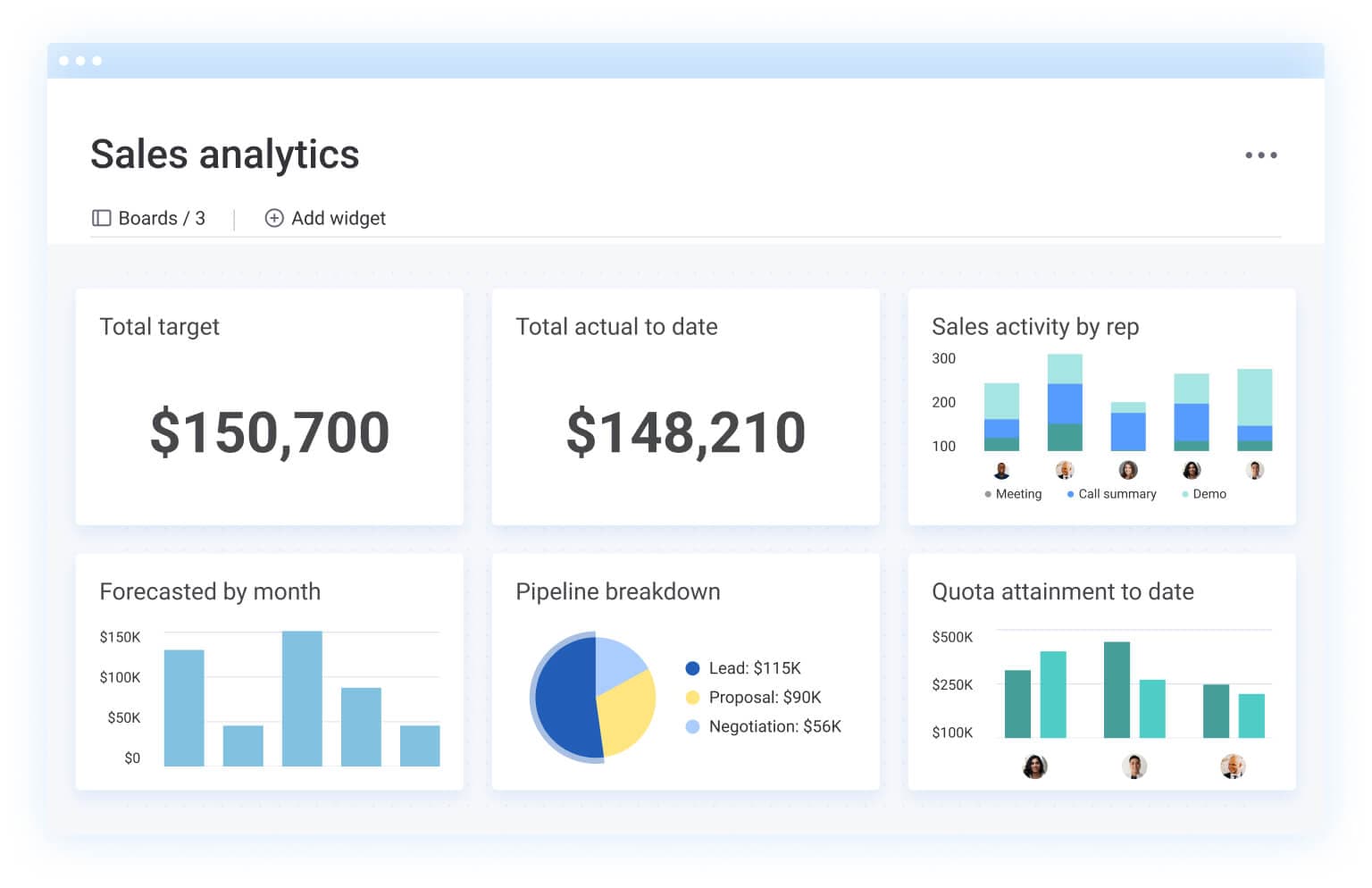
In the best version of monday.com onboarding, the customer does not feel onboarded. They feel operational. The board is no longer a demo artifact, the automation has replaced a manual reminder, the dashboard appears in the meeting rhythm, and the team no longer needs a separate explanation of how to use the product.
That is the standard the company seems to be building toward with its templates, learning center, and customer onboarding workflow. The practical goal is not a warmer welcome. It is a faster path to value, fewer support loops, and a cleaner transition from promise sold to product used. For monday.com, that is where churn is reduced, retention is strengthened, and expansion starts to look inevitable.
Know something we missed? Have a correction or additional information?
Submit a Tip