Monday.com roadmap guide reframes product plans as cross-functional strategy
A roadmap at monday.com is a cross-functional contract: it sets sequence, tradeoffs, and delivery so product, sales, and engineering move as one.
What a roadmap is really for
A roadmap only earns trust when it tells every team what will ship, what will slip, and why. At monday.com, that matters because the company is no longer just planning features for a work-OS, it is connecting product strategy to an AI work platform story that customers, sales teams, and investors all need to understand.

What a roadmap does inside monday.com
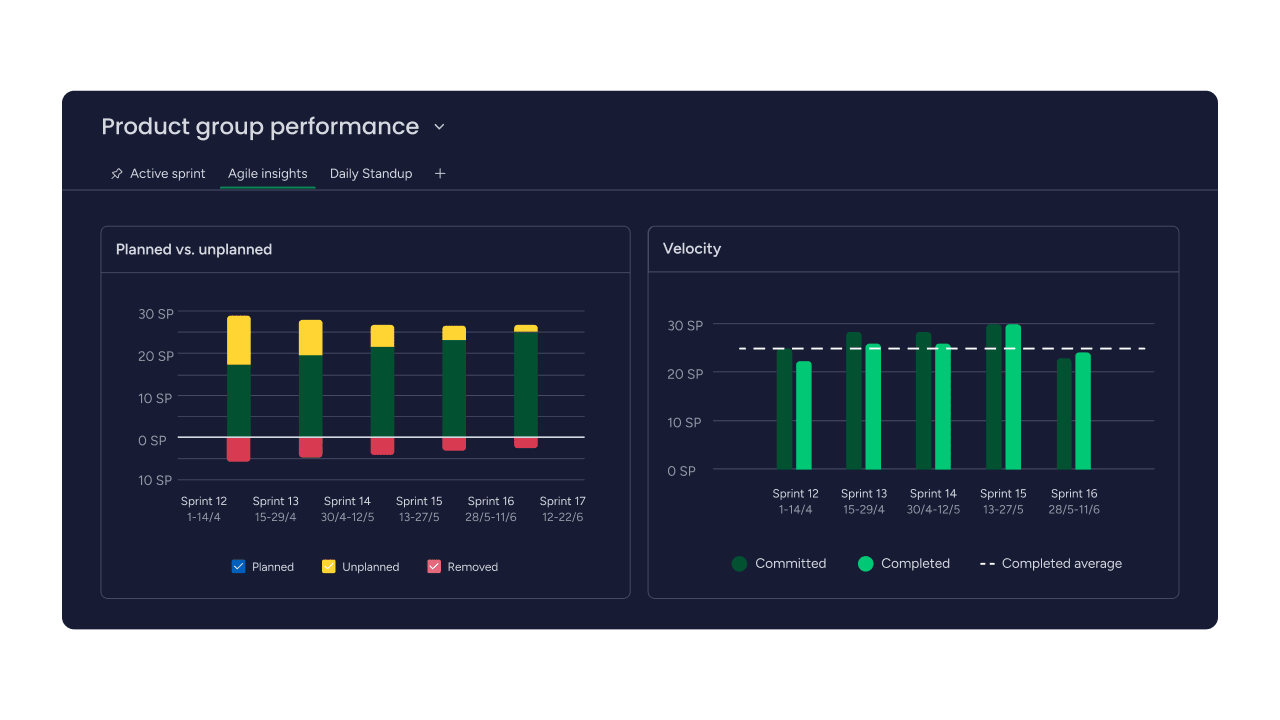
monday.com defines a roadmap as a high-level action plan that lays out vision, direction, product goals, milestones, and deadlines. That framing is more useful than a feature list because it turns scattered ideas into a shared plan for a long-term objective. The real job of the roadmap is to centralize goals and timelines so different teams can align on what is being built and why.
That is especially important in a company whose growth depends on translating product strategy into something customers can understand, buy, and deploy. If the roadmap stays locked inside product management, it becomes a private planning artifact. When it is working properly, it becomes the common reference point that survives the jump from idea to delivery.
Why cross-functional alignment matters
The guide’s biggest message is that roadmaps are not owned by product alone. Successful roadmaps need input from engineering, leadership, and other stakeholders, because the hard part is not naming ambitions, it is agreeing on tradeoffs. Engineers need the plan to stay grounded in execution reality, while executives need to see how the sequence supports the company’s broader strategy.
For sales professionals, the same discipline matters in a different way. Customers usually want reassurance that monday.com can support their business goals without getting lost in internal complexity. A roadmap that is too technical can fail the field; one that is too vague can fail the company. The strongest version explains outcomes clearly enough for customers and specific enough for teams that have to build against it.
How to tailor the roadmap for each audience
monday.com’s roadmap guidance also makes an important distinction between internal and customer-facing views. Internal teams may need a detailed version with dependencies, milestones, and deadlines. Customer-facing teams often need a simpler, outcome-oriented view that shows where the product is headed and what business problem each release is meant to solve.
That difference matters because monday.com now sells into bigger, more demanding accounts. Sales and customer-facing teams need language that helps buyers understand the path forward without exposing every internal debate. The roadmap becomes more useful when it separates the strategic promise from the operational detail, while still keeping both tied to the same plan.
Sequence is strategy
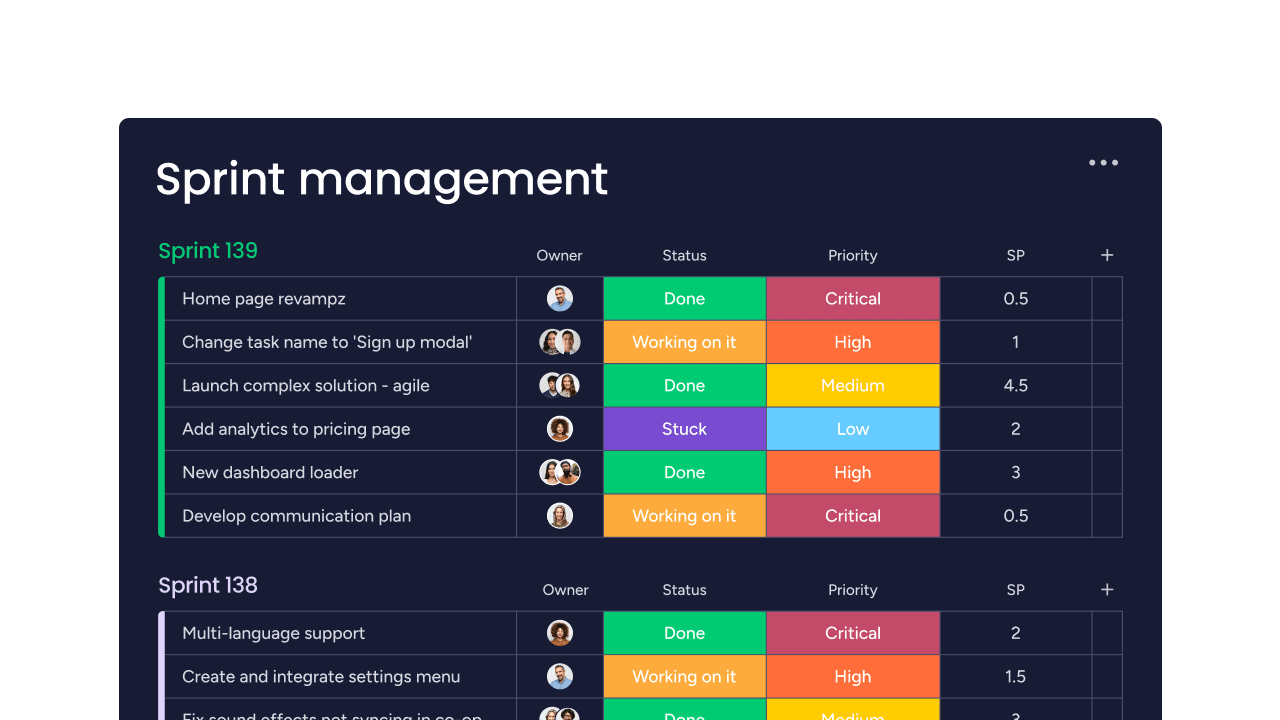
The roadmap template’s most practical advice is to link epics to user stories and tasks, then use methods such as RICE to keep decisions aligned with company strategy. That pushes product leaders to answer the real question behind every roadmap conversation: if this comes first, what gets delayed, and what business goal does that order serve?
That discipline fits monday.com’s current product direction. In February 2025, the company said its AI strategy would center on AI Blocks, Product Power-ups, and the Digital Workforce. Co-founders Roy Mann and Eran Zinman also said AI would be embedded into the products customers already use. In that context, roadmapping is not just about shipping features. It is about deciding how the platform evolves as an AI layer that can support both immediate customer needs and a larger strategic shift.
Why the stakes are higher now
The roadmap conversation matters more because monday.com’s business has moved into a larger-scale phase. The company said more than 250,000 customers worldwide used its platform as of December 31, 2025, and it reported 4,281 customers above $50,000 in annual recurring revenue. That customer mix shows a growing base of larger accounts that expect consistency, reliability, and a clear direction.
The financial numbers tell the same story. monday.com reported fourth-quarter 2024 revenue of $268.0 million, up 32% year over year, and full-year 2024 revenue of $972.0 million, up 33%. The company said it surpassed $1 billion in annual recurring revenue in 2024. By February 2026, it reported fourth-quarter 2025 revenue of $333.9 million, up 25% year over year, full-year revenue of $1.232 billion, and a 14% non-GAAP operating margin. When product decisions are tied this closely to growth, customer expansion, and operating leverage, roadmap discipline stops being a planning exercise and becomes a business control point.
What the product suite shift signals
The platform itself is also becoming more layered. monday.com expanded its suite with monday service, and by 2026 it was describing the platform as an AI work platform where products run on the same AI layer. That shift moves roadmapping away from isolated feature planning and toward platform orchestration. Product teams are no longer just deciding what to add; they are deciding how each product strengthens the same underlying system.
monday vibe gives that transition a concrete example. The company said it became the fastest product in its history to surpass $1 million in ARR. That is a share-worthy detail because it shows how quickly a new product can matter when the platform, the roadmap, and the go-to-market motion are aligned. The takeaway is not simply that a product is growing fast. It is that the company is now using roadmaps to connect product launches to platform adoption and revenue expansion at the same time.
The operating rule for monday.com leaders
The best way to use a roadmap at monday.com is to treat it as a decision-making tool, not a presentation deck. Start with the strategic objective, then attach each initiative to the milestone it supports, the team that owns it, and the tradeoff it requires. If engineering, sales, and leadership would interpret the roadmap differently, it is not ready to guide execution.
That is why monday.com’s 2025 Investor Day, held on September 17, 2025, alongside Elevate NYC, matters in a broader sense. The company is telling a bigger story about AI, scale, and category leadership, and the roadmap is one of the few tools that can connect that narrative to the daily work of shipping software. At monday.com, the strongest roadmap is the one that turns strategy into a sequence people can build, sell, and trust.
This article was produced by Prism’s automated news system from verified source data, official records, and press releases, then run through automated quality and moderation checks before publishing. The system is built and supervised by the people who set the standards it runs under. Read our full AI policy.
Did this article answer your question?