monday.com says faster quotes can prevent revenue delays
Quote delays usually start with internal handoffs, not pricing. monday.com says the fix is a workflow problem sales teams can tackle this quarter.
The fastest way to slow a deal is to make a rep wait on their own company. A buyer asks for pricing, the clock starts ticking, and by the afternoon the quote is still trapped in approvals, spreadsheets, or email threads that nobody fully owns. monday.com’s message is blunt: quote delays are really coordination failures, and the revenue loss usually starts long before a customer ever sees the final document.
That framing matters because it changes the job from “make quotes faster” to “remove the friction that keeps a deal from moving.” In practice, that means tightening the handoff between pricing, product data, approvals, and the customer-facing rep. For sales managers, it is not a theory piece about software categories. It is a guide to how deals stall, how internal workflows create that stall, and how to fix it without launching a giant systems project.
Why quote management is really a workflow problem
Quote management only looks like a document task from far away. Up close, it is a chain of small dependencies: the right customer information has to be in the right place, the right pricing has to be pulled in, and the right person has to approve it before the rep can keep momentum with the buyer. monday.com’s point is that the quote itself is only the visible output. The hidden work is what determines whether a deal stays warm or goes cold.
That is why the company frames quote management as more than speed. The better system is the one that removes bottlenecks, keeps product and customer data connected, and gives teams a clear path from request to approval to send. For engineers and product managers inside monday.com, that makes quoting a classic platform problem. It depends on live data, permissions, and simple enough UX that sales teams will actually use it.
Where monday CRM fits in the sales stack
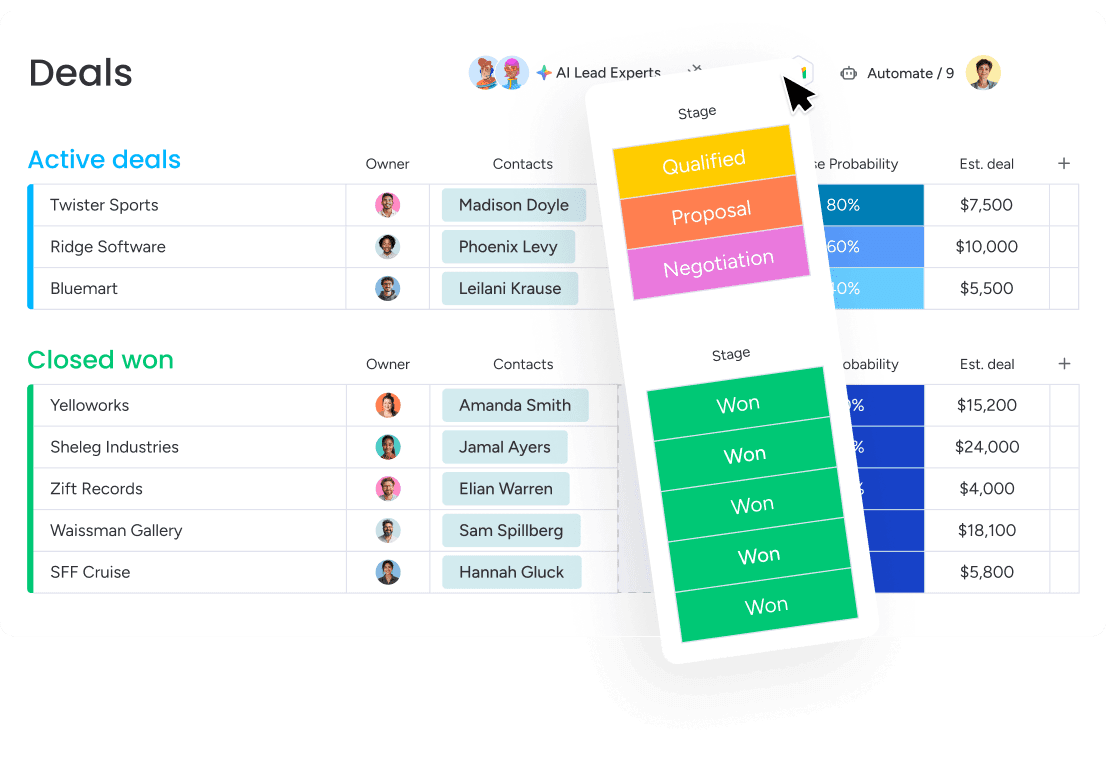
monday.com has been pushing quoting as part of monday CRM rather than as a standalone document tool. Its newer Quotes & Invoices app is only available in monday CRM, and it can pull in contacts, products, and services from existing CRM boards. That matters because it ties quoting directly to the system where customer records already live, instead of asking sales teams to rebuild information in another tool.

The practical effect is that a quote can be created, managed, and tracked inside the same workflow as the rest of the account motion. For teams that already use monday.com to coordinate contacts and pipeline work, that reduces the number of places where data can drift or approvals can disappear. It also makes quoting feel like part of revenue operations, not an isolated admin task.
monday.com has over 250,000 customers worldwide, and its scale gives this product logic more weight than a niche feature release would. In its fourth quarter and full-year 2025 results, the company reported revenue of $333.9 million, up 25% year over year, and said customers with more than $50,000 in ARR represented 41% of total ARR. That suggests quoting is being built for a platform moving deeper into enterprise workflows, where approval speed and operational visibility matter just as much as feature depth.
Quote management versus CPQ
One of the clearest parts of monday.com’s guidance is the distinction between quote management and CPQ. Quote management is the better fit for teams selling standard products or services, where the main problem is moving quickly and accurately. CPQ is designed for more complex pricing logic, especially when products have many configuration rules or dependencies.
That distinction is not just semantic. monday.com says quote management setups can take days or weeks, while CPQ implementations can take months or quarters. Gartner’s 2025 view lines up with that caution: many CPQ deployments cost too much, take too long, fail expectations, or fail outright. For sales leaders, that makes the buy-or-build question more honest. If the team does not need a heavy configuration engine, adding one can create a bigger workflow burden than the quoting problem it was supposed to solve.
The company’s older CPQ explainer reinforces the same idea. monday.com says the platform includes a quote app and can integrate with CPQ tools such as PandaDoc. In other words, monday CRM is positioned to sit on the lighter-weight end of the spectrum unless a business truly needs deep configure-price-quote logic. That is a useful distinction for teams that want speed without signing up for months of implementation work.
What a faster quote flow looks like in practice
For a sales manager trying to fix quote delays this quarter, the goal is to simplify the chain of events, not to redesign the entire revenue stack. The most effective workflow usually has four pieces:
1. Pull customer, product, and service data from a shared CRM source so reps are not rebuilding quotes by hand.
2. Route approvals through a defined path so everyone knows who signs off and when.
3. Keep the quote tracked after it is sent, so follow-up does not depend on scattered email threads.
4. Use a system the team can adopt quickly, because a tool that needs its own project plan will slow the motion it is supposed to improve.
That is why monday.com emphasizes quote management as a workflow layer rather than a pricing exercise. The company’s own messaging says the right setup makes the team faster and more aligned, and signals to customers that the seller is organized and reliable from the first interaction. For reps, that means less time waiting on internal sign-off. For managers, it means fewer deals dying in the gap between interest and action.
Why this matters for monday.com’s broader platform story
This is also a snapshot of where monday.com’s platform strategy is headed. The company now describes itself as an AI work platform, with products that run on the same AI layer and connect workflows across the business. Quote management fits that direction neatly because it sits at the intersection of CRM visibility, automation, and operational control.
For employees inside monday.com, that is the important takeaway. Quoting is not a side feature tucked into sales software. It is one of the places where workflow software becomes infrastructure, because the quote process reveals whether the company can move data, approvals, and customer-facing action without friction. In a sales organization, that is the difference between a deal that keeps moving and revenue that gets stuck waiting for the next internal handoff.
This article was produced by Prism’s automated news system from verified source data, official records, and press releases, then run through automated quality and moderation checks before publishing. The system is built and supervised by the people who set the standards it runs under. Read our full AI policy.
Know something we missed? Have a correction or additional information?
Submit a Tip