monday.com says transparent leadership improves trust, focus, and execution
Transparent leadership is not a soft perk. At monday.com, it becomes a management tool that lowers ambiguity, speeds decisions, and helps distributed teams execute.
Why transparency has become an operating requirement
The strongest case for transparent leadership is not philosophical. It is operational. When employees understand where the business is going, why priorities changed, and how decisions get made, they waste less time decoding the organization and more time doing the work in front of them.
That matters in a company like monday.com, where work is cross-functional and often distributed across teams and locations. The research behind the company’s transparency message points to workplace problems that show up everywhere: loneliness, weak face-to-face interaction, and disengagement. Remote and office workers alike can end up with too little real connection, and that gap does not just feel bad, it has a cost for employers through turnover and absenteeism.
For managers, the lesson is simple: transparency is not about flooding Slack or meetings with more updates. It is about making the work legible enough that people can move with confidence.
What transparent leadership actually changes
The useful version of transparency is specific. It helps employees understand the why behind strategy, the logic behind internal processes, and the path toward their own growth. That is a different bar from simply saying the company wants to be open. It means leaders explain tradeoffs, show how choices connect to company goals, and make room for questions before confusion hardens into mistrust.
That kind of clarity changes how teams operate day to day. Product and engineering teams can prioritize better when roadmap decisions are explained in context, not just announced after the fact. Sales teams can talk to customers with fewer guesses when they understand why internal shifts are happening. Managers also benefit because transparent context lets employees make better decisions without waiting for approval on every small call.
In practice, transparency reduces anxiety by shrinking ambiguity. The more visible the decision-making, the less energy teams spend filling in the blanks themselves.
Why this matters inside a scaling SaaS company
For a company the size and shape of monday.com, this is not abstract leadership advice. It is a coordination problem. As the company scales across functions and geographies, the distance between strategy and execution grows, and so does the risk that teams will stay busy without feeling aligned.
That is where transparency becomes more than culture language. Shared goals help teams see how their work connects to the broader mission. Visible decision-making helps people understand why one project moved ahead while another slowed down. Clearer career paths help employees see that growth is not being left to guesswork or informal networks.
A distributed SaaS company lives or dies on how well information moves. If product, engineering, sales, and people leaders all have slightly different versions of the plan, execution gets slower and trust gets thinner. If they share enough context to make the tradeoffs explicit, the organization spends less time translating itself.
The daily habits of transparent leadership
Transparent leadership shows up in routine management practices, not just in all-hands meetings or polished internal notes. The most useful managers make the work visible in a way that helps people plan, escalate, and decide.
A practical version looks like this:
- Shared goals that are specific enough to guide weekly work, not just broad enough to sound inspirational.
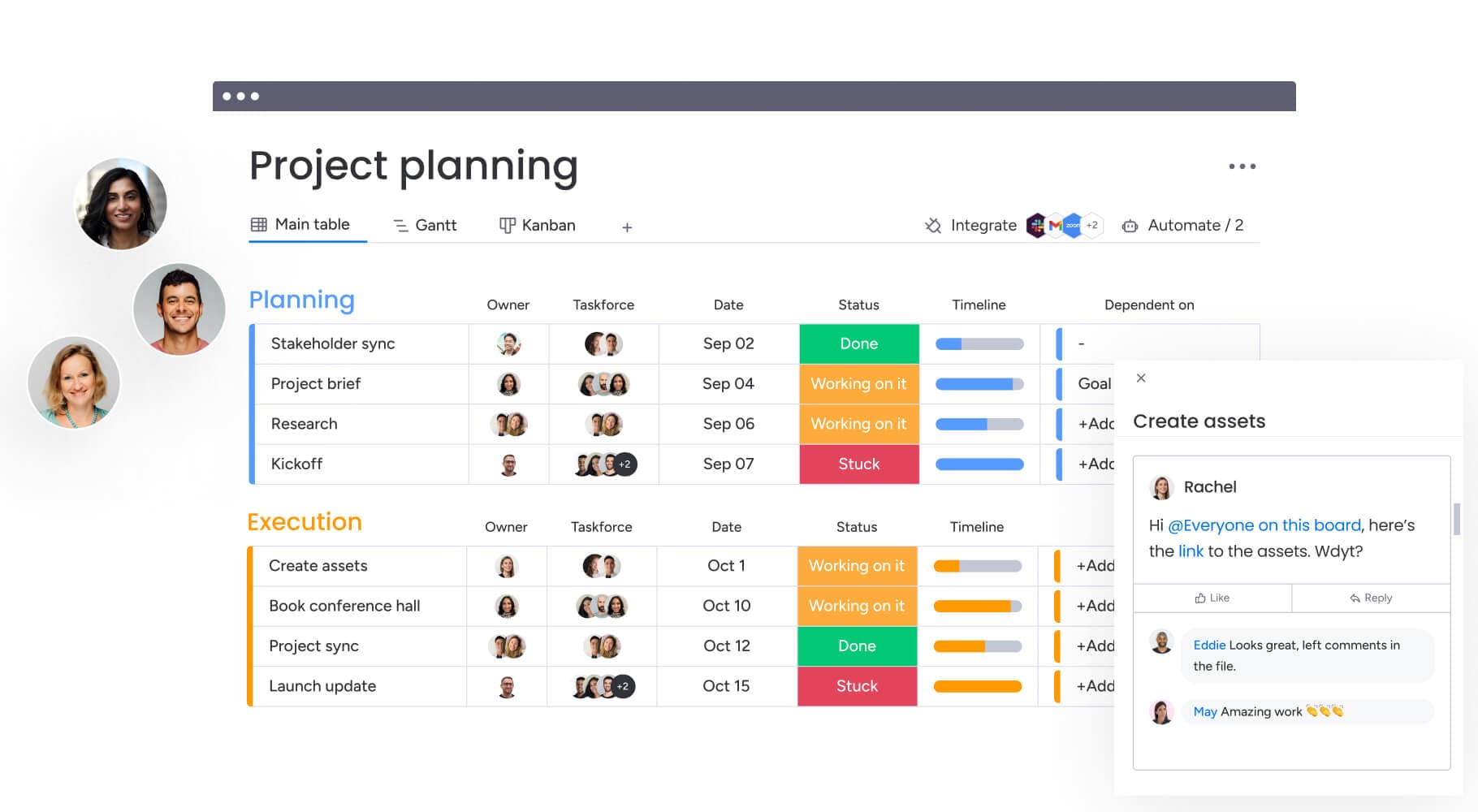
- Status updates that show what is moving, what is blocked, and what needs attention next.
- Decision logs or visible reasoning when priorities change, so teams can see the tradeoff rather than only the outcome.
- Clear escalation paths, so people know when to solve a problem themselves and when to surface it quickly.
- Career expectations that are legible, so growth feels like a process rather than a mystery.
These are not administrative extras. They are the mechanisms that keep a fast-moving company from forcing every team to rediscover context for itself.
Why this cuts through mistrust and confusion
The company’s argument connects transparency to problems that many managers recognize but often try to solve with morale language. Loneliness is one of them. Weak in-person connection is another. A third is disengagement, which tends to grow when people do not understand how their work fits into the larger plan.
That matters because mistrust rarely begins with a dramatic failure. It usually starts with small moments: a roadmap changes without explanation, a process appears inconsistent, or a team learns about a shift only after decisions are effectively locked. Once that pattern repeats, people stop asking for context and start assuming it will not help.
Transparent leadership interrupts that cycle. It gives employees enough information to understand the logic of the business, which makes it easier for them to stay focused even when the answer is not what they hoped for. In a hybrid environment, where not every conversation happens in the room, that kind of clarity carries extra weight.
What it means for product, engineering, and sales
For product and engineering teams, transparency improves prioritization because it ties work back to business direction. Engineers do not need every strategic debate, but they do need enough context to understand why one feature, fix, or platform investment matters more than another. That is especially true in a company built around a work OS, where product decisions can affect multiple workflows at once.
For sales teams, transparency matters in a different way. Reps are often the ones who have to explain change to customers before the rest of the market fully absorbs it. When leadership is open about the logic behind internal shifts, sales can speak with more confidence and less improvisation.
For people managers, the payoff is sharper. Employees who understand the company’s direction tend to make better decisions without waiting for approval every time they hit uncertainty. That does not eliminate management. It makes management more strategic, because leaders can focus on judgment calls instead of constantly clarifying basics.
The bigger management takeaway
The deepest point in monday.com’s transparency message is that clarity is a performance tool. It is not just a nicer way to lead, and it is not a substitute for hard decisions. It is how leaders reduce ambiguity enough for teams to act, escalate, and adapt without turning every shift into a rumor cycle.
In a scaling SaaS company, where execution depends on coordination across product, engineering, sales, and people operations, that difference is enormous. The leaders who matter most are not the ones who simply share more. They are the ones who make the organization easier to read, so teams can spend less time decoding it and more time building.
This article was produced by Prism’s automated news system from verified source data, official records, and press releases, then run through automated quality and moderation checks before publishing. The system is built and supervised by the people who set the standards it runs under. Read our full AI policy.
Know something we missed? Have a correction or additional information?
Submit a Tip