Chicago fair workweek changes raise scheduling stakes for Target teams
Chicago’s updated fair workweek rules can change when a Target shift is posted, swapped, cut, or added. That can affect pay, childcare, transit, and second-job planning fast.
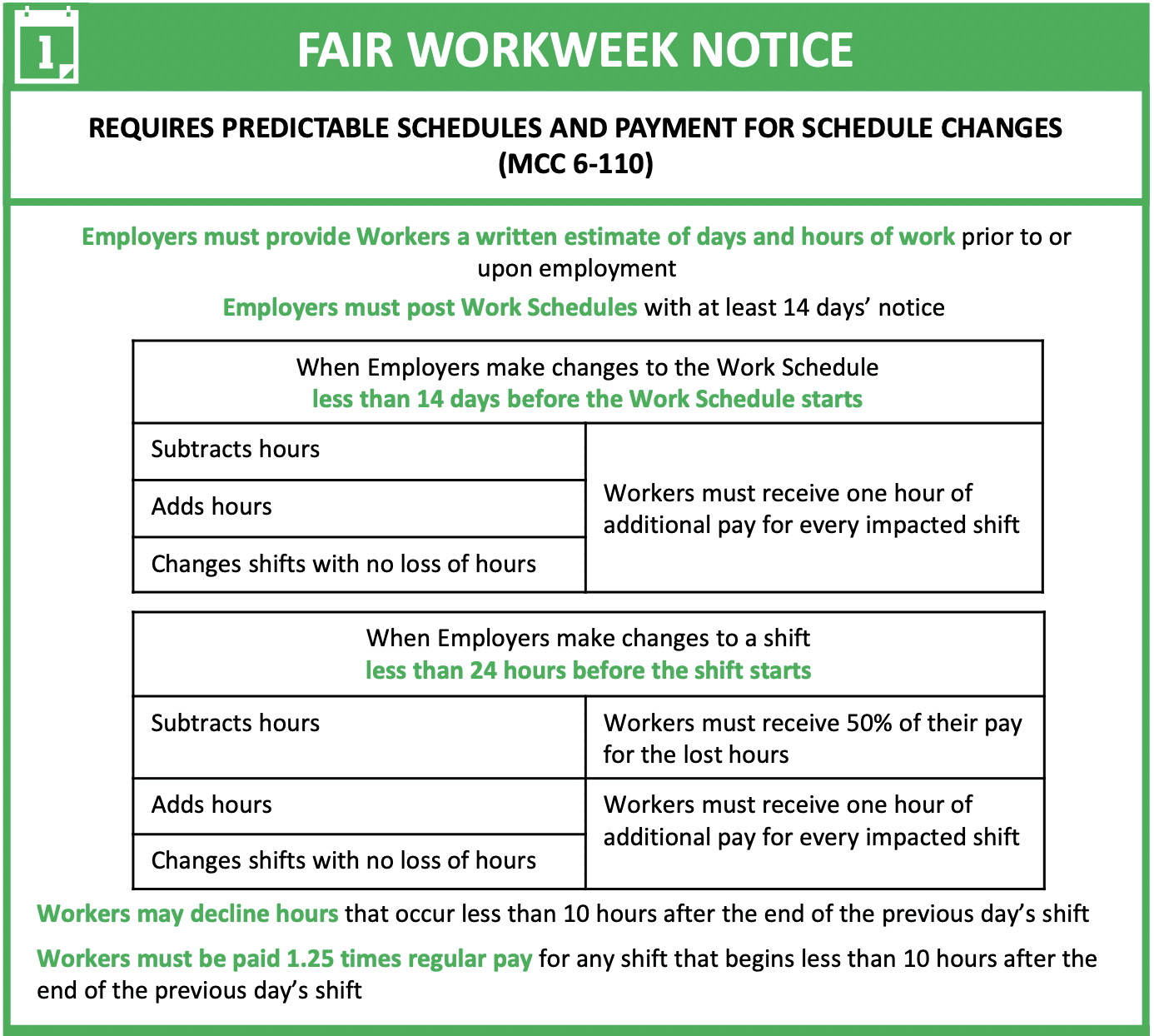
What changed for Chicago Target teams
Chicago’s fair workweek rules just got sharper, and that matters on the sales floor, in the stockroom, and in the back room where schedules get made. For Target team members in the city, the new rules are not just a policy tweak. They can change when hours are offered, how quickly a shift can move, and whether a last-minute adjustment triggers extra pay.

The city’s updated rules took effect June 1, 2026, building on an ordinance that was enacted in June 2019 and became effective July 1, 2020. The core idea is unchanged: certain large employers in covered industries, including retail and warehouse services, must provide predictable schedules and compensation when those schedules shift. For a company like Target, where weekend traffic, event sales, and holiday spikes can scramble labor needs, that means scheduling is now a compliance issue as much as an operations issue.
How the rules apply at Target
Chicago says covered employees in retail and warehouse services are protected if they earn at or below $32.60 an hour, or at or below $62,561.90 a year, and work for an employer with at least 100 employees globally. That threshold is important for Target because its footprint spans stores, supply chain sites, and corporate operations across multiple states. In practical terms, Chicago teams should assume the fair workweek rules matter whenever the job falls inside that wage band and the employer-size test is met.
The city’s ordinance also says employers who need extra hours should first offer them to current part-time covered employees. That can matter when a store is short after a callout or when a department suddenly needs more coverage for truck unload, price change, guest service, or a late-week sales push. For Target leaders, the rule changes the order of operations: before a leader looks outside the team or reshuffles coverage at the last second, they need to think about whether available hours should be offered to the people already on payroll.
The practical effect on a schedule, paycheck, and daily life
The biggest change for workers is simple: a posted schedule is not as flexible as a manager’s day-to-day instinct may be. Covered employees have the right to advance notice of schedules, the right to decline previously unscheduled hours, one hour of predictability pay for schedule changes made within 14 days, and the right to rest by declining work that starts less than 10 hours after the end of the prior day’s shift.
That can ripple through a Target worker’s week in a very real way. If a Team Member planned child care around a closing shift and then gets asked to open the next morning, the 10-hour rest rule may give that worker the right to say no. If a shift gets added, cut, or moved inside the 14-day window, the worker may see a predictability pay trigger that affects the paycheck even if the change seems small on the leader’s side. And if a schedule is posted late or shifted after it was already built around transit or a second job, the consequences are not just inconvenience, they can be lost wages, extra pay, or a missed opportunity to accept the change.
Why June 1 matters more than it sounds
The city’s June 2026 update does not rewrite the whole ordinance, but it does tighten the mechanics. The rules now define “week” as seven consecutive 24-hour periods, and they clarify how employer size is calculated by using average global employee counts over 12 months for existing employers and 90 days for new employers. Those details may sound technical, but they matter because they affect whether a workplace is covered and how scheduling periods are measured.
For Target store leaders, that means more discipline around the calendar. A schedule that used to be viewed as a loose seven-day block now has a more exact legal definition. That can affect how leaders think about posting windows, when a shift change is counted, and when a worker’s refusal of extra hours becomes protected. For team members, it means the dates on the schedule matter more than ever, especially when changes happen across a rolling two-week period.
What Chicago expects employers to post and tell workers
The city also requires fair workweek notices to be posted conspicuously at Chicago worksites. On top of that, employers must provide annual notice with a paycheck issued within 30 days of July 1. That is a reminder that the ordinance is not meant to sit in a handbook or a manager’s memory. It has to be visible, repeated, and tied to payroll.
That should matter to Target teams because notice is often the difference between a calm week and a scramble. If the schedule process is clear, workers can line up transit, child care, school pickups, doctor visits, and second jobs without guessing. If the notice is buried, late, or inconsistent, the worker bears the cost first, and the store absorbs the fallout later in attendance, coverage gaps, and frustration on the floor.
What Target leaders should watch now
Chicago’s Office of Labor Standards says it handles complaints, investigations, mediation, settlement proceedings, and enforcement actions for labor laws. That gives the rules teeth. It also means store leaders should not treat schedule problems as informal fix-it moments once a worker raises them. If a schedule change, extra hour, or rest-period issue triggers the ordinance, it can become a payroll and compliance matter quickly.
Target’s own 2025 annual report points to why this is operationally important. The company says it is focused on in-stocks, faster fulfillment, stronger store training and support, and reducing friction for store teams. Those goals depend on labor being in the right place at the right time, but they also depend on the store being able to staff responsibly. In Chicago, fair workweek compliance is part of that equation.
What team members should check right away
Chicago Target workers do not need to read the ordinance like a lawyer to use it. They do need to watch the schedule closely and know what changed. A few practical checks matter most:
- Compare the posted schedule against any later edits, especially inside 14 days.
- Track whether an added shift, cut shift, or moved shift changes your pay.
- Check whether a change forces you into a start time that is less than 10 hours after your last shift ended.
- Watch for notices about fair workweek rights at the worksite and in paycheck communications tied to July 1.
- If extra hours are being offered, note whether they were first offered to current part-time covered employees, as the ordinance says they should be.
For Target teams in Chicago, the new rules turn scheduling into something more than a back-office task. They shape whether a shift can be changed, who gets the first shot at extra hours, and how much control a worker has over the rest of the week. In a business built on tight labor planning, that is a real change at store level.
This article was produced by Prism’s automated news system from verified source data, official records, and press releases, then run through automated quality and moderation checks before publishing. The system is built and supervised by the people who set the standards it runs under. Read our full AI policy.
Know something we missed? Have a correction or additional information?
Submit a Tip