Target shares sink as investors question Fiddelke turnaround ahead of earnings
Target’s stock slide is turning up the heat on Michael Fiddelke, with workers likely to feel it first in labor hours, remodel timing and performance goals.
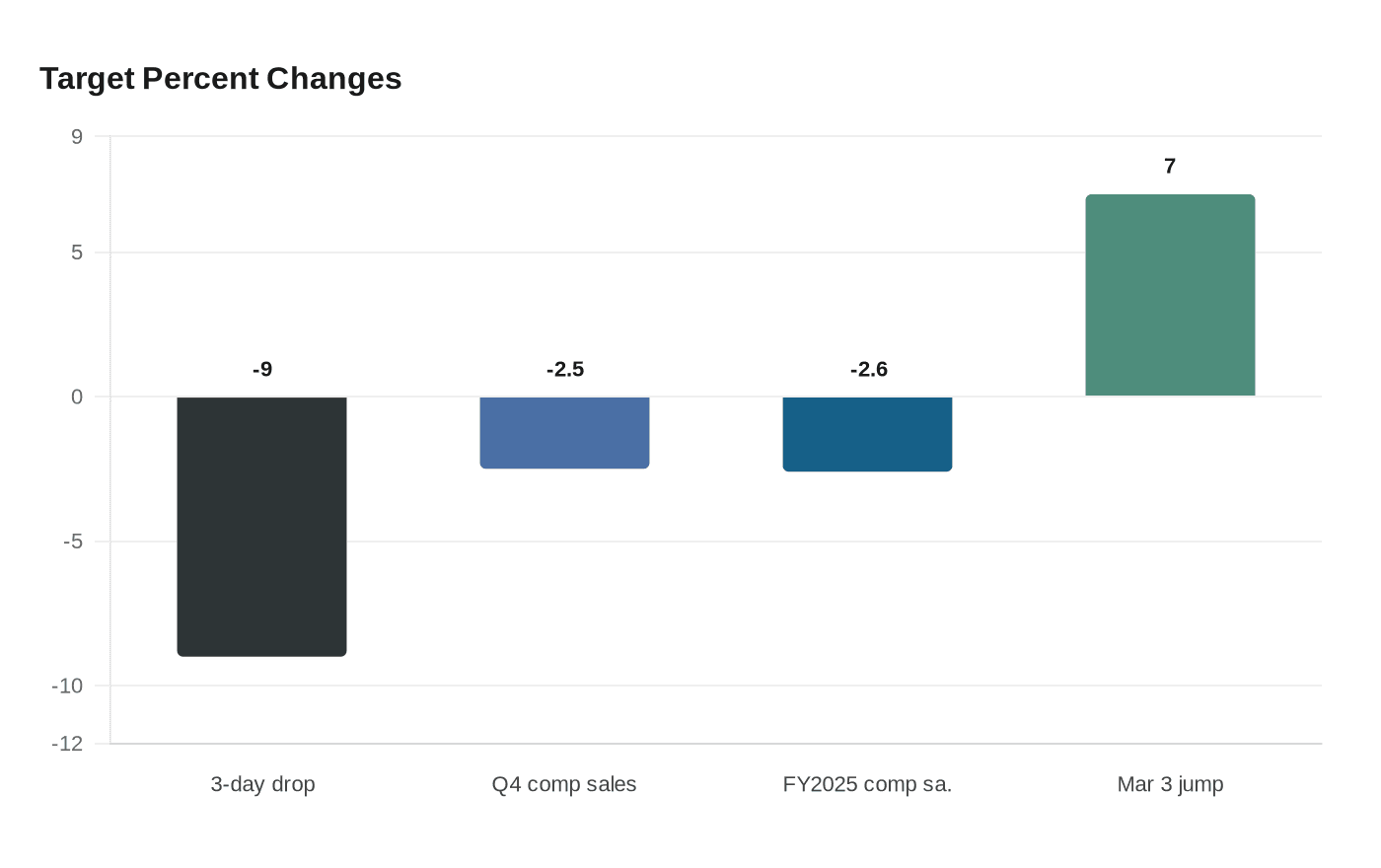
Target’s share slump is Wall Street’s verdict, but the pressure point for employees is more practical: how much payroll, training and store investment actually reaches the floor. The stock fell nearly 9% over three days, its worst stretch in more than a year, as investors questioned whether Michael Fiddelke can steady the retailer before Target’s first-quarter earnings call on May 20.
Fiddelke, a Target veteran who joined the company in 2004 and became chief executive on February 1, laid out a multi-year turnaround plan on March 3 that centers on stores, speed and execution. Target said it would add an incremental $2 billion in 2026, including more than $1 billion in capital expenditures and $1 billion in operating investments, while pushing total capital investment to about $5 billion for the year. The company said that money would go toward store redesigns, higher payroll and training, assortment changes and more AI-enabled technology.
For team members, that is the real question beneath the stock chart: which of those promises turns into more hours, more cross-training, and more pressure to hit remodel and service standards. Nothing in the company’s public plan spells out store-by-store staffing changes, but the roadmap makes clear that labor, training and store presentation are at the center of the turnaround.
Target’s own numbers explain why the company is under such scrutiny. It reported fourth-quarter net sales of $30.5 billion, said same-store sales fell 2.5% in the quarter and 2.6% for full-year 2025, and guided full-year 2026 adjusted earnings per share to $7.50 to $8.50. The company also said sales and traffic trends improved in the last two months of the quarter, a sign that management is looking for momentum going into earnings season rather than a fast fix.
The market has been sending mixed signals about whether Fiddelke can deliver. Investors initially reacted badly when Target picked an insider to replace Brian Cornell, with Reuters reporting that some saw Fiddelke as unlikely to solve the retailer’s broader problems. Target shares then jumped nearly 7% to a one-year high on March 3 after Fiddelke promised to restore annual sales growth and spend billions on stores, shopping experience and deliveries. Since then, skepticism has returned, with Barclays reportedly downgrading the stock to Underweight/Sell and warning that a major strategic overhaul may still be needed.
That uncertainty hangs over the stores as Target continues to navigate the fallout from its 2025 retreat from parts of its DEI program, which triggered boycott activity and public backlash. Some reports say that boycott was later called off in March 2026 after outreach and expanded commitments to Black-led community groups. For workers, the next test is less about investor mood and more about whether the turnaround reaches schedules, shelves and store standards before the May 20 call becomes the next excuse for tighter performance demands.
This article was produced by Prism’s automated news system from verified source data, official records, and press releases, then run through automated quality and moderation checks before publishing. The system is built and supervised by the people who set the standards it runs under. Read our full AI policy.
Did this article answer your question?