Target workers may face fewer job switches as labor market cools
Job openings are still tight, so Target workers may have less room to jump for a quick raise even as layoffs stay relatively contained.
A Target team member looking to switch stores, ask for more pay or jump to another retailer is facing a market that has not stalled, but has clearly cooled. Indeed Hiring Lab said the U.S. labor market had settled into a low-hire, low-fire pattern that has persisted since late 2025, and its Job Postings Index was only 2.4% above pre-pandemic levels as of April 30, 2026.
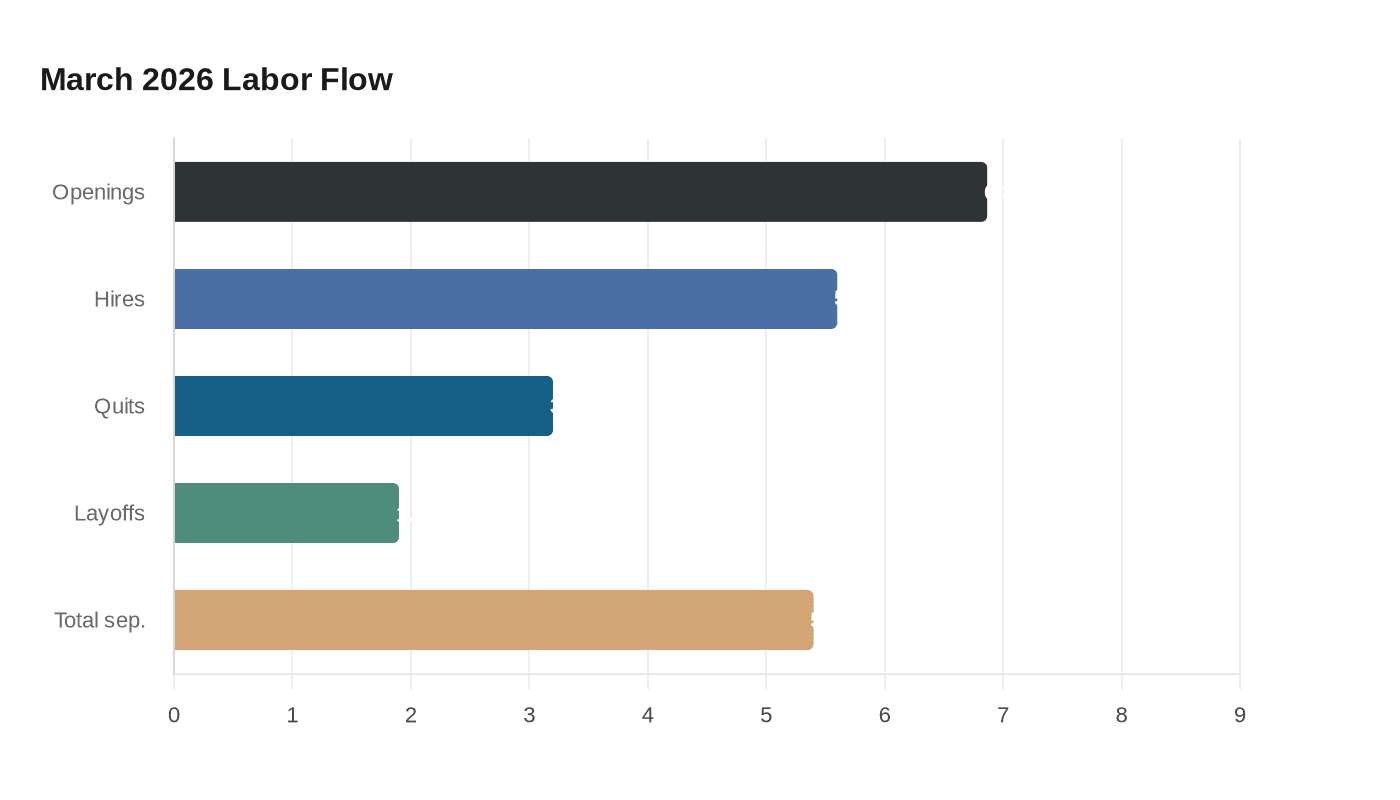
The clearest sign is in the federal numbers. The U.S. Bureau of Labor Statistics said March 2026 job openings were 6.866 million, with the openings rate at 4.1%. Hires came in at 5.6 million, quits at 3.2 million, layoffs and discharges at 1.9 million, and total separations at 5.4 million. For larger employers with 5,000 or more workers, openings, hires and quits barely moved, while layoffs, discharges and total separations increased. That combination points to a market where people are not getting pushed out in large numbers, but they also are not finding as many fresh openings to chase.

For retail workers, that matters. The BLS said retail trade employment showed little net change over the prior 12 months, even though retail added jobs in April. Total nonfarm payrolls rose by 115,000 in April and unemployment held at 4.3%, which suggests the broader economy is still adding jobs, just not at a pace that gives workers the kind of easy mobility seen in hotter labor markets.
Target is leaning into that slower environment by trying to keep its own workforce anchored. In March, the company said it would make a $1 billion operating investment in 2026, including hundreds of millions of dollars in additional store payroll and training. Target also says its U.S. hourly starting wage range is $15 to $24 per hour for store and supply chain team members. In February, CNBC reported that Target planned to invest more in store labor while cutting about 500 other roles at distribution centers and regional offices, a split that underscores how the company is prioritizing guest-facing work over some back-office and supply-chain jobs.
For workers, the practical takeaway is straightforward. A cooler labor market usually means fewer fast exits and fewer easy counteroffers. Staying put can make sense if a team member can use Target’s training, cross-training and internal advancement paths to build a stronger resume from inside the company. A move can still pay off, but the timing is less forgiving, and the strongest leverage now may come from sharpening skills first rather than expecting the outside market to bid aggressively for retail labor.
This article was produced by Prism’s automated news system from verified source data, official records, and press releases, then run through automated quality and moderation checks before publishing. The system is built and supervised by the people who set the standards it runs under. Read our full AI policy.
Did this article answer your question?