21-Day Mobile Mindfulness App Shifts Health Decisions in College Students
A 21-day Tide app trial on 90 college students tested whether 10 minutes of daily mindfulness could shift how they make food and exercise choices.
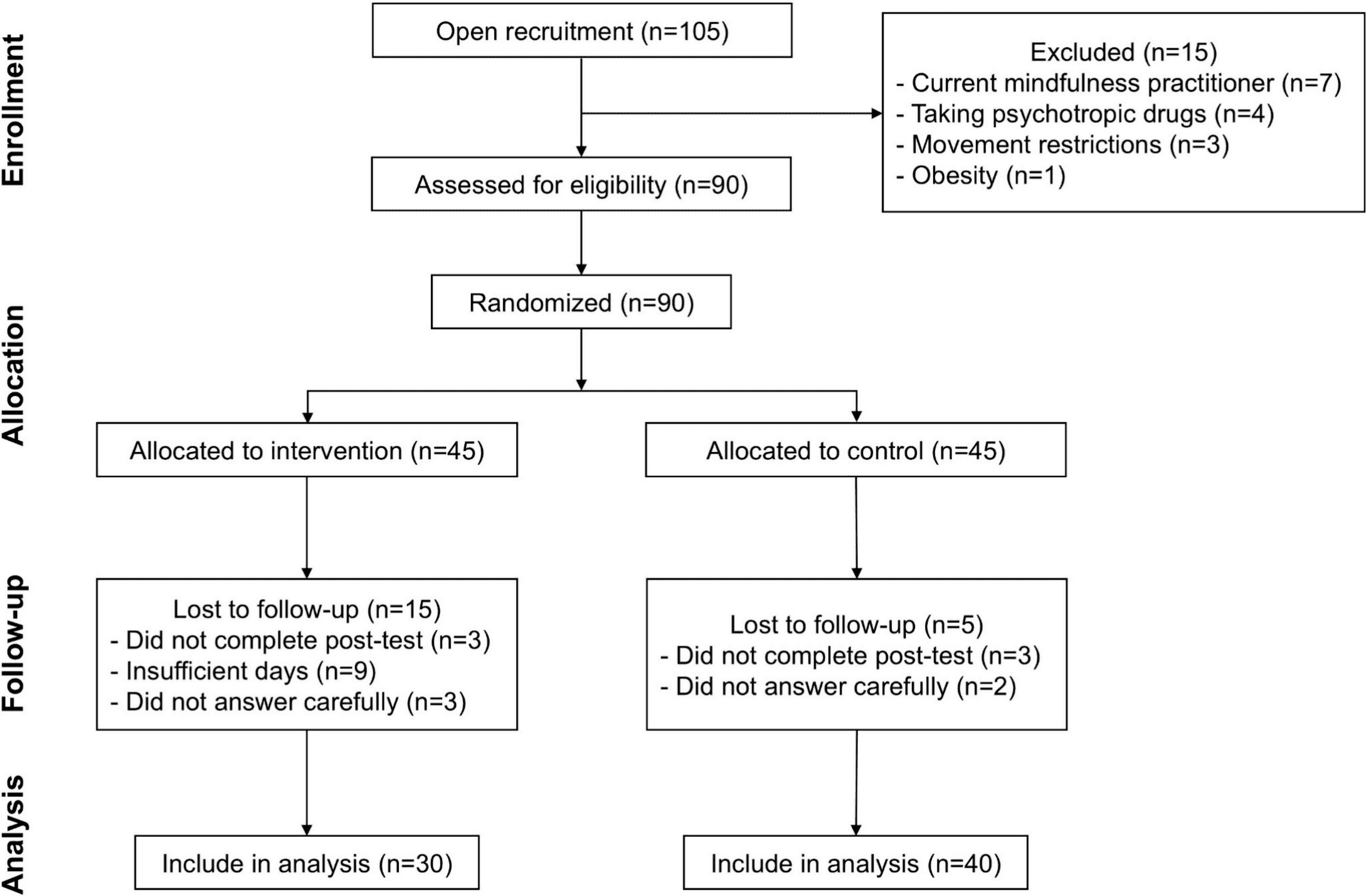
Poor diet and physical inactivity run rampant among college students, and a new randomized controlled trial published March 13 in the journal Mindfulness asked a pointed question: can a self-guided mobile app shift the underlying decision-making that drives those habits?
The trial enrolled 90 Chinese college students and split them into two groups over 21 days. The intervention group used the Chinese version of the Tide app, accumulating at least 10 minutes of mindfulness practice daily. The active control group simply recorded their daily events, a design choice that helps isolate the mindfulness component rather than just the effect of structured self-reflection.
What the researchers were actually measuring sets this study apart from the usual stress-and-anxiety outcome work. Instead of self-report mood scales, participants completed computer-based behavioral tasks assessing food choice and physical activity decision-making before and after the intervention period. The primary indicators were health-attribute weighting, essentially how much participants factored health into their choices, and successful self-control. Mixed-effect models adjusted for baseline covariates were used to analyze pre- and post-intervention changes.
The study's title claims the intervention produced shifts in health-related decision-making, but the full numerical results were not available in the excerpts published at the time of this writing. The complete findings, including effect sizes, p-values, and the authors' own interpretation, require the full article text to report precisely.
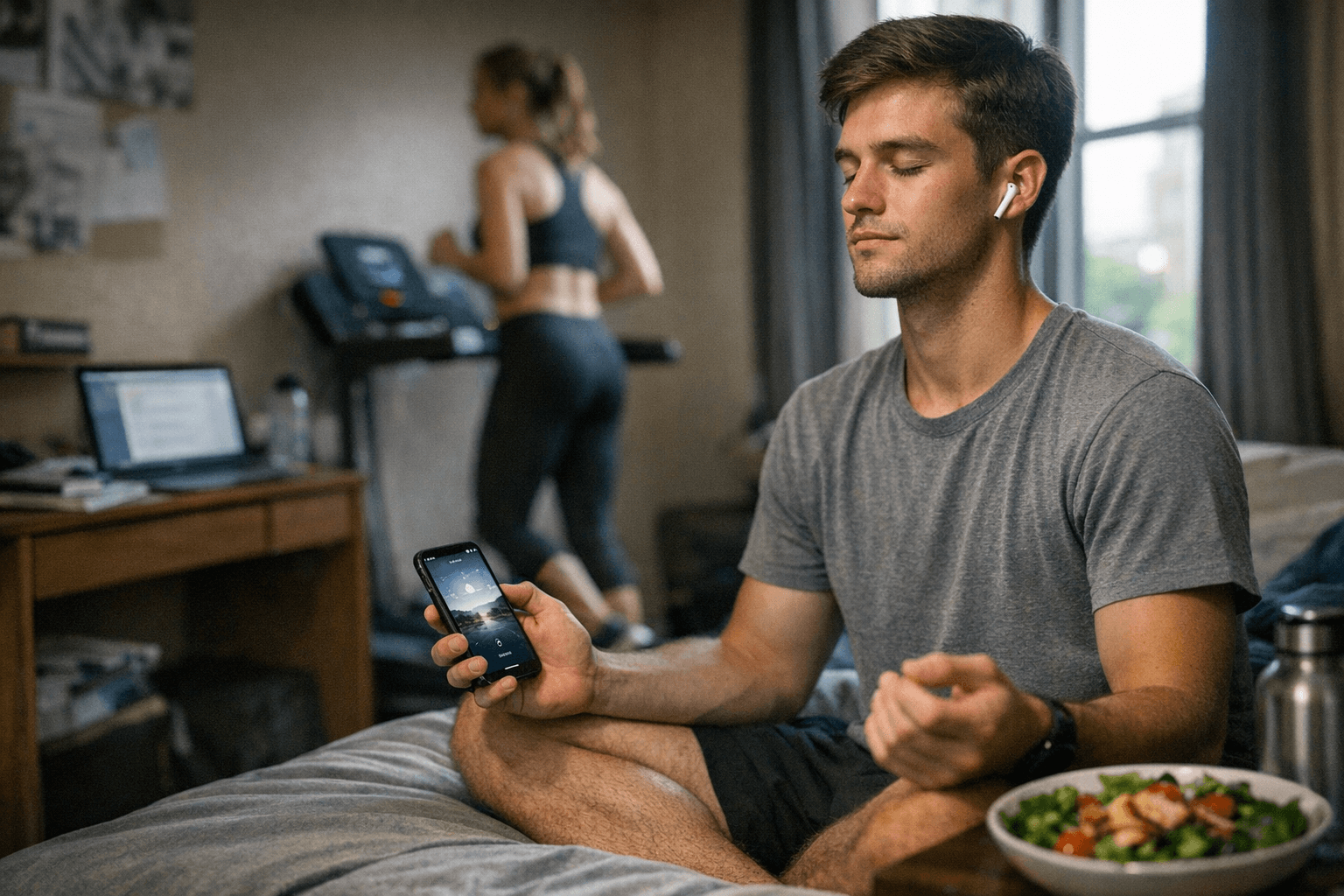
What the research design does clearly signal is the growing interest in using behavioral decision tasks rather than self-report to evaluate mindfulness apps. That methodological choice matters. The broader mHealth meditation literature, including a separate RCT of the Healthy Minds Program smartphone app, has documented small but real effects: reductions in psychological distress around d = 0.28 and improvements in candidate mechanisms ranging from d = 0.18 to 0.41 relative to waitlist controls. Those figures are notably smaller than the d = 0.55 benchmarks associated with in-person mindfulness-based interventions, a gap that researchers in that separate study attributed to fundamental trade-offs between scalability, cost, and potency.
The Tide trial's use of an active control addresses one of the persistent criticisms of app-based mindfulness research: without one, it is impossible to rule out a digital placebo effect. The computer-based behavioral task approach similarly sidesteps the social desirability bias that haunts self-report measures, though whether a 21-day window is long enough to produce durable changes in decision-making remains an open question the study, by its own pre/post design, cannot answer.
For practitioners curious about recommending apps to students or integrating short digital practices into wellness programming, this trial is worth tracking. The pairing of a structured daily practice target with objective behavioral measurement is the kind of methodological rigor the field has needed, and the results, once fully published, will tell us whether 10 minutes a day through a consumer app can genuinely move the needle on the choices that shape long-term health.
This article was produced by Prism’s automated news system from verified source data, official records, and press releases, then run through automated quality and moderation checks before publishing. The system is built and supervised by the people who set the standards it runs under. Read our full AI policy.
Did this article answer your question?