Harvard Research Links Sadhguru's 7-Minute Meditation to Rapid Brain Changes
A peer-reviewed EEG study of 103 meditators found measurable brainwave shifts begin within 2-3 minutes and peak at exactly 7 minutes into Sadhguru's breath-watching practice, even in complete beginners.

Seven minutes. That is the precise point at which brainwave changes reach their peak during Sadhguru's breath-watching meditation, according to a peer-reviewed study published March 21, 2026 in the Springer Nature journal *Mindfulness*. The finding that complicates easy dismissal: the pattern held in complete beginners, not just seasoned practitioners.
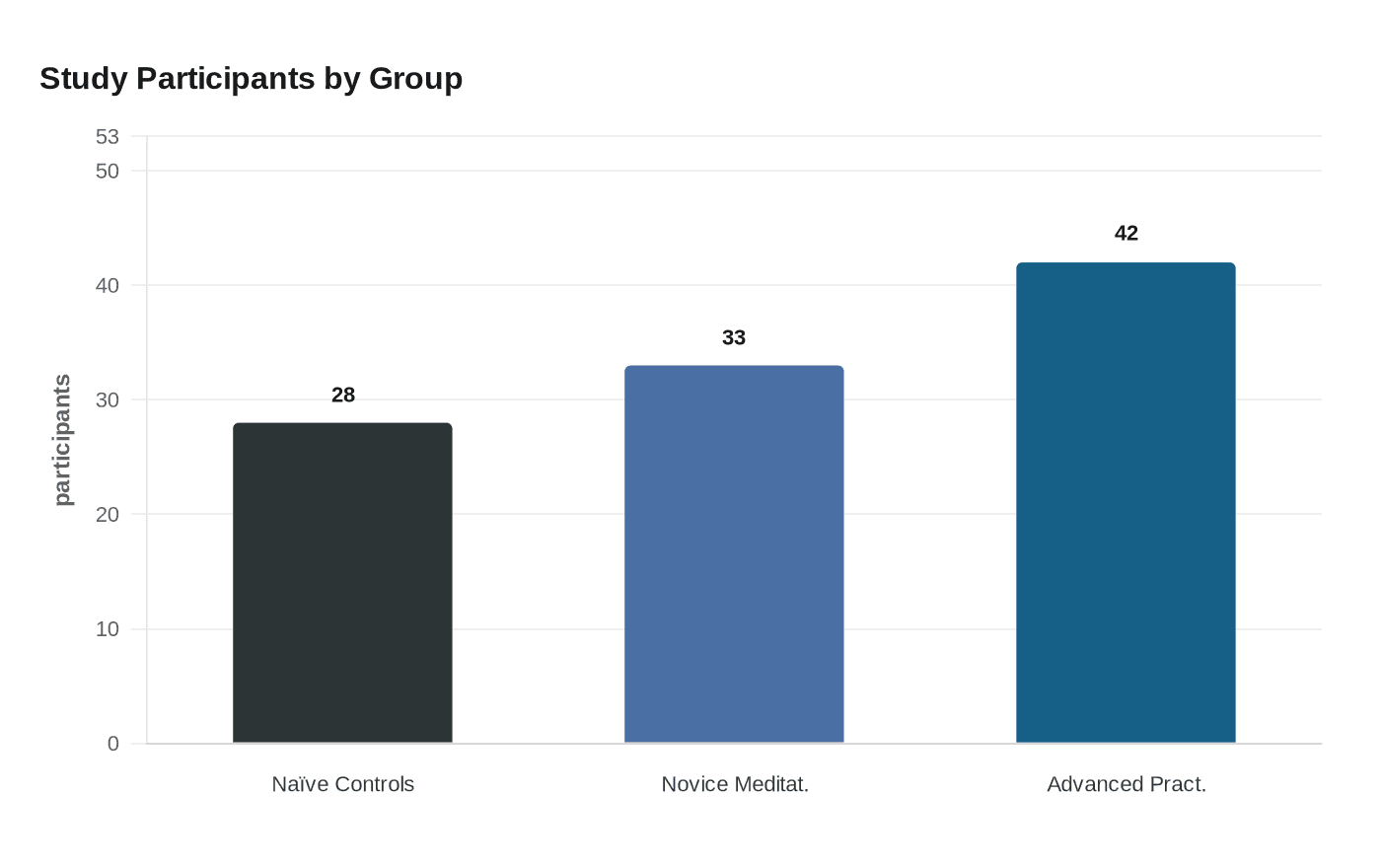
The research was led by a team at the National Institute of Mental Health and Neurosciences (NIMHANS) in Bangalore, working alongside researchers from the University of Liège and the University of Ottawa. They used 128-channel EEG technology to track brainwave activity second-by-second in 103 participants, all practicing a meditation from Sadhguru. The three groups were meditation-naïve controls (28 participants), novice meditators (33), and advanced practitioners (42). Harvard Medical School professor Balachundhar Subramaniam, who co-authored the study and directs the Sadhguru Center for a Conscious Planet at Harvard, summarized the findings in Psychology Today in March 2026.
Across all three groups, significant, measurable changes in brainwave activity began within just two to three minutes of starting meditation, and those effects then peaked at around seven minutes. The study examined temporal dynamics across multiple EEG frequency bands, including delta (0.5-4 Hz), theta (4-8 Hz), alpha (8-12 Hz), and beta1 (13-20 Hz). The specific signature: alpha, theta, and beta1 power increased while delta power decreased. Beta1 waves reflect alert, engaged focus, and their increase during meditation produces what researchers call "relaxed alertness," the state in which the mind is simultaneously calm and awake.
That seven-minute timeline lands differently when measured against the dominant evidence-based paradigm. Mindfulness-Based Stress Reduction, developed by Jon Kabat-Zinn at the University of Massachusetts in 1979, requires eight weeks of daily sessions lasting 45 minutes or more before clinically measurable outcomes are typically documented. A 2011 Harvard study by Dr. Britta Hölzel and Dr. Sara Lazar confirmed structural brain changes in the hippocampus and posterior cingulate cortex after a full eight-week MBSR course. What the NIMHANS study measures is categorically different and worth distinguishing precisely: functional EEG changes during a single session, not structural remodeling of brain tissue across weeks of practice. These are related claims, but not equivalent ones.
The technique at the center of the study is Isha Yoga Breath Watching, the same focused-attention practice that anchors Sadhguru's Miracle of Mind app. Sadhguru launched the Miracle of Mind app on February 26, 2025, and it was downloaded by 1 million people in its first 15 hours. It is free, available in 212 countries, and offers a 7-minute daily guided meditation. The underlying technique requires no app and no prior instruction: sit with the spine upright, close the eyes, and observe the natural breath without attempting to control it. When the mind drifts, return attention to the breath. Repeat until seven minutes elapse. That is the full protocol.
The caveats belong in the same paragraph as the results. All participants were drawn from the Isha Yoga tradition, meaning the sample carries selection variables that broader or tradition-agnostic replication would need to address. The study was also published just ten days before this writing, leaving no time for independent groups to attempt replication. Advanced practitioners showed stronger absolute brainwave changes than beginners, which tracks with what longer studies have documented about training effects.
Sadhguru, born Jagadish 'Jaggi' Vasudev in Mysore, Karnataka in 1957, founded the Isha Foundation in 1992 near Coimbatore, Tamil Nadu. The organization claims tens of millions of global practitioners and holds UN consultative status. His flagship Inner Engineering program teaches the 21-minute Shambhavi Mahamudra Kriya. Breath-watching is the entry-level technique the NIMHANS team chose precisely because it can be taught to someone who has never sat in meditation before, which is exactly who showed up in the data.
Know something we missed? Have a correction or additional information?
Submit a Tip