Mindfulness App Strengthens Fear Extinction in the Brain, 7T-fMRI Study Finds
Four weeks on a mindfulness app cut threat responses to extinguished cues by a measurable physiological margin, and 7T-fMRI scans from Lund University show exactly which brain circuits changed.
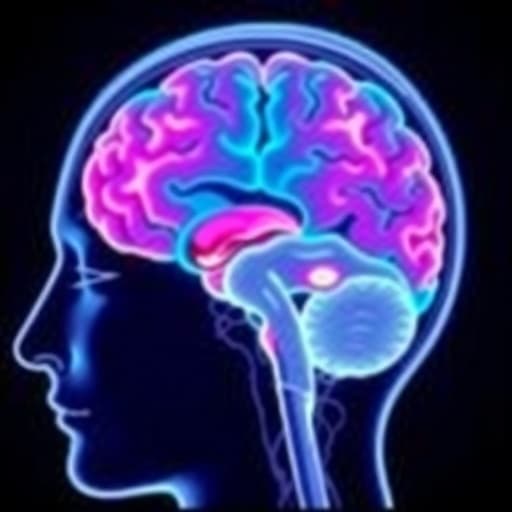
A randomized controlled trial using 7T-fMRI tested whether mindfulness training enhances fear extinction recall, a process considered critical for recovery from fear-based disorders. The answer, from Johannes Björkstrand and colleagues at Lund University's Department of Psychology, is a clear yes, with brain imaging sharp enough to show precisely where and how the effect registers.
Healthy participants received four weeks of app-based mindfulness meditation (n = 27) or served as waitlist controls (n = 28), then underwent fear conditioning and extinction recall testing. The intervention centered on guided meditation practices designed to build present-moment awareness, attentional control, and emotion regulation skills. The conditioning protocol was straightforward: participants first learned to associate certain stimuli with mild aversive outcomes, then went through repeated exposures designed to decouple the stimulus from threat, simulating extinction learning.
Mindfulness training specifically enhanced extinction recall, reducing threat responses to extinguished cues by both physiological (skin conductance, p=.028) and neural measures. That skin conductance result matters because it puts an objective, bodily number on what is typically described in purely subjective terms.
The findings reveal a candidate mechanism: mindfulness reduced activation in subcortical threat-processing regions, including the amygdala, striatum, and supplementary motor areas during extinction recall. Connectivity analyses also showed stronger functional communication between the prefrontal cortex and the amygdala, the brain's primary fear-processing center. That reinforced prefrontal-to-amygdala pathway is understood to mediate successful extinction recall, meaning the cortex is doing a more efficient job of telling the amygdala the threat has passed.
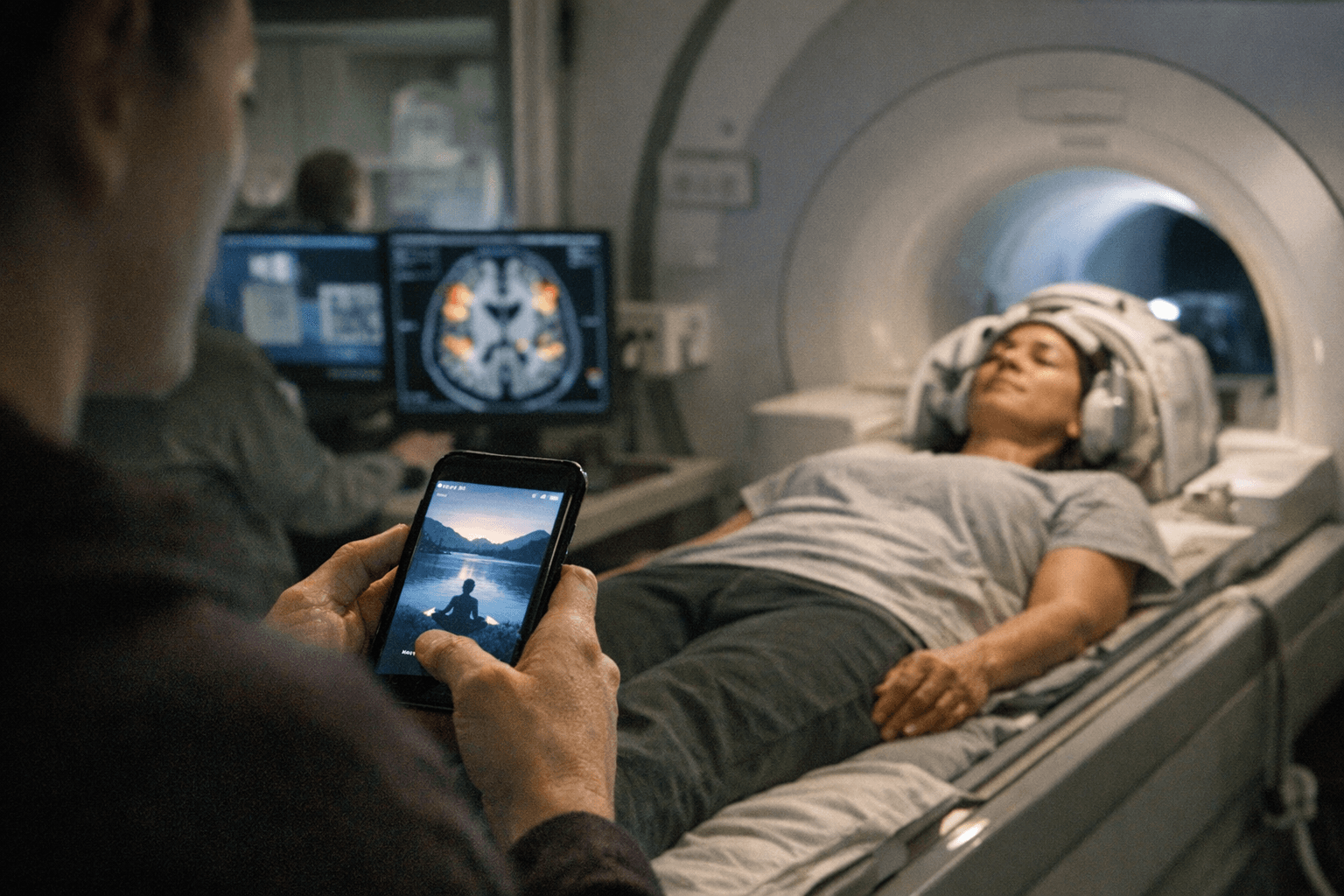
The study is a direct follow-up to Björkstrand's earlier work. In the 2019 predecessor study, healthy subjects were randomly assigned to receive either four weeks of daily mindfulness training delivered through the Headspace app or were assigned to a waitlist control condition. That earlier paper established the behavioral effect. The research team was then repeating the experiment with twice the number of participants, conducted inside an fMRI scanner equipped with an extra strong electromagnetic field to measure brain activity to a high degree of precision throughout all parts of the experiment. The new 7T paper is the payoff of that follow-through.
The National 7T facility at Lund University Bioimaging Center provided experimental resources, with open access funding provided by Lund University. UK received research funding from Lundbeckfonden (grant ID: R291-2018-1462) for this study.
Fear-based disorders affect millions worldwide, yet current treatments show limited effectiveness for many patients, and while mindfulness is increasingly used clinically for anxiety and trauma disorders, the neural mechanisms underlying its effects on fear processing have remained unclear. That gap is what makes the mechanistic data here useful: it's not just that app-based practice reduced fear responses, but that the imaging shows the specific subcortical circuitry being recalibrated. For practitioners working with exposure-based approaches, extinction recall is not an abstract concept; it's the core of why exposure therapy works, or sometimes doesn't. A four-week, app-delivered protocol producing measurable changes in the PFC-amygdala circuit that governs that recall is exactly the kind of finding that bridges the cushion and the clinic.
This article was produced by Prism’s automated news system from verified source data, official records, and press releases, then run through automated quality and moderation checks before publishing. The system is built and supervised by the people who set the standards it runs under. Read our full AI policy.
Did this article answer your question?


