New review says mindfulness teachers need personal practice to lead well
Personal practice is back at the center of mindfulness teaching. The new review says MBCT and MBSR instructors are judged not just on skill, but on embodiment.
A mindfulness teacher can memorize the curriculum and still miss the point. The sharper question now is whether the teacher still sits, practices, and embodies the work well enough to lead other people through it without losing steadiness.
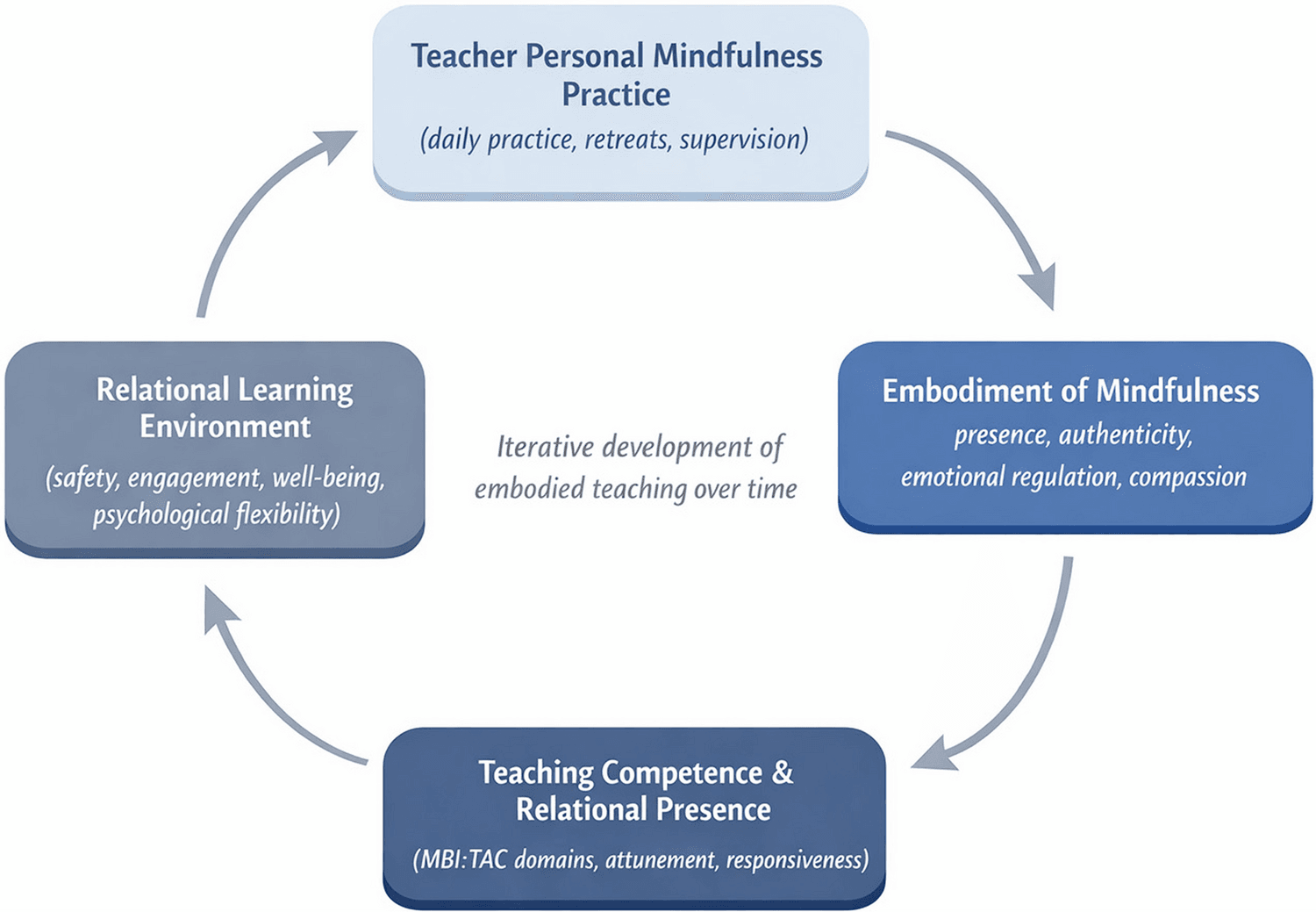
That is the argument running through Why Personal Practice Matters: A Critical Review of Embodiment and Teacher Competence in Mindfulness-Based Interventions, published in Mindfulness on April 22, 2026. The review focuses on Mindfulness-Based Cognitive Therapy and Mindfulness-Based Stress Reduction, and it treats personal practice as more than a private habit. In the field’s own terms, embodiment is part of competence: a teacher has to do more than explain mindfulness. The teacher has to transmit it with enough authenticity and consistency that participants can trust the room.

That idea is not new, but the review lands in a field that has spent more than a decade trying to define it properly. In 2011, Rebecca S. Crane, Willem Kuyken, J. Mark G. Williams and colleagues argued that quality in mindfulness teaching depends on training processes, standards and competence. The Mindfulness-Based Interventions: Teaching Assessment Criteria, better known as the MBI:TAC, grew out of work beginning in 2008 in the UK around MBSR and MBCT. Its first validation study used 16 assessors to rate 43 teachers and reported internal consistency of .94 and an overall intraclass correlation coefficient of .81. That kind of measurement matters because it turns an old intuition into a professional standard: not everyone who can guide a practice can teach it well.
The accountability piece gets sharper when training moves beyond philosophy and into certification. Oxford Mindfulness says its Certificate of Competence requires a full assessment based on recorded MBCT teaching, reviewed by trained MBI:TAC assessors. The certificate requires competence in at least five domains, with no more than one domain rated as Advanced Beginner and none as Beginner. BAMBA, the British Association of Mindfulness-Based Approaches, describes itself as the UK’s primary professional body for mindfulness practitioners, teachers and training organizations, and its current Good Practice Guidelines call for a BAMBA-recognized training qualification, a supervised pathway lasting at least 12 months, and at least five days of extended practice within a 12-month cycle.

The field is also starting to ask participants, not just assessors, what competence looks like. A 2025 study developed the MBI:PAT questionnaire, and Oxford Mindfulness said it offers a scientifically sound way to ask participants about their teacher’s competence. That shift matters. It acknowledges the obvious thing students notice first: whether a teacher seems attentive, interested and grounded, or whether something feels off. In a mindfulness boom filled with apps, institutions and digital courses, that is the real test. Personal practice is not a badge of purity. It is still the backbone of credible teaching.
This article was produced by Prism’s automated news system from verified source data, official records, and press releases, then run through automated quality and moderation checks before publishing. The system is built and supervised by the people who set the standards it runs under. Read our full AI policy.
Did this article answer your question?