Study Finds Peak Brainwave Changes Occur at 7 Minutes of Meditation
New EEG research finds brainwave changes peak at 7 minutes into a breath-watching session, suggesting a quick daily sit may be neurologically sufficient.
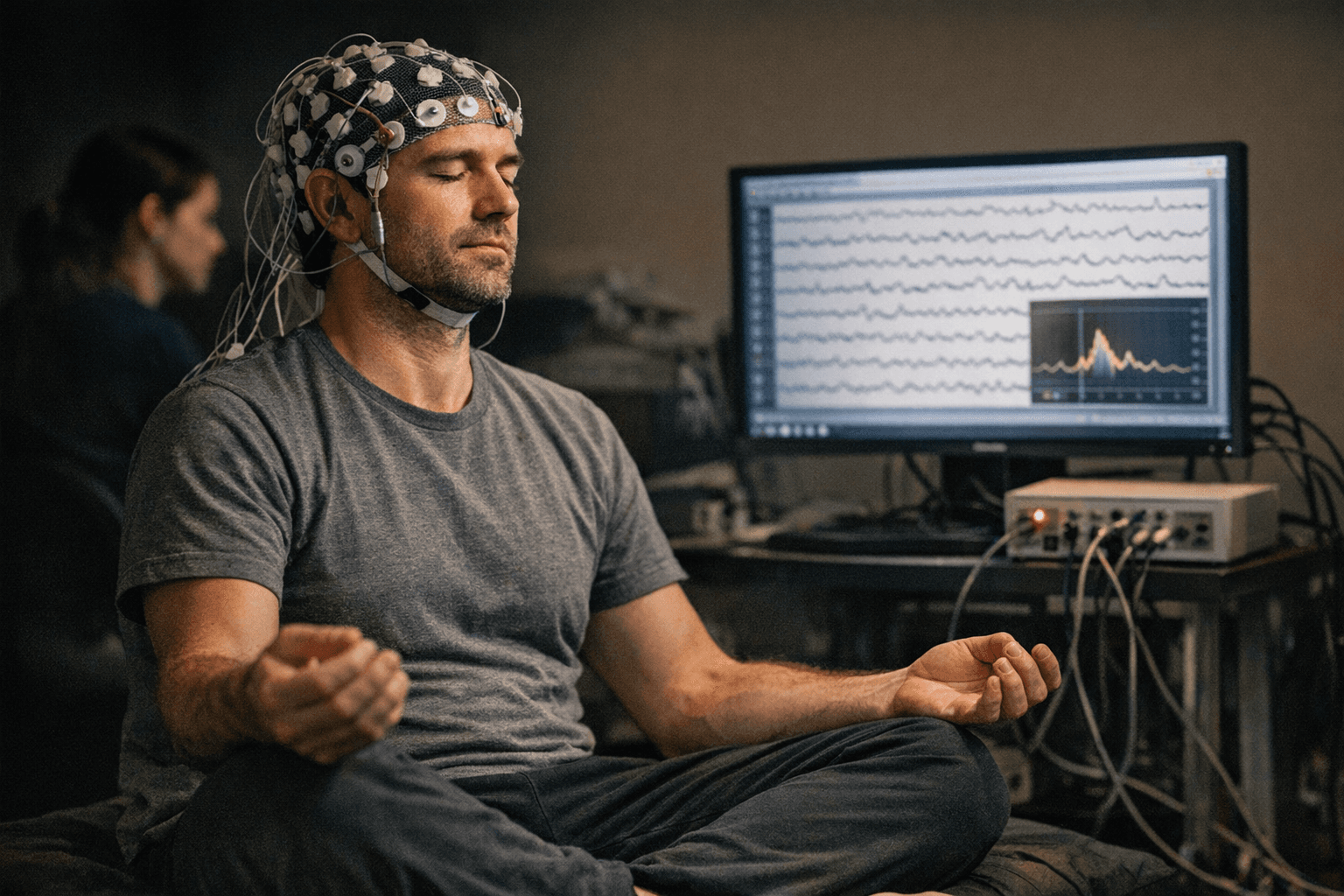
Seven minutes. That's how long it takes for your brain to hit peak measurable change during a focused-attention meditation session, according to a multi-group EEG study published March 21, 2026, in the journal Mindfulness. The paper, authored by Saketh, M., Sasidharan, A., Venugopal, R., and colleagues, tracked brainwave activity continuously throughout a 10-minute Isha Yoga breath-watching practice and found something prior research had largely missed by measuring EEG only before and after sitting: the changes don't build gradually and plateau at the end. They spike in the middle.
The study's results are specific enough to be genuinely useful. EEG changes emerged around 2 to 3 minutes after participants began the breath-watching session, then peaked between 7 and 10 minutes. The directional pattern was consistent across all groups: increases in alpha, theta, and beta1 power, with simultaneous decreases in delta and gamma1 power. If you've spent time in meditation circles hearing about theta and alpha as markers of a calm, focused state, this data gives those conversations a precise timeline to work with.
What separates this study from earlier EEG and meditation research is the recording design. A pilot study on Om mantra practice, for instance, recorded EEG for more than two minutes before and after the session in 23 unskilled meditators, not during it. A separate study on Bhramari pranayama captured EEG midway through the practice in 30 experienced practitioners, which is closer but still a single snapshot. The Isha Yoga study recorded continuously throughout the session, which is how the researchers were able to identify that real-time recordings during meditation capture more fine-grained variation in brain activity than post-session data does.
Experience level made a measurable difference. Advanced meditators showed consistently higher theta and theta-alpha power at every time point, not just during peak activity windows. That tracks with what longtime practitioners often describe qualitatively, a baseline depth that novices take longer to reach, and it's reflected here in band-power differences that held across the full session.
The paper's conclusion carries a practical edge that's worth taking seriously: "brief meditation practices of seven min or more, delivered through digital platforms, could offer accessible, effective, and scalable solutions for improving mental well-being." That's a peer-reviewed team making a direct case for short daily sessions as neurologically meaningful, not just as a gateway to longer retreats.
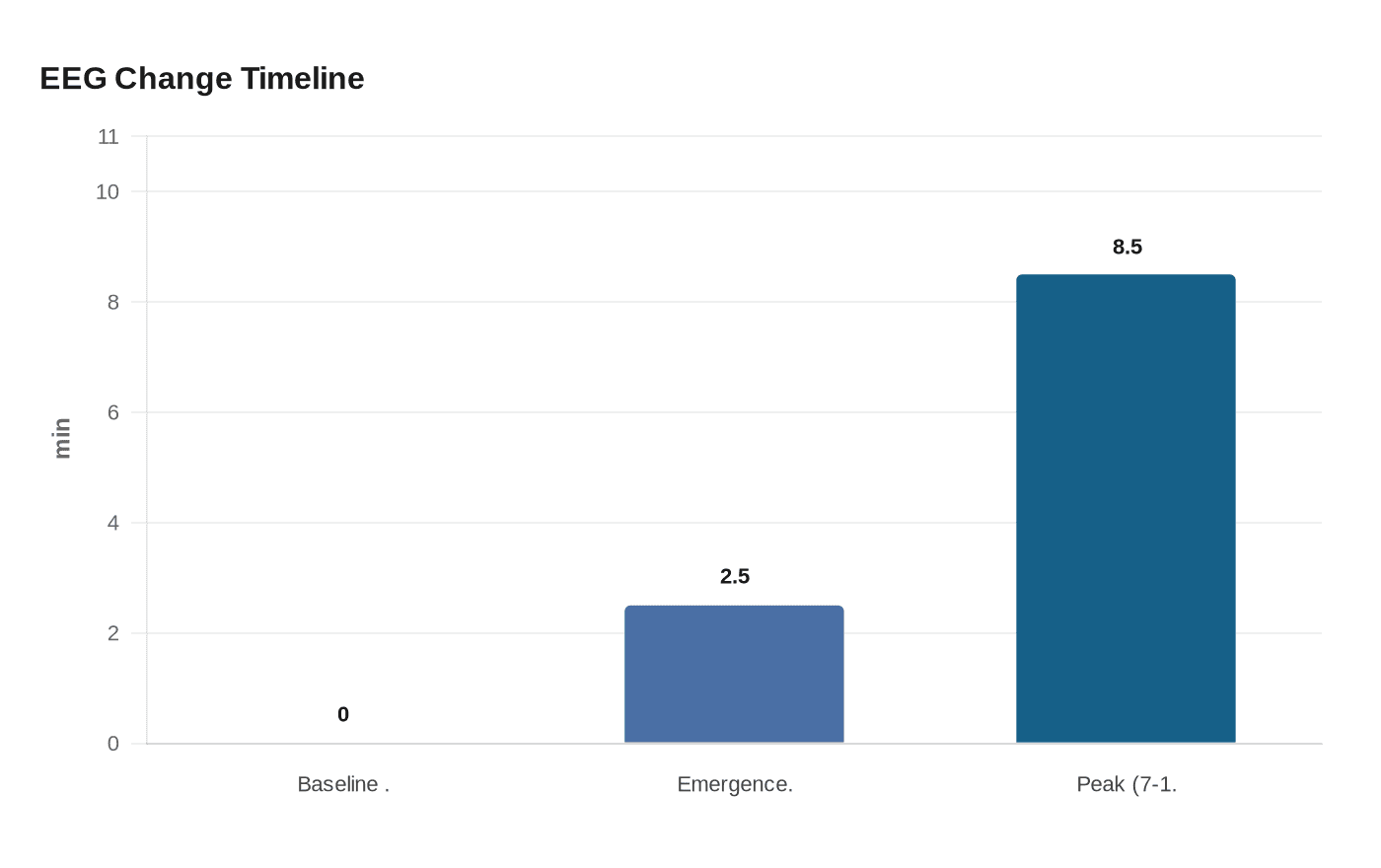
For anyone already practicing, the 7-minute finding reframes what counts as a complete sit. You don't need 45 minutes on the cushion to reach peak brainwave response. You need enough consistency to get past the 2-to-3-minute warm-up phase and push through to the window where the changes are actually peaking. Whether that holds across meditation styles beyond Isha Yoga breath-watching remains an open question the authors don't claim to answer, but the temporal architecture they've mapped is a solid starting point for thinking about session length with more precision than "longer is better.
This article was produced by Prism’s automated news system from verified source data, official records, and press releases, then run through automated quality and moderation checks before publishing. The system is built and supervised by the people who set the standards it runs under. Read our full AI policy.
Did this article answer your question?


