Study tests mindfulness of death meditation in three experiments
Mindfulness of death did not act like a calm-breathing exercise. In three experiments, it boosted inspiration, but it also changed fear, peace, and acceptance in ways that make careful framing essential.
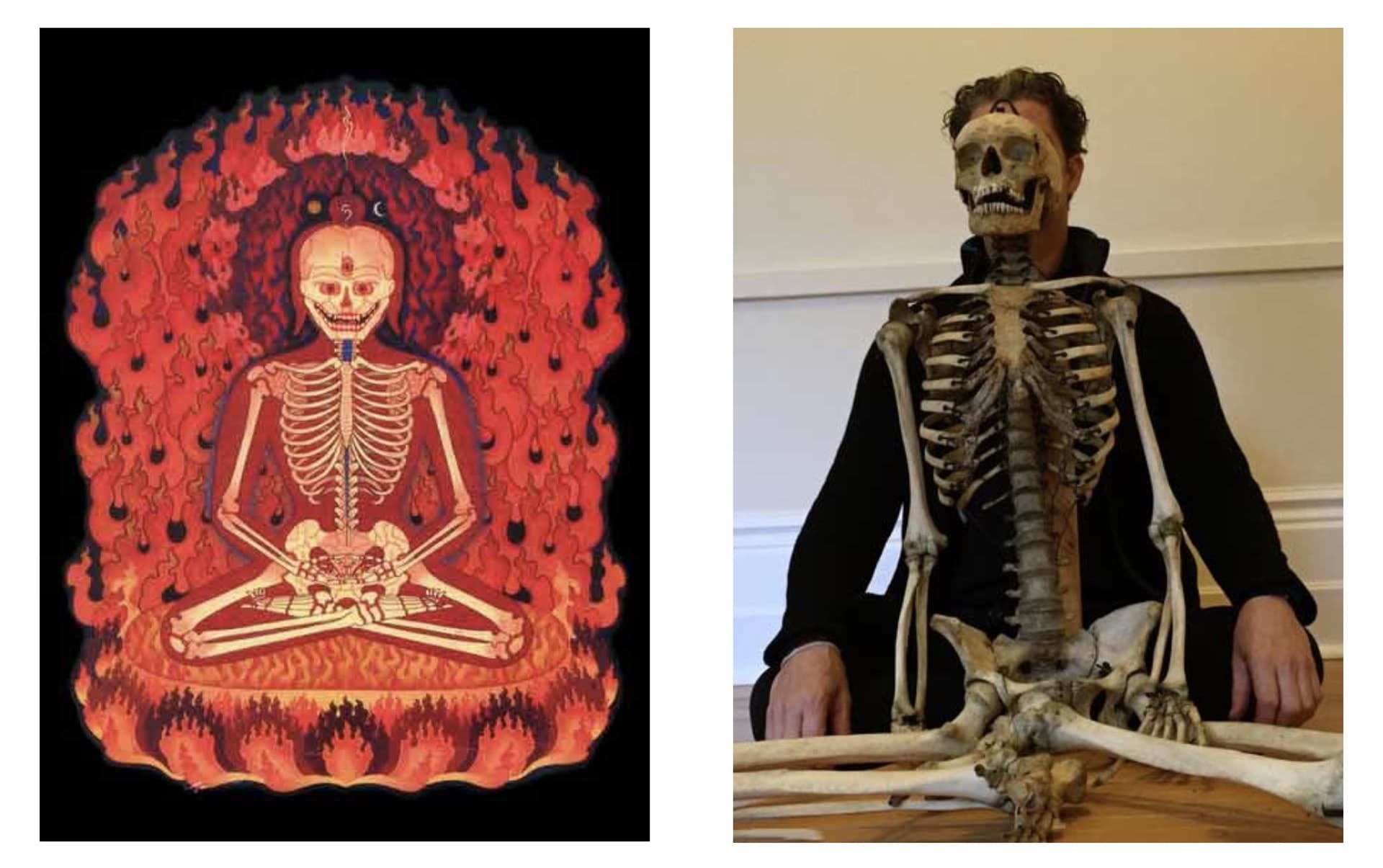
A meditation built around mortality is not a soft place to start, and that is exactly why this paper is interesting. In three experiments, Quan Tang, Yuan Zheng, and Xutong Lv tested mindfulness of death meditation against breathing practice, death-scenario imagination, standard mindfulness, and a waitlist control, and the pattern was anything but one-note. The practice could sharpen inspiration and acceptance, but it also had the power to stir anxiety and fear, which is the opposite of the cozy stress-relief pitch people often attach to mindfulness.
What was tested, and why it matters
The paper, published June 26, 2026 in *Mindfulness* as an open-access Springer Nature article, takes an important Buddhist contemplation and puts it through modern experimental design. That matters because mindfulness science has spent years treating meditation as if one broad mechanism explains everything, while this study asks a more useful question: what happens when the object of attention is death itself? The authors built a specific mindfulness of death meditation intervention because focused empirical work on the practice has been thin, even though the tradition behind it is not.
The structure is the real strength here. Study 1 compared mindfulness of death meditation with mindful breathing. Study 2 compared it with death-scenario imagination. Study 3 ran a three-arm randomized controlled trial that pitted mindfulness of death against standard mindfulness meditation and a waitlist control, while measuring emotions, self-control, death attitudes, and life satisfaction. That setup gives the paper a much cleaner read on what is unique about mortality-focused contemplation instead of treating it like just another relaxation script.
What the three experiments showed
Across Studies 1 and 2, the death-focused practice reliably increased inspiration. That is a useful result because it pushes the practice out of the usual “feel calmer now” box and into a different lane: existential reflection, meaning-making, and values pressure-testing. But the comparison with mindful breathing also showed the cost side of the ledger. Relative to breathing, mindfulness of death raised anxiety and fear and lowered peace, which is a reminder that not every meditation is supposed to feel soothing on contact.
The comparison with death-scenario imagination tells a different story and is the key to understanding the technique. Compared with simply imagining death scenarios, mindfulness of death reduced anxiety and fear, reduced death avoidance, improved peace, and increased natural acceptance. In plain terms, the structured contemplative frame mattered. This was not morbid free-association, and it was not a raw exposure exercise dressed up as spirituality. The practice worked differently because it asked participants to meet mortality through a deliberate meditative lens rather than through anxious mental theater.
Study 3 sharpened the picture further. In the randomized trial, both mindfulness of death and standard mindfulness improved emotion control and reduced sleepiness. But only the mindfulness-of-death condition reduced fear. That is the detail practitioners should not gloss over: standard mindfulness and death-focused mindfulness overlap in some self-regulation effects, yet they diverge when the target is mortality-related fear. This is not just a new flavor of breathing meditation. It behaves like a distinct contemplative tool.
How to read the results without romanticizing them
If you use this as a guide to the practice, the best reading is simple: mindfulness of death is not a generic stress-reduction technique. It may be closer to an existential practice that can surface discomfort before it produces acceptance. That makes it potentially useful for therapists, contemplative teachers, and anyone working with impermanence, death anxiety, or values-based reflection, but it also means the first response may not feel pleasant.
The distinction from rumination is crucial. Rumination spins the same frightened loop without structure or direction. Mindfulness of death, in these studies, was a defined intervention with an intentional contemplative frame, and that frame appears to be what separates reduced death avoidance and increased natural acceptance from the flat, agitated replay you get when fear runs the whole session. The difference from generic mindfulness is just as important: if your expectation is the standard “sit down, breathe, and feel better” outcome, this is not the same kind of practice.
Why the Buddhist and clinical context matters
The study does not appear in a vacuum. A 2022 grounded-theory study of 13 Thai Buddhist patients with life-limiting cancer found that death acceptance developed through three phases: engaging suffering, being open-minded about death, and adhering to Buddhist practices for increasing death consciousness. That gives the new experiments a lived context. Mortality-focused contemplation already has a role in Buddhist coping and palliative settings; the new paper simply asks how that practice behaves when tested with current lab methods.
A separate 2022 survey of medically ill adults adds another useful piece. The average medical-illness stress score was 7.23 out of 10, 70% reported little or no fear of death and dying, and 75% preferred psychotherapy or mindfulness interventions for dealing with stress. Those numbers help explain why mortality-aware meditation is drawing attention beyond doctrine. There is a real clinical audience for interventions that address illness stress without pretending death is not in the room.
There is also a clear research trend here. In 2025, a randomized study in Malaysia tested guided mindfulness of death in 52 cancer patients with moderate to severe fear of death. Earlier palliative-care work has also tested a 5-minute mindfulness of peace intervention in adult palliative-care patients. Taken together, these studies show the field moving toward short, targeted contemplative tools for high-distress situations rather than one-size-fits-all mindfulness packages.
Who should not try this alone
This is the part to take seriously. Because mindfulness of death can raise anxiety and fear before it improves acceptance, it is not the practice to freestyle when you are already unstable, overwhelmed, or in the middle of an acute grief or panic spiral. The study’s own results point to a method that needs careful setup, not casual experimentation in the middle of a rough night.
- Start with brief sessions rather than open-ended contemplation.
- Use a framework that keeps attention structured, not free-floating.
- Pair it with standard mindfulness or emotion-regulation skills if fear rises fast.
- Avoid using it as a substitute for therapy when death anxiety is already severe.
A safer way to approach it is to treat it as a guided, bounded practice:
That is the real lesson of the three experiments: mindfulness of death is neither taboo novelty nor universal remedy. It is a precise tool that can open up inspiration, acceptance, and fear reduction, but only when it is handled as a serious contemplative method rather than a generic calm-down exercise.
This article was produced by Prism’s automated news system from verified source data, official records, and press releases, then run through automated quality and moderation checks before publishing. The system is built and supervised by the people who set the standards it runs under. Read our full AI policy.
Did this article answer your question?