Traditional Buddhist mindfulness matches secular therapy in depression trial
In a 66-person pilot, Buddhist mindfulness and secular MBCT cut depression by nearly the same amount, but only the Buddhist-rooted arm boosted spirituality.
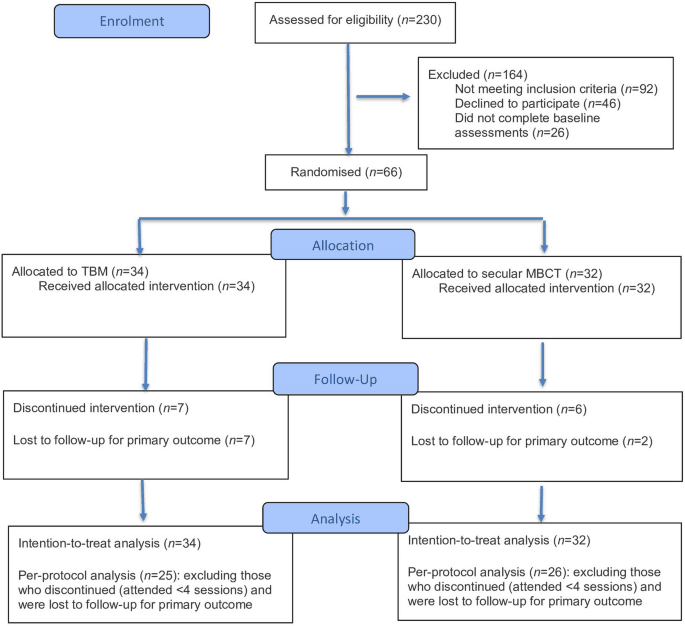
A pilot trial of 66 Buddhist adults with lingering depressive symptoms found that an eight-week traditional Buddhist mindfulness program and secular mindfulness-based cognitive therapy produced nearly the same clinical gains. Mean Beck Depression Inventory-II scores fell by 13.1 points in the traditional Buddhist mindfulness arm and 12.9 points in the MBCT arm, while WHO-5 well-being scores rose by 6.8 points and 6.9 points.
The study was a Research Square preprint and marked not peer reviewed. It had been registered in the Clinical Trial Registry on June 13, 2024. Participants were already receiving outpatient antidepressant treatment when they were randomized, 34 to traditional Buddhist mindfulness and 32 to secular MBCT. Prespecified non-inferiority margins were 2.5 BDI-II points and 1.25 WHO-5 points, but the Buddhist-rooted program did not clear that statistical bar, even as both groups improved substantially and the between-group differences on the primary outcomes were not statistically significant.
MBCT was built in the 1990s as an eight-week group relapse-prevention program, mixing mindfulness training with cognitive-behavioral elements and later becoming a standard classroom model taught in groups of roughly 8 to 15 people. Traditional Buddhist mindfulness draws directly from sati, the contemplative practice described in Buddhist traditions, and sits inside a larger ethical and moral framework.

A Lancet meta-analysis found no evidence that MBCT was superior to maintenance antidepressant treatment for preventing relapse, although both approaches were linked to durable gains in relapse, recurrence, residual symptoms and quality of life. A JAMA Psychiatry editorial summarizing nine randomized trials with 1,258 patients found that MBCT reduced relapse risk over 60 weeks, and routine clinical data from the Netherlands showed depressive symptoms falling after MBCT in 765 patients, alongside gains in mindfulness skills and self-compassion.
This article was produced by Prism’s automated news system from verified source data, official records, and press releases, then run through automated quality and moderation checks before publishing. The system is built and supervised by the people who set the standards it runs under. Read our full AI policy.
Did this article answer your question?