Evaporated Milk Sourdough Sandwich Bread Brings Softness to Loaf Pan Baking
Evaporated milk turns sourdough into a softer, sliceable sandwich loaf that still keeps its tang, and it holds up better for lunches and toast.
Why evaporated milk changes the loaf
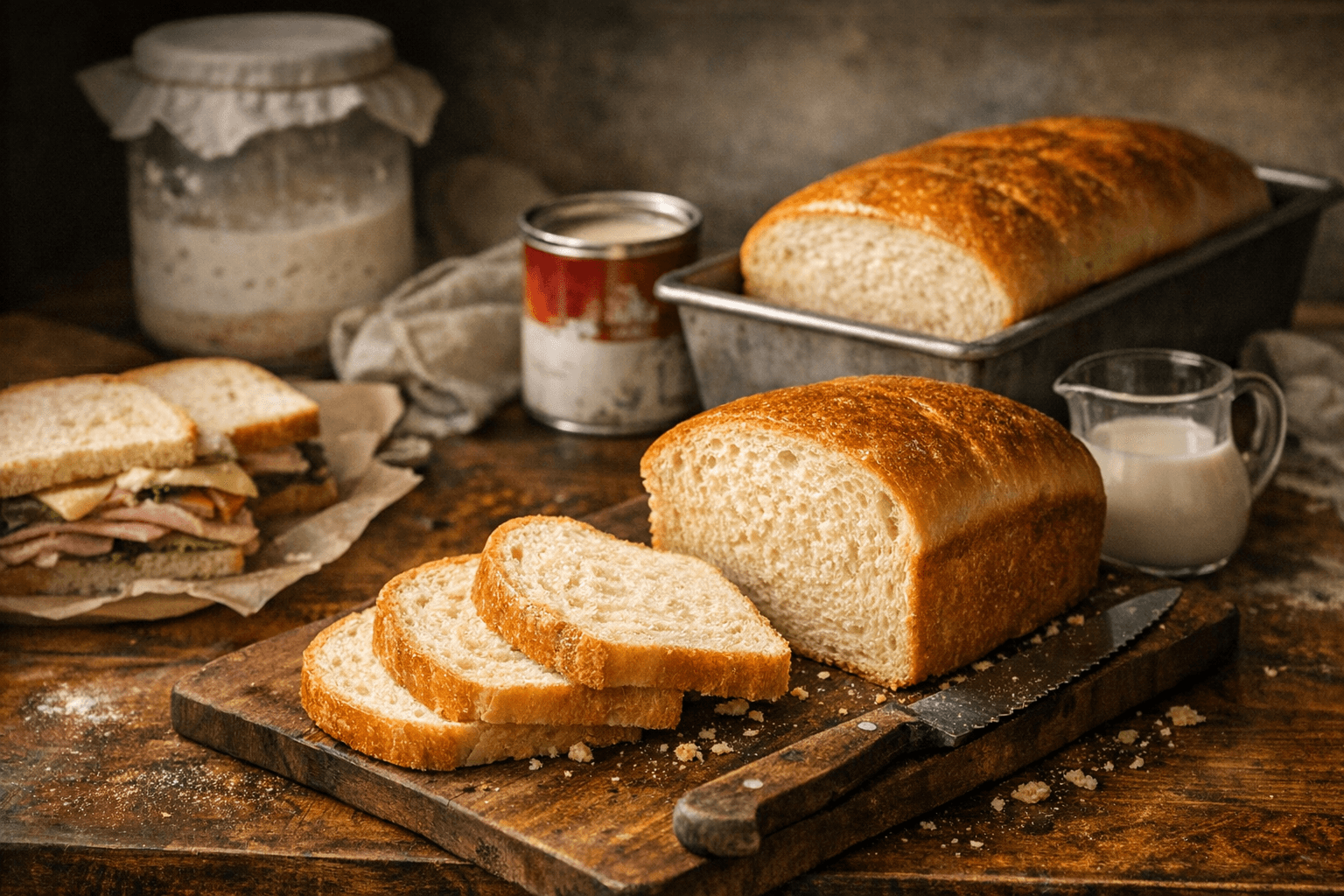
Seb’s evaporated milk sourdough sandwich bread sits right in the sweet spot between rustic sourdough and classic white sandwich bread. The loaf pan gives it a softer, more even shape than a crusty boule, while the sourdough starter keeps the flavor alive enough to satisfy anyone who wants more than plain white bread.
That balance is exactly why this style keeps showing up in home baking. King Arthur Baking Company has leaned into soft-textured sourdough sandwich loaves and sourdough milk bread for the same reason: a lot of bakers want the tang of sourdough in a familiar sliceable format, not only in an artisan round with a hard crust.
What evaporated milk is doing in the dough
Evaporated milk is more than a convenient pantry swap. Federal standards define it as milk with part of its water removed, sealed in a container, and heat-processed to prevent spoilage, while USDA’s shelf-stable description makes clear that it is meant to sit safely at room temperature. That matters in a long-fermented dough, where fresh milk can become a headache and evaporated milk stays dependable.
The milk solids and lactose bring real texture benefits. They help the dough feel smooth and supple, support gluten development, and keep the fermentation from feeling harsh or tight as it moves through bulk rise and final proof. In practical terms, that means a dough that is easier to handle and a baked loaf that slices cleanly without losing the sourdough character.
How the crumb and crust get softer
This is where the loaf earns its sandwich-bread reputation. King Arthur Baking says milk-based doughs tend to be softer and more tender than water-based doughs, and Iowa State University Extension and Outreach notes that milk can slightly weaken gluten strands, which increases tenderness and helps create a browner crust. That softness is the point here, not a compromise.
The finished loaf gets a tender crumb and soft crust that feel closer to enriched milk bread than to a lean country loaf, but the method still stays firmly in sourdough territory. It does not need tangzhong to get that plush texture, which makes the formula feel especially practical for bakers who want a softer loaf without adding another technique to the process.
What else is in the formula
The structure comes from bread flour and active starter, while evaporated milk adds richness and water balances the hydration. Butter adds tenderness and helps the loaf stay pleasant longer, honey brings a touch of sweetness and contributes to browning, salt keeps the flavor from drifting flat, and the egg wash finishes the top with a bakery-style sheen.
That ingredient list is doing a lot of quiet work. Bread flour gives the loaf enough strength to stand up in the pan, but the enrichment keeps it from turning tough. The result is a loaf that feels intentional from the first slice: structured enough for sandwiches, soft enough for toast, and rich enough to eat plain.
Why the crust browns so well
The color on a loaf like this is not accidental. King Arthur Baking points to the Maillard reaction as the reason bread crust turns golden brown, and Exploratorium explains that the chemistry depends on proteins, sugars, and enough heat. In this dough, the milk solids and honey give that reaction more to work with, so the crust can develop a deeper, more appealing color than a lean dough usually does.
That browning matters because it changes the way the loaf reads on the table. A sandwich bread that looks pale can feel flat before you ever slice it, but this kind of formula gives you a crust that looks finished and tastes more complex, even while staying soft under the knife.
When this loaf makes more sense than a lean country loaf
If you want open crumb, a thick crust, and a loaf that makes a statement on its own, a lean country loaf still has its place. But if you are baking for weekday lunches, toast, peanut butter sandwiches, grilled cheese, or leftovers that need to survive the next morning, this is the better tool for the job.
The bigger advantage is consistency in everyday use. King Arthur’s sourdough milk bread is described as staying soft for several days, and that is the kind of promise families notice fast. A loaf like this can move from breakfast toast to packed lunches to French toast without drying out or falling apart.
How to think about this style in your own kitchen
Use evaporated milk sourdough sandwich bread when you want sourdough flavor without the full rustic bite of a country loaf. It is especially useful if you like to keep a starter going but want the final bread to feel familiar, soft, and practical enough for daily slicing.
A loaf like this also changes the mood of sourdough baking at home. Instead of treating sourdough as a weekend-only artisan project, it makes it a pantry bread, something you can actually rely on for the school week, the workweek, and the last two slices in the bag. That is the real win here: a softer loaf that still tastes like sourdough, and still feels like bread worth making again.
This article was produced by Prism’s automated news system from verified source data, official records, and press releases, then run through automated quality and moderation checks before publishing. The system is built and supervised by the people who set the standards it runs under. Read our full AI policy.
Did this article answer your question?