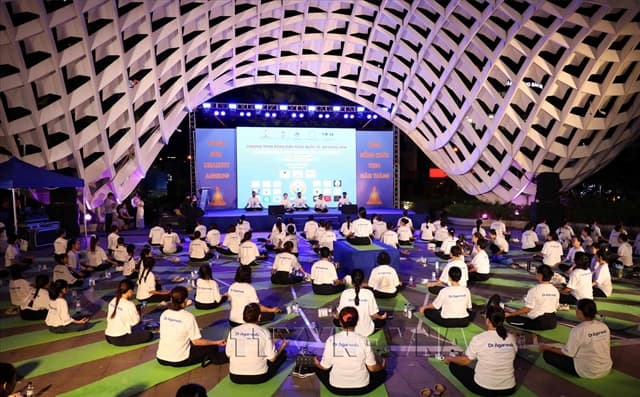
Studies Link Yoga to Gene Changes, Brain Protection, and Stress Relief
Yoga’s science case is real enough to matter, but the strongest findings are still early: gene shifts, brain-scan changes, and calmer autonomic tone.
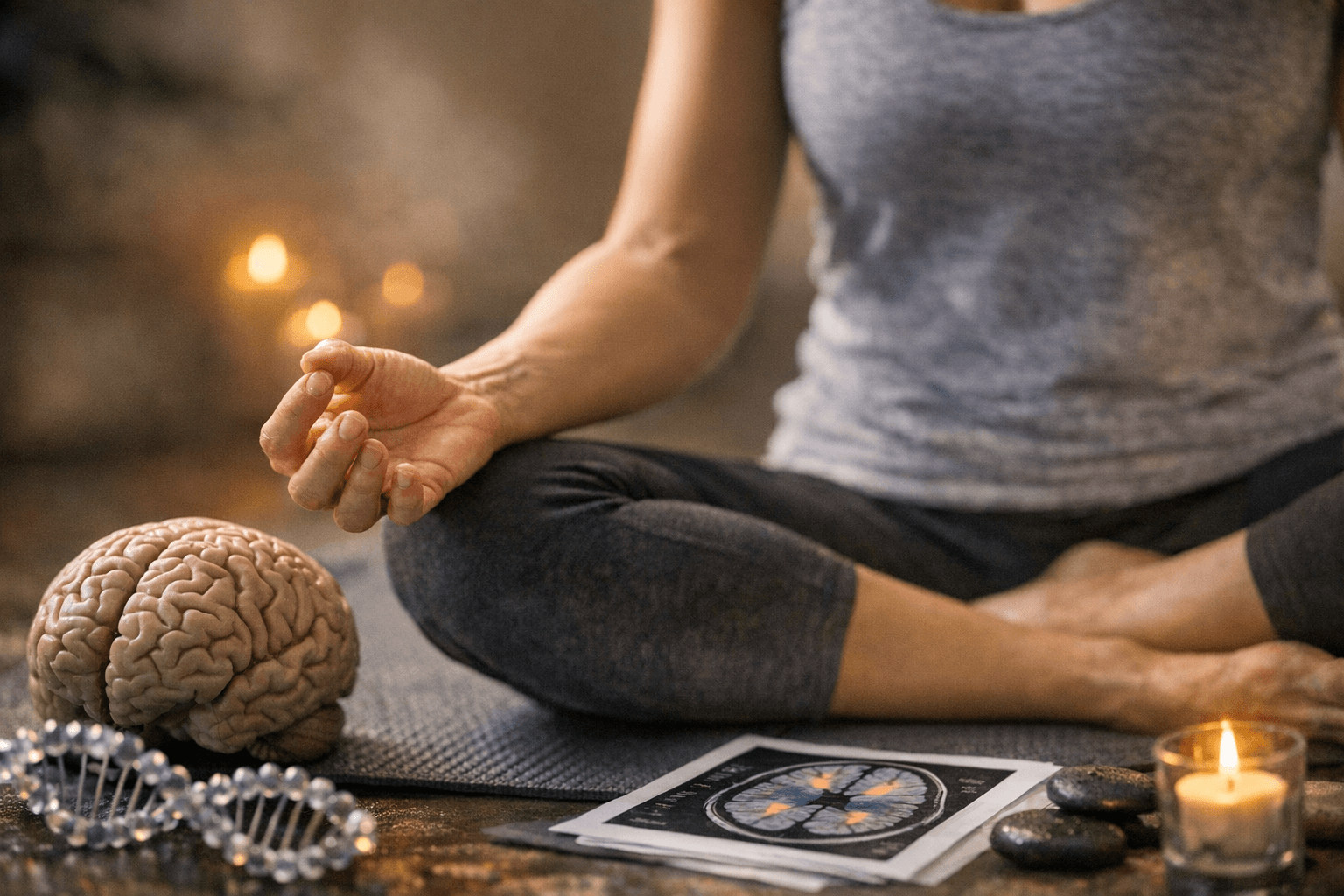
Yoga’s viral science claim has a real backbone, but not the cartoon version
The loudest pitch around yoga right now is not about flexibility. It is about biology: gene expression, hippocampal gray matter, vagus nerve activity, and stress pathways that look different in regular practitioners. The responsible read is more interesting than the hype. Yoga appears to nudge inflammation, brain structure, and autonomic balance in measurable ways, but the evidence still comes from small, mixed studies rather than a clean proof that one practice “rewires” every brain.
The gene-expression story is the most striking, and also the easiest to overstate
The newest piece of the puzzle is a 2025 systematic review in *Cureus* that pulled together 11 randomized controlled trials from 2015 to 2024, involving more than 700 adults. Across those studies, yoga was associated with downregulation of pro-inflammatory genes such as IL-6, TNF-, and NF-B in five trials, and upregulation of immune-regulatory genes including TGF-, FoxP3, sHLA-G, and IL-10 in four trials.
That matters because those are not vague wellness markers. They are the sort of molecular signals researchers use to describe inflammation, immune regulation, and recovery. The same review also reported signals affecting DNA repair, mitochondrial function, and epigenetic regulation, which is exactly the kind of language that makes yoga sound almost pharmaceutical. Still, the review’s own caution is the part worth keeping in view: the sample sizes were small, the interventions were short, and the results are too heterogeneous to turn into a sweeping claim about what yoga does in every body.
The cleanest way to read this is simple: yoga may influence stress biology at the level of genes, but the data do not justify pretending it is a universal anti-inflammatory switch.
The brain-scan evidence is real, but it is not as dramatic as the headlines
The imaging story is older than the gene-expression wave and a little easier to interpret. A 2015 study in *Frontiers in Human Neuroscience* comparing yogis with control participants found that the controls showed the expected age-related global gray-matter decline, while the yogis did not. That does not prove yoga prevents brain shrinkage outright, but it does suggest a possible protective effect against the structural changes that often come with age.
Harvard Health summarized MRI findings in 2024 that pointed in the same direction: regular yoga practitioners had a thicker cerebral cortex and hippocampus than nonpractitioners. Those are not throwaway details. The cortex and hippocampus are exactly the regions that tend to thin with age, and they are central to memory, learning, and executive function. Harvard Health framed that as a plausible route for yoga to affect learning, memory, mood, and anxiety by changing brain structure and function.
The key point for readers is that these findings are promising, not definitive. Most of the brain-imaging work tells you that yoga is associated with better-looking scans, not that yoga alone caused every difference.
The hippocampus is where the evidence starts to get more specific
If you want the most concrete neuroscience example, it is the 2023 randomized controlled trial in older women at risk for Alzheimer’s disease. The study enrolled 11 women in a 12-week Kundalini yoga program and 11 in memory-enhancement training. The two groups did not simply get the same benefit by different means. They showed different hippocampal connectivity changes.

In the yoga group, a left anterior hippocampal subregion showed greater connectivity increases, and that pattern was associated with lower stress. In the memory-training group, other hippocampal networks shifted in ways linked to a lower frequency of forgetting. That is the sort of result that cuts through the usual wellness fog: yoga and cognitive training were not interchangeable, and they did not appear to drive the same neural changes.
A separate 2022 pilot randomized controlled trial in older adults found that Kundalini yoga increased hippocampal volume. Put those two studies together and the picture gets more nuanced. Yoga may influence both how the hippocampus communicates and how much space it occupies, at least in some older adults. But the sample sizes were tiny, and both studies point to specific populations rather than a universal effect for everyone who rolls out a mat.
Stress relief may run through the vagus nerve, but the quality of the evidence is uneven
The autonomic side of the story has been around longer and is still one of yoga’s best-selling scientific claims. A 2016 review of 59 studies involving 2,358 participants found that yoga can increase heart-rate variability and vagal dominance during practice. That is the physiology people usually mean when they talk about “activating the parasympathetic nervous system” or calming the body down.
The catch is that the same review also warned that much of the evidence was built on small, methodologically weak studies. That is important because vagal tone and heart-rate variability are easy to market and hard to prove cleanly. The signal is plausible and repeated often enough to take seriously, but not strong enough to support breathless claims that yoga fixes stress biology for everyone on command.
In practice, the best reading is this: yoga often looks like a body state that tilts away from fight-or-flight, especially during the session itself. Whether that shift lasts, how much it varies by style, and how much it translates into daily life are still open questions.
What this means if you actually practice yoga
The practical takeaway is not that yoga is magic. It is that yoga looks like a legitimate biological intervention with signals in inflammation, brain structure, hippocampal connectivity, and autonomic regulation. The strongest evidence supports a modest, cumulative effect, not an overnight transformation.
- If you use yoga for stress, the most credible promise is a measurable calming effect, not a permanent cure.
- If you are looking at brain health, the imaging data suggest possible protection or support, especially around the hippocampus and cortex, but the studies are still small.
- If you are tempted by the gene-expression headlines, keep the scale in mind: over 700 adults across 11 trials is encouraging, yet still too limited to generalize broadly.
- If you practice Kundalini, it is notable that two of the more specific hippocampal findings came from that style, but the broader evidence does not reduce yoga’s biology to one school alone.
Yoga’s science case is strongest when you describe it honestly: not as mystical brain rewiring, and not as a placebo with good PR, but as a practice that may move stress, immune, and brain markers in the right direction. That is plenty interesting on its own, and it is still not the same thing as a settled verdict.
This article was produced by Prism’s automated news system from verified source data, official records, and press releases, then run through automated quality and moderation checks before publishing. The system is built and supervised by the people who set the standards it runs under. Read our full AI policy.
Did this article answer your question?