David Sinclair spotlights Leroy Hood, biotech pioneer still powering science at 87
Leroy Hood still starts before dawn, then hits 200 push-ups, a routine that matches the scale of the biotech tools he built and the medicine he helped reshape.
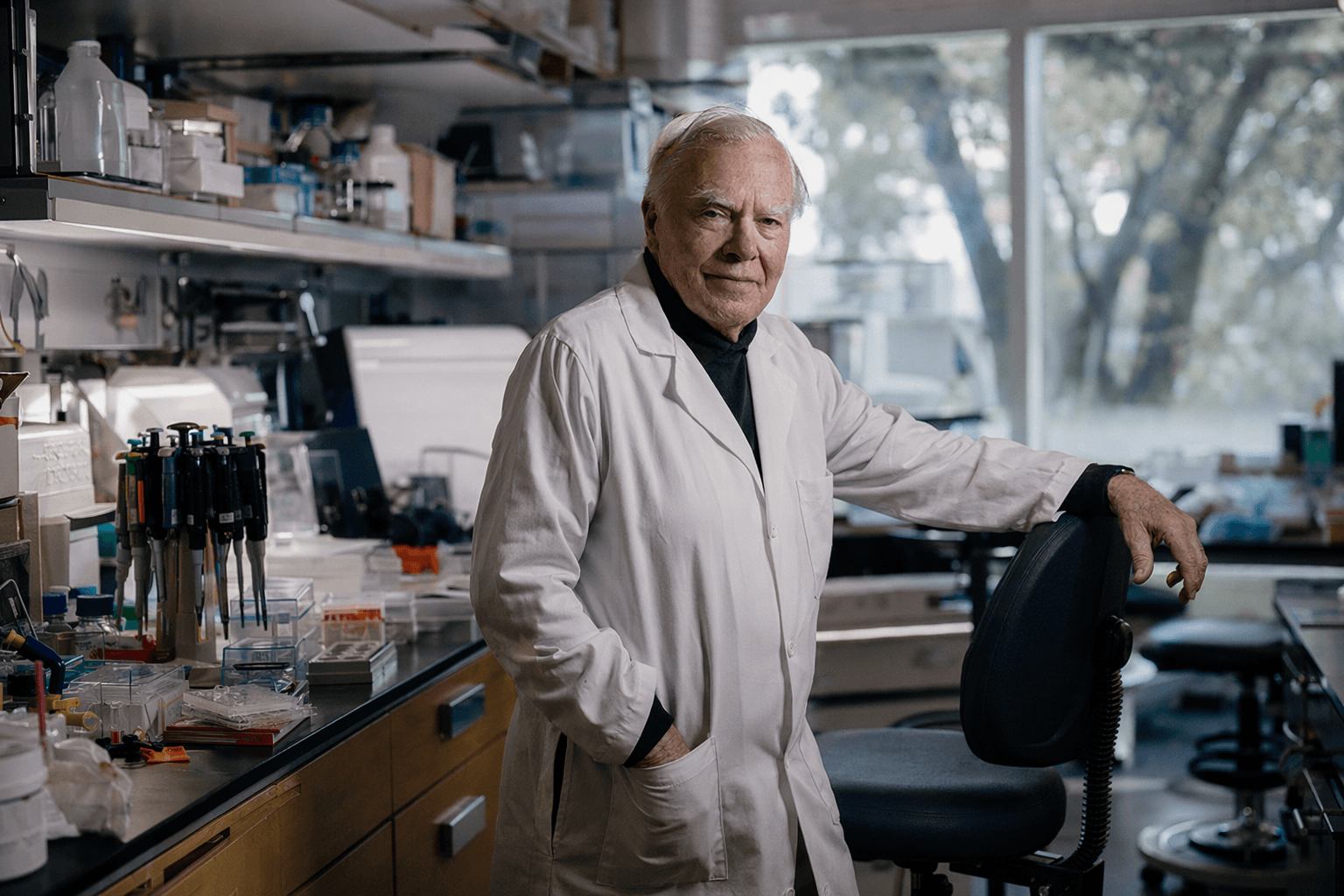
Leroy Hood built the instruments that made modern biology machine-readable, and at 87 he still lives like someone with work left to do. He wakes around 5:30 a.m., spends his first two hours writing and strategizing, then moves into a 40-minute workout of 200 push-ups, 100 sit-ups, 100 deep-knee bends, stretching, and balance exercises. He also takes 25 supplements, practices intermittent fasting, and walks about a mile to his Seattle office.
That discipline tracks with a career that helped create the protein-analysis era. Hood, born October 10, 1938, developed a gas-liquid phase protein sequencer in 1980 with Michael Hunkapiller at Caltech, then followed it with a protein synthesizer in 1984 and an automated DNA sequencer in 1985. Those tools were not just incremental lab upgrades. Hood’s sequencer became important enough to play a role in the Human Genome Project, turning what had once been painstaking manual work into the kind of automated pipeline modern biology now takes for granted.
Hood carried that engineering mindset into institutional science. He co-founded the Institute for Systems Biology in 2000 and served as its first president until 2017, helping define systems biology as a field that looks at biology as an integrated network instead of a stack of isolated parts. The same logic runs through his P4 medicine framework, predictive, preventive, personalized, and participatory, which argues that medicine should move away from waiting for disease and toward measuring risk early, tracking biomarkers continuously, and intervening sooner.
The honors followed the influence. Hood received the National Medal of Science in 2011 and has also been recognized with the Lasker Award, the Kyoto Prize, and the Lemelson-MIT Prize. He is credited with founding more than a dozen companies, including Amgen, a reminder that his work did not stay confined to academic papers or conference talks. It became infrastructure for an industry.
That is why David Sinclair keeps pointing people back to Hood. Sinclair, a tenured Harvard Medical School genetics professor known for aging research, leads a lab that trains more than 100 people, with many alumni moving into leadership roles in academia, industry, and venture capital. Harvard materials say Sinclair has argued that aging can be slowed and even reversed in some approaches. Put Hood beside Sinclair and the through line is obvious: the same curiosity that built protein sequencers now drives the rush toward biomarkers, healthy aging, and preventive medicine. Hood is still living inside that feedback loop, not just explaining it.
Know something we missed? Have a correction or additional information?
Submit a Tip