Eden Brew wins US GRAS clearance for cow-free casein, targets supplements
Eden Brew’s cow-free beta-casein cleared GRAS, and the startup is aiming first at supplements, where functional dairy protein can move fastest into market.
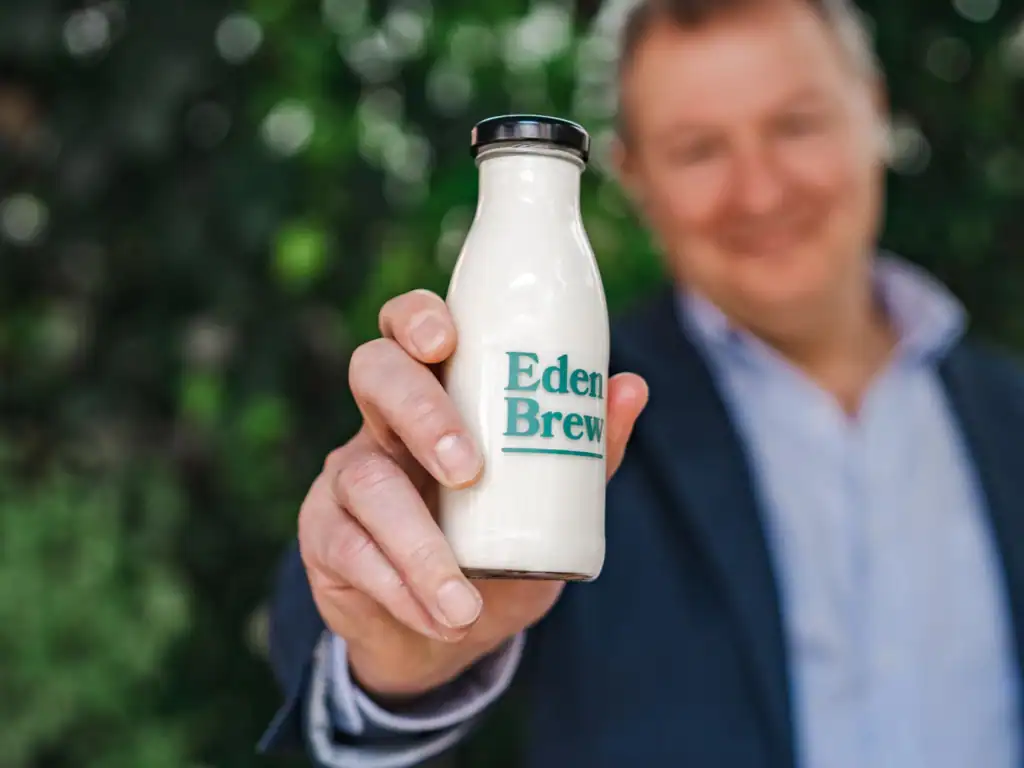
Eden Brew has turned its cow-free beta-casein from a lab-scale promise into a commercial ingredient, and it is not heading first for supermarket milk. The Melbourne startup said it self-affirmed recombinant beta-casein as Generally Recognized as Safe in early March 2026, a step that gives it a clearer path to U.S. sales and a faster route into formulations that need dairy-like performance without cows.
The company’s first commercial push is into health and supplements, a telling choice for a precision-fermentation business trying to convert technical proof into revenue. Casein matters because it is one of dairy’s most commercially valuable proteins, prized for texture, mouthfeel and protein delivery. That makes it attractive to brands building ready-to-drink beverages, bars and specialty wellness products, where protein quality is part of the sales pitch and not just a line on a label.
The regulatory milestone also changes the kind of conversations Eden Brew can have with partners. GRAS status can shorten the path from ingredient development to branded launches, and it gives formulators a cleaner story when they want animal-free functionality without the livestock supply chain. Eden Brew co-owner Norco, Australia’s largest dairy cooperative, has already backed that thesis with capital. The company launched in 2020 and raised A$24.4 million in Series A funding in October 2023 from Main Sequence Ventures, Breakthrough Victoria, Radar Ventures, Possible Ventures, Mars’ Digitalis Ventures, NGS Super and Orkla.
Eden Brew has said its animal-free casein micelle is designed to recreate the sensorial and nutritional properties of conventional dairy, and it has leaned hard on the efficiency argument as well. The company has claimed its process uses less than 10 litres of water to make a litre of finished milk product, versus 1,000 litres for cow’s milk and 6,000 litres for almond milk. Those numbers are part of the commercialization pitch as much as the science.
The broader U.S. landscape shows why that matters. The Food and Drug Administration’s GRAS inventory includes GRN No. 1228 for beta-casein produced by E. coli DSM 35048, notified by Fermify GmbH, with intended uses up to 15% in cheese, cheese analogs, non-alcoholic beverages, dairy product analogs, frozen dairy desserts, milk products and plant protein products. New Culture also announced self-GRAS for animal-free casein in February 2024, describing it as the world’s first cleared for commercial sale. At the same time, policy risk is still in the background after Health Secretary Robert F. Kennedy Jr. directed FDA to revisit the self-affirmed GRAS pathway in March 2025.
For Eden Brew, the logic is straightforward: supplements offer a lower-friction bridge from ingredient approval to paid adoption. If animal-free casein can win there first, broader dairy applications become easier to justify, one high-value formulation at a time.
This article was produced by Prism’s automated news system from verified source data, official records, and press releases, then run through automated quality and moderation checks before publishing. The system is built and supervised by the people who set the standards it runs under. Read our full AI policy.
Did this article answer your question?