Nature Study Reveals Hidden Human Microproteins, Opening Cancer Research Frontiers
A Nature study uncovered 1,785 hidden microproteins, including immune-surface peptideins that could shift cancer target hunting.
The human proteome just got a lot messier. A Nature study published May 6, 2026, found 1,785 previously undetected microproteins hidden inside regions long treated as noncoding, forcing a rethink of the roughly 19,500 proteins scientists have used as the standard catalog of human biology.
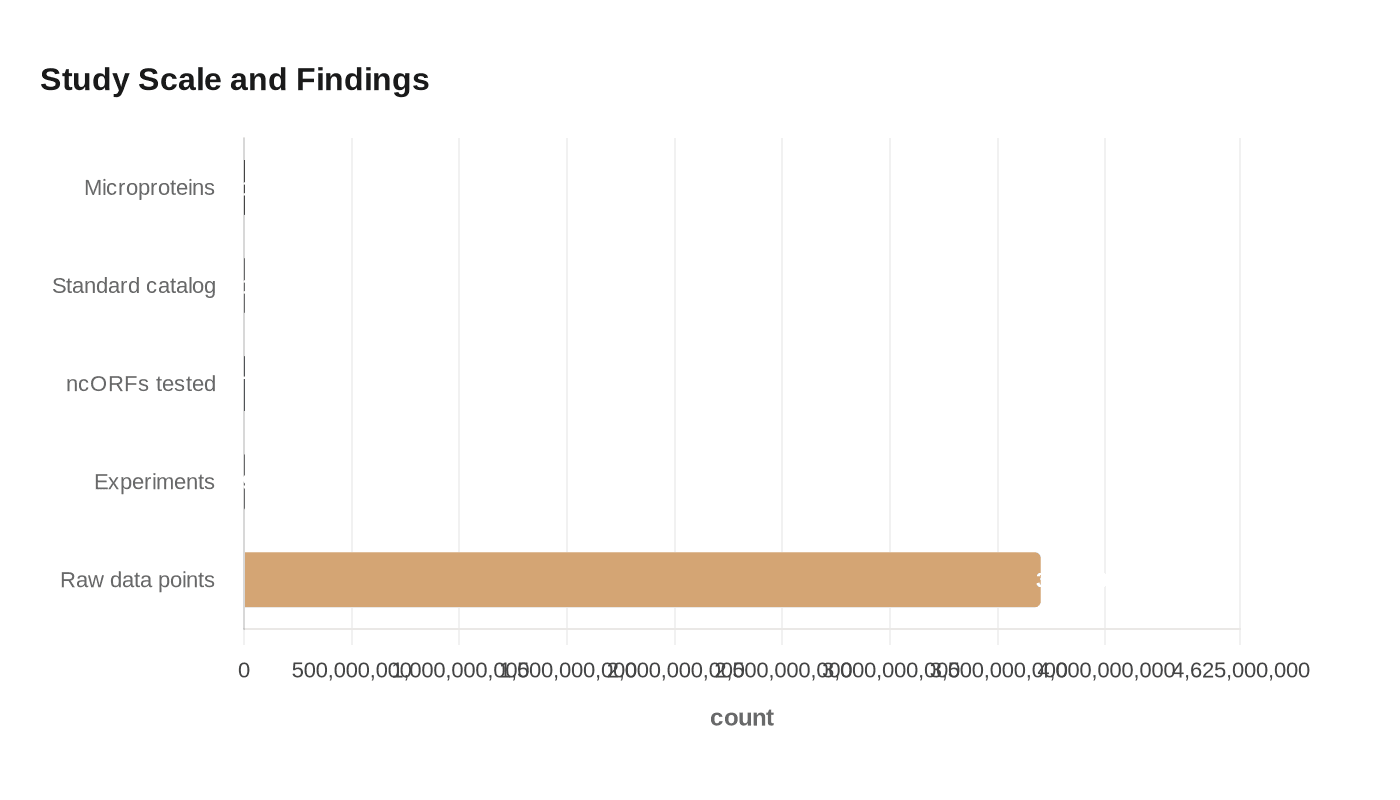
The work came from the TransCODE Consortium, a collaboration of more than 60 researchers across over 30 institutions, including EMBL’s European Bioinformatics Institute in Cambridge, the Princess Máxima Center for Pediatric Oncology in the Netherlands, the University of Michigan Medical School in Ann Arbor, the Institute for Systems Biology in Seattle, and MIT in Cambridge, Massachusetts. The team examined 7,264 non-canonical open reading frames, or ncORFs, and found that about 25% produced detectable protein-like molecules. Of the proteins uncovered, 65% were fewer than 50 amino acids long.

The consortium coined a new label for this class of tiny proteins: peptideins. That matters because naming is not just cosmetic in proteomics. Once a molecule is visible, named and added to reference resources, it becomes searchable in the same databases researchers already use for biomarker work and target discovery. The team said the data were made publicly available and are being folded into GENCODE, UniProt and PeptideAtlas, a move that should make these molecules far easier to track in future studies.
The biggest immediate payoff may be in cancer. Many of the newly detected peptideins were found on immune-cell surfaces, which makes them plausible biomarkers and possible targets for cancer immunotherapy. The consortium also used CRISPR gene-editing screens to test whether some of the peptideins are essential for cell survival, a useful filter for separating biological noise from molecules with real functional weight. That is the kind of screen that can turn a cataloging exercise into a drug-hunting pipeline.
This result did not come out of nowhere. It builds on ribosome profiling methods first introduced in 2009 and on the wave of 2010s discoveries showing that ribosomes translate thousands of regions once written off as noncoding. Sebastiaan van Heesch’s ribosome-profiling work on frozen human hearts in 2019 helped push the field toward these hidden proteins, and earlier studies had already linked some microproteins to mitochondria, cell division, DNA repair and cancer-cell surfaces. The new study deepens that picture with 95,520 experiments and about 3.7 billion raw data points.
The broader message is blunt: biology has been reading from an incomplete script. A January 2025 Nature feature framed dark proteins as a growing frontier in gene regulation and cancer, and this study turns that frontier into a much bigger map. If peptideins prove as functional as the early signals suggest, they could change how scientists annotate the genome, how they search for disease mechanisms and how they pick the next wave of immunotherapy targets.
Know something we missed? Have a correction or additional information?
Submit a Tip