University of Illinois pilot plant helps protein startups scale up
The real bottleneck in protein innovation is scale-up, and Illinois is building the pilot-plant infrastructure startups need to reach commercial production.
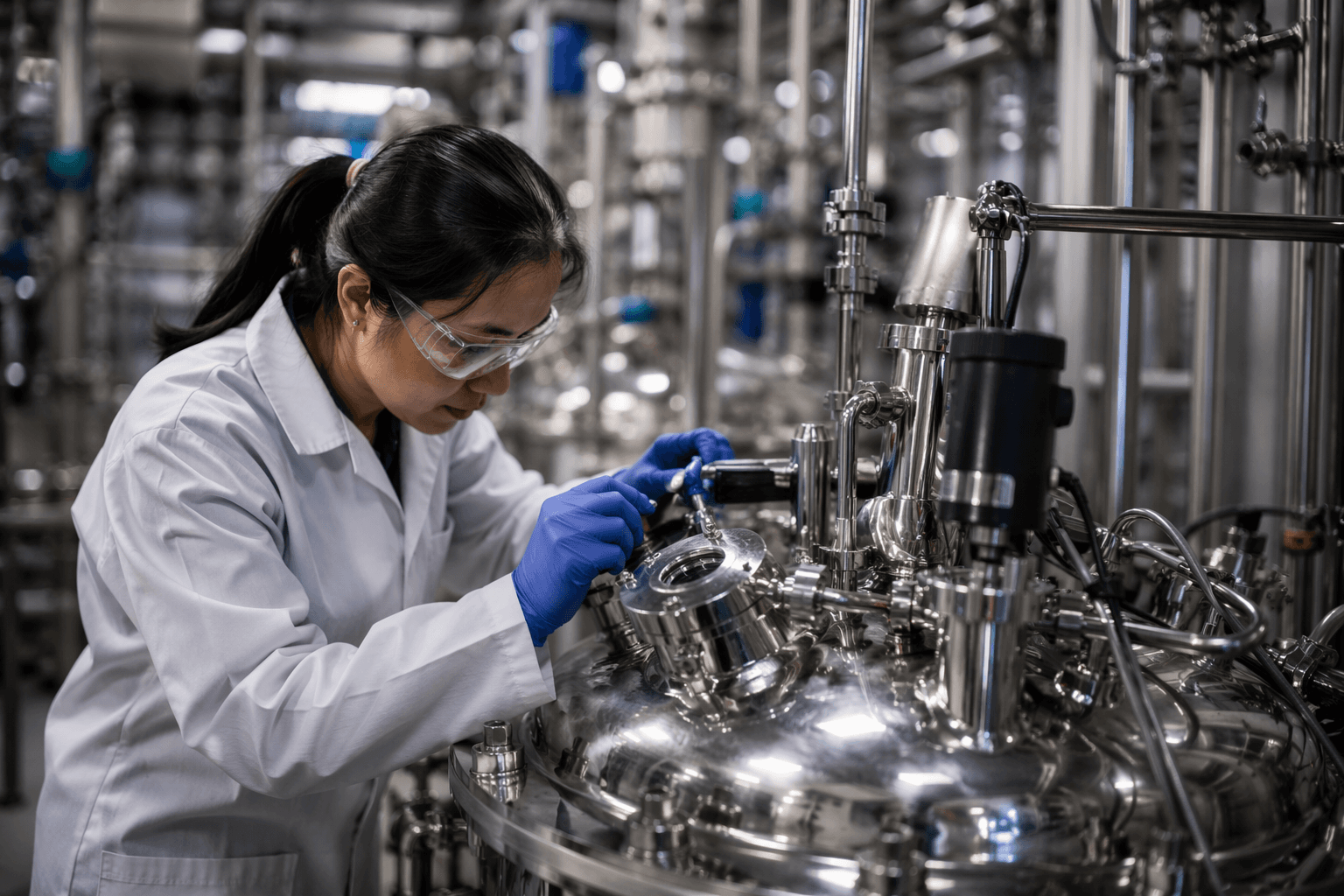
In 2024, the U.S. Economic Development Administration awarded the iFAB consortium about $51 million in Phase 2 funding. The University of Illinois Urbana-Champaign has built its scale-up story around the middle layer where a lab win has to survive real tanks, real utilities, and real economics, using the Integrated Bioprocessing Research Laboratory and the Food Science and Human Nutrition Pilot Processing Plant to help food companies move from bench work to commercial production with ADM, Primient and other industry partners.
The missing middle in protein scale-up
That middle layer is where protein startups discover whether a process is actually manufacturable. A fermentation-derived protein that looks clean in a flask still has to prove repeatability, compatibility with industrial equipment, ingredient consistency, and a cost structure that can stand up outside the lab. The pilot plant is where those questions get answered before a team commits to a full commercial build.
At this stage, the problems are practical, not theoretical:
- Can the process run on available equipment without constant retrofits?
- Can yields stay high enough when the batch size changes?
- Can the ingredient come out with the same specs from run to run?
- Can the company afford the capital it would take to build its own facility?
What Illinois brings to the table
The Integrated Bioprocessing Research Laboratory is built to serve bioenergy, bioprocessing and food science companies by pairing them with the university’s human and equipment capabilities. In plain terms, that means outside companies do not have to build every capability themselves just to prove a concept. They get access to expertise, process know-how and equipment that can expose weak points long before a commercial plant is on the line.
The Food Science and Human Nutrition Pilot Processing Plant adds another layer. It is a flexible facility for students, researchers and the international food industry, with plug-and-play utilities, a large equipment selection and a product development kitchen. A startup may need to change process conditions, swap out a unit operation, or test how an ingredient behaves in a finished food matrix, and a plant like this lets teams do that without rebuilding the entire setup.
For protein companies, especially those working on fermentation-derived inputs or enzyme-enabled ingredients, the facilities bridge process validation, pilot runs and customer collaboration in one place.
How iFAB is building the regional scale-up network
The bigger framework around these facilities is the iFAB Illinois Fermentation and Agriculture Biomanufacturing Hub. Its goal is broad: scale precision fermentation into alternative proteins, food ingredients, materials, chemicals and more by converting underutilized corn feedstocks into higher-value products. That makes the region’s industrial base part of the pitch, not just the university campus.
The funding supports new precision fermentation facilities at IBRL, upgrades at ADM’s Decatur plant, and more fermentation capacity at Primient’s Decatur facility in a joint project with Synonym.
iPROOF is a planned pilot-scale facility at Primient’s corn wet mill plant in Decatur, Illinois. It is designed to bridge the critical gap between pilot and full-scale commercialization.
Why Decatur keeps showing up in the map
Decatur is central to this buildout. ADM has been part of the Decatur community since 1939, and the city is its North American headquarters and its largest employee base, with 4,000 colleagues. That concentration of industrial experience matters when a pilot project needs to connect feedstocks, processing know-how and a realistic path to manufacturing.
The regional case is also agricultural. Central Illinois sits close to the corn-and-soy supply base that underpins the biomanufacturing pitch, which is why the area keeps surfacing in conversations about precision fermentation capacity. Local economic-development materials put the long-term opportunity for precision fermentation and biomanufacturing at roughly $200 billion over the next 15 years.
What startups actually need from a pilot plant
For a protein startup, a good pilot plant is not just rented stainless steel. It is a place to debug the whole chain from input stream to finished ingredient. That means aligning upstream fermentation performance with downstream recovery, checking whether the ingredient behaves the same after each run, and learning how much process variation the market will tolerate before costs get ugly.
The University of Illinois facilities and the iFAB network let companies do that work without absorbing the full capital burden on day one. A process that has been iterated in shared university infrastructure, with actual equipment and actual production constraints, is easier to discuss with customers, partners and investors than one that only exists in a slide deck.
This article was produced by Prism’s automated news system from verified source data, official records, and press releases, then run through automated quality and moderation checks before publishing. The system is built and supervised by the people who set the standards it runs under. Read our full AI policy.
Know something we missed? Have a correction or additional information?
Submit a Tip